
Be So Good the Robots Are Irrelevant
It’s easy to become nihilistic and pessimistic when thinking about the arts and AI. To recover your optimism, return to the simple idea of play.

It’s easy to become nihilistic and pessimistic when thinking about the arts and AI. To recover your optimism, return to the simple idea of play.

When a traditionally-published author made the switch to self-publishing, she found that success reveals itself in months, not days.

When building a character, roles can be efficient shorthand—hard-boiled detective, dutiful nurse—but the best characterizations require going deeper.
Potential readers can step inside your book’s world via brief, text-based, choose-your-own-adventure-style stories made with online tools.

Publishing professionals have a responsibility to learn about AI—not to use it, but to effectively deal with its consequences in their work.

If your story requires characters whose motivations don’t come naturally to you, here are some tips to help you imagine the impossible.

A good story, like a good hiking path, simply unfolds without seeming forced. Here’s a tool that helps keep complex stories on track.

An avid male reader of romantasy speaks up about his love for the genre, and what it can teach men about themselves and their relationships.

Both show and tell are essential tools for powerful storytelling. The trick is balancing their use at the line, scene, and story level.

If you’re an author thinking about wearable merch for a book launch or tour, here are some considerations to help the process go smoothly.

Even successful writers fall prey to self-doubt. Here are a few ways to strengthen yourself if and when you hear that voice in your head.

Fear can limit our ability to apply reason and logic, leading to flawed choices and behavior—bad in real life, but story gold in fiction.

Omniscient POV might be resurging, thanks to some recent bestsellers. To use it well, remember three C’s: clarity, consistency, and control.

Transitioning away too often—to a flashback or a new scene—risks losing the depth of storytelling that readers get from living inside a scene.

One memoir coach sees writers rush ahead into chapters and character detail before understanding: Why am I writing this exact story right now?

“Noticing what you notice” helps you identify your authentic material and produce work no one can ever copy.
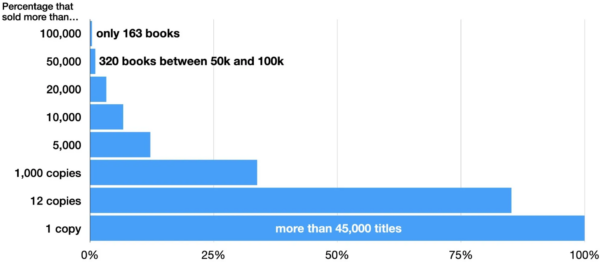
I attempt to clarify the claim that half of all books sell fewer than a dozen copies—a statistic for which I am partially responsible.
A repeated word, phrase, motif, symbol, or image can create tension for your readers in small, barely noticeable increments.

Before trying to structure a memoir, you must understand how you’ve changed and what that process looked like—which can be hard to pinpoint.
Most characters have a challenge to overcome, but what about more serious physical or psychological issues that can’t be “cured” or ignored?

Librarians are managing AI’s real-world effects, making them publishing’s early warning system on reliability, trust, and the limits of AI literacy.
Faced with pursuing publication that might reopen old wounds, one memoirist overcame the challenge with help from therapy, community, and AI.

When a writer began to see her mother with compassion, her writing changed—and her stories started getting published.
An author decides to pay a bookstagrammer for exposure for her book, and comes to regret it so much that she asks the promotion to be deleted.

By teaching one’s own work, a writer discovers not only what they do well, but how others might use such insights to unlock their own drafts.

Readers who give three stars are often responding to the intersection between their expectations and the book—not the book’s inherent worth.

Three practices separate successful memoirists from those who underestimate the writing craft.

By learning to embrace the nonlinear nature of the ADHD brain, you can learn to write with more ease and less frustration.
Lack of support might come from fears about their own privacy, not understanding the enormity of your achievement, and/or information overload.

Booksellers discuss how BookTok has changed the demographic visiting their stores, and how publishers can better pitch their titles for placement. (Also: print galleys still matter.)

Working on a book with a refreshed, rejuvenated mind, even if only for a short time, is far more conducive than slogging through exhaustion.
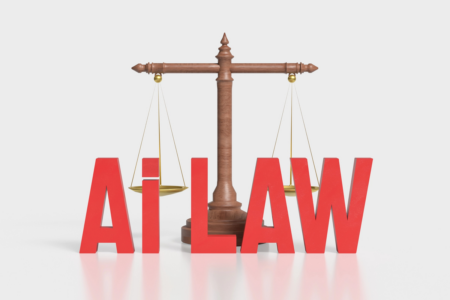
Everything writers need to know about AI, copyright, and current case law, in one regularly updated, fact-based guide.

For writers who approach a newsletter with intention, it’s one of the most powerful—and genuinely scalable—channels available today.

You love teaching, and your students love you. How can you position yourself to deepen their experience with a powerful live or online event?

Applying genre labels to creative work can be vexing, but understanding each genre’s core concerns can also be inspiring and instructional.

The Authors Guild has expanded its human-authorship certification program to all authors. It verifies author identity, but not whether the author used AI in the work.

When a scene shifts to a new setting, time, or POV without clearly bridging that gap, we risk losing readers’ trust and goodwill.

When the Huffington Post published a personal essay by Lea Page, a stranger in the comments section wished her dead for writing about empathy. Lea reflects on the price we can pay for publishing and making ourselves vulnerable—and how to reclaim our power.
One author appeared on 50+ podcasts before her book launched. Here’s what she learned about timing, pitching, and making it work for you.

There’s no one-size-fits-all way to structure a story, so understanding the core principles will help you decide what’s right for yours.

One author reflects on how her desire to not just outsource marketing, but to outsource even thinking about it, led to regrettable results.
Making the leap from short online articles to longer, narrative work brought one writer into contact with a new challenge: being truly edited.

By observing our own species through the eyes of another, something new just might be revealed to us.
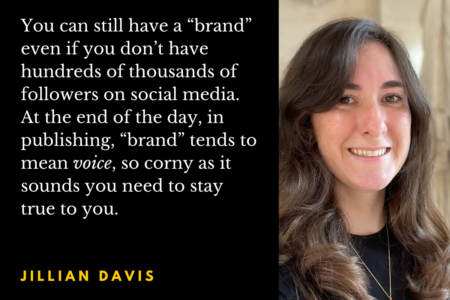
I spoke with the head of the book department at LA-based Kaplan Stahler Literary Agency about working at the intersection of book publishing and Hollywood.
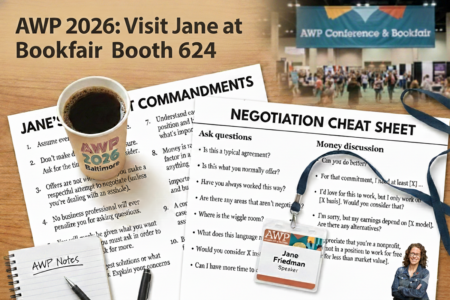
I’d love to see you at AWP Conference & Bookfair (March 4–7, 2026, Baltimore). I’ll be exhibiting (Booth 624) and speaking at the Bookfair.
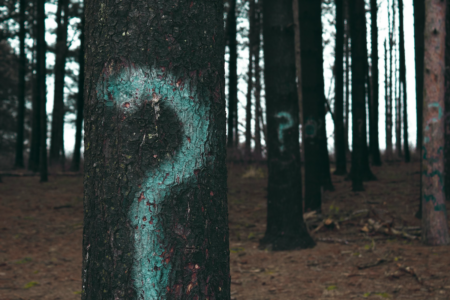
The first question is often some version of “What happened to me?” Understanding it helps craft a story that speaks to your readers’ needs.

If you’re overwhelmed by the volume of accumulated words after months or years of generating new material, here’s how to tame and shape them.

One book coach wondered whether an AI tool, trained on his own archive of advice, could answer authors’ questions as well as he could.

Stories are like trains: a connected chain of main events (railcars) and transitions (couplings), with very little stopping at platforms.

Writing outside our lived experience isn’t just about getting facts right—it’s also about learning who we are when we truly listen to others.