Literary adaptations are a big business. From the social media firestorm surrounding Emerald Fennell’s take on Wuthering Heights to the A-list casting for Colleen Hoover’s Verity, the book-to-screen pipeline has always been an exciting space, with writers often pitching their work as something with TV or movie potential.
Recently, the LA-based TV literary agency Kaplan Stahler brought on Jillian Davis to start their book department. Graduating from Syracuse University as a double major in Television/Radio/Film and English & Textual Studies, Jillian thought she would never use either major, and ended up using both. At Kaplan Stahler, she brings YA, romance, and women’s fiction to publishers and producers alike. She also volunteers as a mentor with WriteGirl, enjoys scuba diving, and spoils her cat-daughter, Purrsephone. She lives in Los Angeles.
I’m grateful to Jillian for answering a few questions about the unique space she’s in.
Jane Friedman: Given that you have a history working in books to TV/film, how did you become a literary agent, and what drew you to this side of publishing?
Jillian Davis: Before coming to Kaplan Stahler, I worked at a production company that specialized in adapting romance novels for TV and film, so I was already very familiar with that process. I started the book department at KSA because I’ve always loved books, and I wanted to get back into that space because the TV landscape has changed dramatically over the last few years, and everyone is looking to IP (intellectual property) more and more.
But as much as I love imagining a manuscript having another life onscreen, there is something special about the creative freedom in publishing. In TV and film, a script will live and die by the production budget, meaning that stories such as period or high fantasy aren’t as common as contemporary or grounded genres. But in publishing, a writer can be as creative and descriptive with a world and plot as they want—all that’s considered from a production standpoint is the cost of printing a book.
Is a book’s potential for adaptation a major consideration for you when deciding what to represent? Or are you specifically hunting for IP that has potential for much more than a book?
When reading a manuscript, I definitely consider if it could have a second life as a feature or series, but it’s not everything. The most singular thing that I look for is good writing, because I believe that a book can be about pretty much anything as long as the writing is good. If an author’s prose makes me feel something and compels me to turn the page to the end, then I know I’ve found a good story.
For an author looking to break into the book-to-TV pipeline, how much does their social media platform matter versus the quality of the story?
I think in an ideal world, an editor would want someone with a massive following and a quality story, but if you’re someone who doesn’t have a massive following, just focus on your book being great.
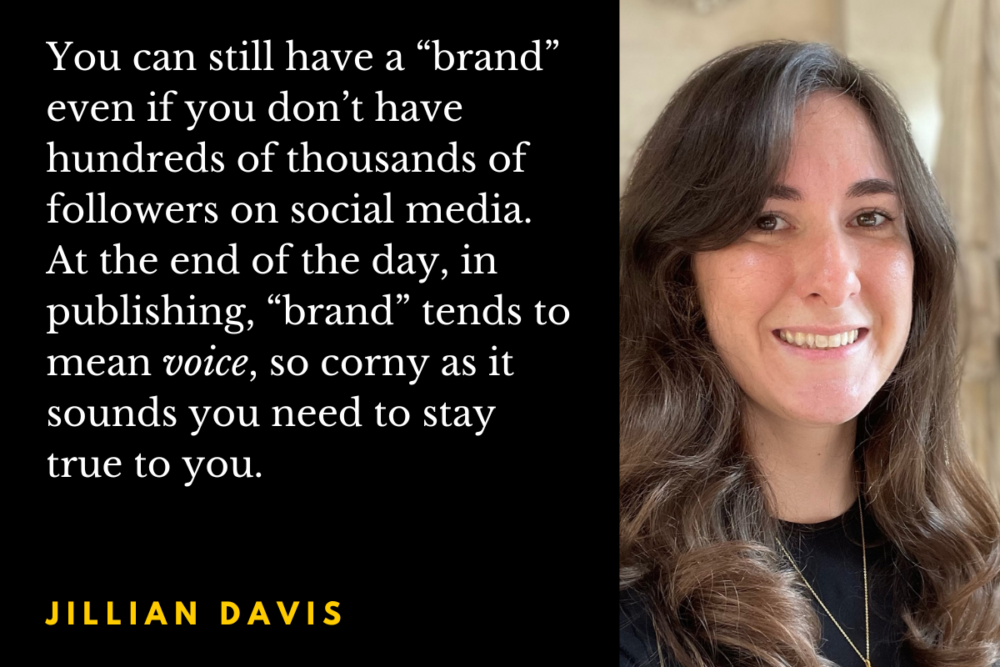
On the other hand, if you’re someone with a massive following and you want to be an author, think about what your followers might want in a book from you. I’m seeing more and more online creators getting book deals based on their brand and following. I want to emphasize though, following isn’t everything. You can still have a “brand” even if you don’t have hundreds of thousands of followers on social media. At the end of the day, in publishing, “brand” tends to mean voice, so corny as it sounds you need to stay true to you.
Does being under the same roof as TV literary agents change the way a book is shopped to publishers compared to a traditional standalone literary agency?
I’ve only worked as a literary agent at Kaplan Stahler, so I can’t speak to how things are shopped at a standalone literary agency. Every book needs its own strategy of course, but since I handle both the publishing and TV/film rights, I’ll usually send a manuscript to producers at the same time that I send it to publishers.
What are some of your long term goals for the book department at Kaplan Stahler?
Given that this is a new department, most of our clients are debut authors, so pretty much all of my long term goals relate to growing their careers. I’m pleased with our progress so far, because in my first year I made a goal to sell at least one book, and I ended up selling several. I also facilitated a TV option for a manuscript, and I’d like that to happen more this year and in the years to come.
I would like to see my debut clients get the chance to turn their standalones into (book) series, and of course I’d like to see their advances get bigger as their careers do. At Kaplan Stahler, we believe in seeing careers through from the beginning, which is why we start representing authors at the manuscript stage. Of course everyone wants to see their manuscripts turned into books, and their books into movies and TV, and I want the same thing. I enjoy the day to day process of pitching my clients to whoever wants to read their books, and I’m eager for more people to know about them and read them.
Thank you, Jillian.

Jane Friedman has spent her entire career working in the publishing industry, with a focus on business reporting and author education. Established in 2015, her newsletter The Bottom Line provides nuanced market intelligence to thousands of authors and industry professionals; in 2023, she was named Publishing Commentator of the Year by Digital Book World.
Jane’s expertise regularly features in major media outlets such as The New York Times, The Atlantic, NPR, The Today Show, Wired, The Guardian, Fox News, and BBC. Her book, The Business of Being a Writer, Second Edition (The University of Chicago Press), is used as a classroom text by many writing and publishing degree programs. She reaches thousands through speaking engagements and workshops at diverse venues worldwide, including NYU’s Advanced Publishing Institute, Frankfurt Book Fair, and numerous MFA programs.