

Today’s post is by novelist Dr. Zena Ryder.
If you belong to any online groups for writers, you’ve seen it. A writer shares a passage of their writing, then it’s critiqued in a thread, which can stretch to dozens or even hundreds of comments. Some nice, some not so nice. All you can do is hope the writer is neither crushed nor overwhelmed.
Sometimes they’re just seeking a little encouragement, but they’ve equated that with approval of their writing. What they really need to hear is keep going, even if what they’ve written is crappy. Which it probably is if it’s a first draft. As Anne Lamott reminds us in Bird by Bird, that’s totally normal.
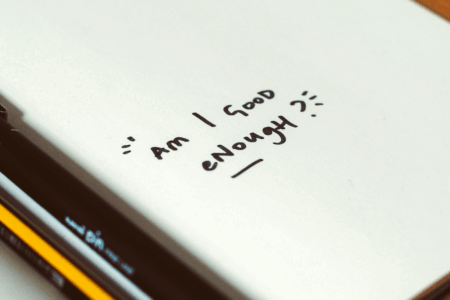
Insensitive or rude feedback is problematic at any stage, but can be particularly harmful if received early in the writing process, before a writer has built some confidence and resilience. Women’s fiction writer Karen Clark says while she was working on an outline, she got feedback on one scene that was still unclear in her mind. “The feedback I received was that it would make my readers roll their eyes.” This left Karen “feeling demoralized and unworthy.” Four years later, she says she still carries the feeling of being an imposter as a writer.
When he attended a writing group after moving to a new city, murder mystery writer Frank Anderson received some negative feedback on his first draft. It left him feeling “angry and questioning why I bothered to attend.” He hasn’t been back to the group after that first meeting.
The problem isn’t always the group or a tactless critique, though—it’s the mismatch between what the writer needs and what the group provides. It’s like hiring an electrician to fix your toilet. An electrician and a plumber are both skilled professionals, but you need to hire each one for the right job.
Great tools, wrong job
I’ve run Central Okanagan Writers, an in-person feedback group, since 2018. And I ran an online critique circle through the Federation of BC Writers for a year. I understand it’s essential to get good feedback on your writing! Sadly, though, even thoughtful and kindly delivered critique can stop a first draft in its tracks.
Christine Esovoloff writes women’s fiction. She told me that whenever she’s shown her first draft to someone else, “If they make any suggestion or comment—not even a negative one—then I automatically think ‘It sucks, it’s a piece of garbage, I can’t believe I thought this could be good and I’m so sorry for wasting your time.’”
There’s not something inherently wrong with critique groups, but writers often seek feedback too early. New writers especially don’t always know what they need, or what will be helpful to them on their writing journey. Christine admits that had I recommended not getting feedback on her first draft, “I probably would have fought you on that.”
Writers hear the advice to join a critique group and perhaps hope it will serve every need—motivation, accountability, encouragement, feedback, and writerly companionship. But it’s hard for one group to provide all those things to all members at the same time.
What writers actually need during the first-draft stage
Instead of critiques, what writers really need while writing their first draft is:
- Motivation: Encouragement to keep at it, day after day, even though you’re writing crap and you have no idea if it’ll ever be any good.
- Accountability: Knowing someone else is paying attention can help you keep going even when it’s hard.
- Companionship: Friendships with other writers ensure you don’t feel like the only one struggling with the same difficulties.
- Permission: Reminders that it’s perfectly normal to write badly and inconsistently—so long as we persist.
Contrast that with what critique groups typically offer: analysis, feedback, and suggestions for improvement. These are all valuable, but better suited for the revision phase.
There’s another practical reason not to get feedback on a first draft. Once you revise your work, it’s bound to change a lot. There’s not much point in getting feedback on your opening chapter if, after you’ve completed the first draft, you realize you started your story in the wrong place and you scrap that chapter entirely.
Either way, it can take courage to show your work to others for the first time, and completing a first draft can give you a huge boost of confidence and resilience. As Karen says, “When I’m still working on an idea, feedback can feel like humiliation. Once I’m further into my own commitment to the story, it is easier to stand by my choices.”
Eventually feedback is vital for a writer. If you want your writing to be read, then you need to know how it lands with other people. Waiting until a later stage before seeking critique doesn’t mean working in isolation. It means finding the right kind of group for the right task.
Match your community to your stage
I recently joined Eyes On Books, an online community designed to help authors (and aspiring authors) learn how to market their books more effectively. This is a good fit for me because I’m currently querying a novel, which I hope to be marketing in coming months. I’m also still a member of my in-person feedback group. These groups serve different purposes. Decide what you truly need right now and find or create that kind of community.
- Drafting community: Gives you motivation, accountability, companionship, permission to write badly
- Critique group: Provides feedback on craft, suggestions for improvement
- Professional network: Offers business advice, info on publication strategies, marketing ideas
Christine realizes that what’s most important for her is to find ways to keep motivation up while writing the first draft. She says that while it’s fine to get general writing tips, soliciting feedback on her first draft is not helpful. She now knows that in the beginning she needs camaraderie, not critique.
So hire a plumber to fix your toilet—and find (or create) a writing group that offers the right kind of support at the right time.

Zena Ryder is a freelance writer, historical fiction writer, and founder of the First Novel Fellowship, an online community for writers working on the first draft of their first novel. She’s currently querying agents with her novel, Committed, which is about a young woman who’s committed to an insane asylum during the American Civil War. At the same time, she’s hard at work on her next novel, about Elizabeth Van Lew, a Union spymaster based in the Confederate capital of Richmond, Virginia. You can find her and information about the First Novel Fellowship at www.zenaryder.com



Spot on essay. Thank you.
I’m glad it was helpful, Sabena!
What an important topic and what valuable insight, especially for those just starting out who may be most vulnerable to the harmful effects of a mismatch between need and purpose that Dr. Ryder describes.
Thanks, Marilee! I hope it helps newer writers choose (or create) a writing group that serves them well.
I’ve led in-person critique groups for almost 20 years and have “written the book” (six of them, actually–my Craft & Critique series, now in print or about to be published) on them and on critique specifically. Dr. Ryder is right on target. Besides the psychological aspects of critiquing the new work of a new writer, there’s also this important point: no one, not even the author, no matter how much outlining they might have done, really knows where the story’s going. How, then, does a group effectively critique such things as plot, story arc, or character development? Short answer: they can’t, not really. All they’re doing is guessing.
That said, certain things can be critiqued, and to good effect–dialogue, sentence/paragraph/scene/even chapter structure, and clarity, for example–so there isn’t a single yes/no answer to the question of whether to critique a first draft. But as Dr. Ryder notes, even that critique must be done with care and a large dose of encouragement as well as constructive suggestions. Not every group knows how to do this, and it’s on the leader to set the tone and the example.
The idea of using a group for accountability and encouragement is terrific. We’re doing that with several of my group’s members right now. When they finish that first draft, we’ll do an alpha-read of the entire piece for big-picture issues, with a side-order of general commentary on more “mechanical” matters.
Effective critique must meet the needs of the author at that moment in the development of their work–even if, maybe especially if, they don’t know what their needs are. And that’s a continual learning process for both the authors and the critiquers.
Yes, “approach with caution” is generally good advice when it comes to getting feedback!
20 years leading critique groups is impressive. That’s a lot of valuable experience, which it’s great you’re sharing in your book series. Thanks for commenting.
What a great nutshell distinction between different kinds of writing groups vs. different stages of the written work and what it and the author needs! Thank you!
I’ve belonged to a local critique group since 2017. Initially, a couple dozen writers came through, with an average attendance of eight every month. It has boiled down to five of us core members. We look at everything, from first-draft chapters to polished ending chapters. Our founder set up hard-&-fast rules up front: 1) comment on the content, not the author, 2) provide specific details in your critique, and 3) highlight at least one well-written thing in the work.
I have found this third rule to be true – regardless of how well or badly written a piece is (final or rough draft), it always contains at least one “gem” of an idea, concept, detail, or insight.
We have become close enough friends now that at the beginning of a session we can say, “What were you thinking?” about a first draft, and we all laugh, then we get down to the concrete commentary.
I’m the only published member of the core group, but my work always benefits from my fellow critiquers. (They are all professionals in different fields, unrelated to writing.) Their perspectives make me sit up and say, “Wow! I never would have thought of it from that angle!” And that is often the very angle my story needs.
Thanks for your kind words and comment, Sally. It’s so wonderful when the same people read one another’s work over time. You really get to know each other’s projects, and see one another develop and grow as writers!
Super interesting! And I love the plumber analogy! I have never shared any work-in-progress. I sent finished versions (or at least what I feel is a finished version at that point) to my editor at Soho and a couple of trusted friends. Not sure how I would feel sharing a draft, a total work-in-progress…
Thanks, Teresa! I confess I was pretty pleased with the toilet/plumber/electrician analogy when I came up with it, haha!
Thanks for this article, which echoes a conversation I had today with a critique partner. Finding the right kind of group is important, no matter the stage of the novel. I’ve recently realized that my novel needs an entirely different ending and I am writing my way towards it. While the bulk of the novel is ready for critique, it will be a while before I’m willing to submit these new chapters. Brand new material is tender and easily derailed. Second drafts are sturdier and more resilient to critique.
‘Tender’ is a perfect word for it, Morgan. Good luck with coming up with that ending!