
Today’s post is by novelist and freelance writer Rebecca Morrison.
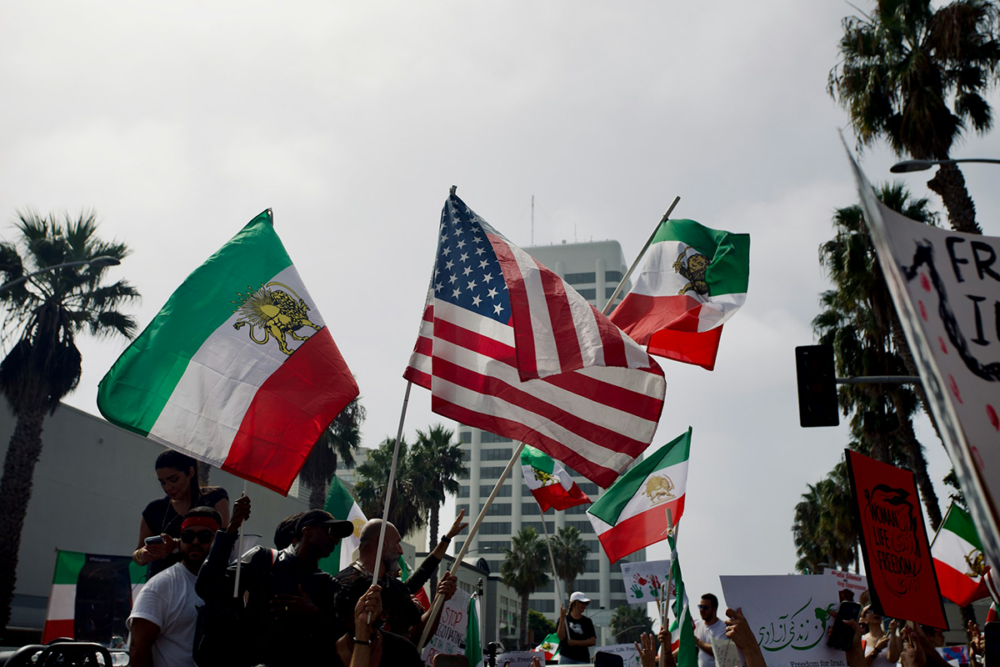
When the protests in Iran began last month, I resisted writing about them. Not because I didn’t want to; as someone who left Iran 47 years ago, the demonstrations felt deeply personal. But because I was afraid. Afraid of saying the wrong thing about a dangerous and complex situation. Afraid of hurting the people I love, both in Iran and in America. Afraid of exposing how insignificant my voice is compared to the risks people were taking in the streets.
And if I’m being honest, I was afraid of being a fraud.
Who was I, sitting in my safe American home, to write about a country I haven’t seen since I was a child? What right did I have to comment on a struggle that belongs to people who live every day under a brutal regime?
I left Iran with my family in 1979, during the revolution. I was only eight years old. I didn’t experience the bloodshed and terror that millions of Iranians endured during those protests and the violent government crackdowns that followed.
That’s why, when I consider writing about Iran, part of me feels shame.
The kind that comes from knowing you can close your laptop, turn off the news, and go on with your day, while people in your country of birth are deciding whether risking their lives in the streets is the only remaining way to be heard.
So I stayed quiet as I watched the devastation. I carried the fear in my chest. But silence started to feel like another kind of betrayal.
As writers, we live in this uncomfortable space. We’re taught to tell stories, to witness, to put language around pain. But we know that when we speak, we won’t please everyone. We’ll be misunderstood. We’ll be criticized by strangers. Sometimes even by people we love. Writing is an act of exposure, and writing about something this personal, this political, and this dangerous feels like standing in a blizzard naked.
But this is what we do. We write anyway.
So I wrote. Draft after draft. Doubting every sentence. Trying to share a reality far larger than my own. In the end, I decided to share my heartbreak the only way I know how: honestly, imperfectly, and knowing my words are minuscule compared to the bravery unfolding on the ground.
I may not be in the streets, but I have a voice. I have access. Silence protects the tyrannical regimes. Attention, however small, is one of the few shields protesters have.
That dread is familiar to many writers, especially those working with inherited trauma or collective pain. We worry about authority. We worry about appropriation. We worry about taking up space that isn’t ours. We worry that our story is either too much or not enough.
But avoiding the page doesn’t make those tensions disappear. It just moves them into an uncomfortable feeling in our gut.
That’s why writing about Iran now feels both necessary and terrifying to me. I know I didn’t live through what the people of Iran did. I know the privilege that shaped my life. But I also know that distance doesn’t erase belonging, and safety does not cancel responsibility.
Feeling like a fraud is part of our writing. And that’s okay. The discomfort of knowing you were spared the suffering you see is part of the story. It’s the tension of speaking about pain you didn’t personally endure but that still shaped who you are. And it’s that discomfort that pushes you to keep trying to tell the story.
We don’t need to be experts. We don’t need perfect policy solutions. What we need to be is a witness to what’s happening in our world.
Our voices will not free the people that are suffering from their situation. But it’ll make it harder for their oppressors to hide their cruelty.
So we write.

Rebecca Morrison is the author of The Blue Dress, a novel based on her childhood as an Iranian immigrant. Her work has appeared in the New York Times, The Washington Post, and NBC News, among others. You can find her at rebeccakmorrison.com.


Excellent article, clearly captures the conflicting emotions of writers who wish to use their skills to try to make a difference, but are concerned about how effective they will be.
Thanks so much, Cathy!
Beautifully written
Thanks, Hadley!
Excellent! Very interesting food for thought.
Thank you, Natalie!
This: “Our voices will not free the people that are suffering from their situation. But it’ll make it harder for their oppressors to hide their cruelty.” Thank you, Rebecca.
Thank you, Andi!
Well written and honest. Thanks
Thank you, Don.
Amen and brava to you, Rebecca. Yes, writers as witnesses, writers as truth-tellers bring tyrants’ cruelties, their lies, their dangerous violent speech and actions into full view. Telling the truth also teaches every reader to stop looking away. We need all of us in the human family to nurture our natural empathy for each other so we can move into compassion and right action.
Thanks so much, Sabena!
Poignant. Def feel this in writing about whats happening in America. And inside my heart right now. Facebook posts dont cut it. Im out on the streets of Wdc screaming for my head off. I have a pen. I have the skill…maybe its time to really write. Thx for the nudge. Prompt, anyone?
Thank you, Marina!
Marina — here’s an idea for a prompt.
Write a few paragraphs about a conversation you had during the demo. With someone else (might be someone from around the corner, or someone older, or different in another way). Or a few sentences from the conversation you had in your own head.
Maybe you helped someone with their placard or admired it. Maybe you smiled and kept someone’s spirit strong when they were frightened.
Thank you for standing up. Many of us are with you.
“Our voices will not free the people that are suffering from their situation. But it’ll make it harder for their oppressors to hide their cruelty.
So we write.“
Beautiful.
Thank you so much, dear friend.
I feel this so hard. Thanks for putting it into words, Rebecca!
Thanks, Ali!
Well articulated!
Thanks, Calliope!