
Today’s post is by author and book coach Andromeda Romano-Lax.
Jane recently wrote about the importance of not obsessing about arbitrary genres and subgenres, whether one is just beginning to write a book or struggling to pitch it. After all, genres (and categories) are the concerns of people selling books, not the people writing them.
Yes, but. Or should I say Yes, and?
As a multi-genre author of seven novels who jumped from literary historical fiction to the more commercial thriller category a few years ago—and sold more copies in the last two years than I’d sold in the previous ten—I want to share my view that genre does matter in ways that can be inspiring and instructional rather than limiting or vexing.
First, let me explain that I came to creative writing via literary fiction and the classics. I fed my late-blooming novelist’s mind with doses of Virginia Woolf, Philip Roth, and Ian McEwan. My debut historical novel was modeled on Don Quixote.
This high-brow literary focus taught me useful things about voice, theme, and the evolution of the novel as a form, which I passed on to my students once I became an MFA instructor. What it didn’t always teach me or my students effectively was how to plot. Or even about how to develop characters, in that I gravitated toward characters who were opaque, passive, and generally inaccessible. While my friends were reading Fifty Shades of Grey, I was thoroughly enjoying Of Human Bondage. (Don’t be fooled by the title; it’s not a spicy book.)
What literary fiction didn’t teach me during the first half of my writing career, genre fiction finally has—especially when I’ve been willing to “sit in the discomfort” of how genres and subgenres work, searching for answers to how we navigate tropes or manage (and benefit from!) reader expectations.
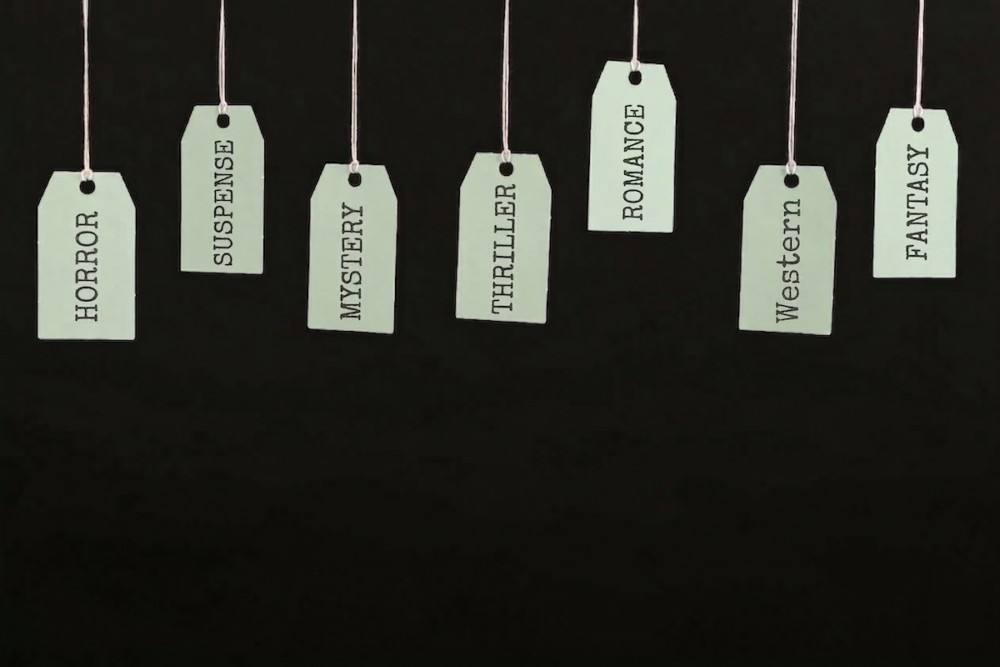
Horror
Let me start with horror, because it’s what I’ve been reading while writing my first Gothic novel. Horror relies on dread, fear, and sometimes disgust. As a new convert to the genre, I’m also starting to realize how much horror depends on the body—and I don’t just mean the most obvious body gore, but rather, most of the stories we’d catalog as spooky or terror-filled.
In my first attempt at writing this genre, I moved too fast, using the kind of plotting I see in suspense. Then I realized my error. I needed less to happen, but I needed each piece of the story to trigger more sensations. Bodily sensations. If suspense asks, “What happens next?,” horror asks, “How does this feel?”
Feel not just as in sad, but feel as in wet, sticky, viscous. You get the idea.
Horror often involves a loss of control, reminding us that we can’t escape our own bodies (or “meat sacks,” as some would call them). I sometimes wonder if horror’s current popularity is in part a response to the decarnalization of our lives, via screens, phones, and now, AI. Realistic depictions of bodies are too often neglected in fiction, yet readers yearn to explore what our bodies know and mean, especially during this moment in history.
Takeaway: If you’re like me, too easily separated from your body, unsure how to communicate the many ways the body speaks—and not just in terms of erections or fluttering hearts—then read, analyze, and maybe even try to write some horror.
Suspense
That question I posited for suspense—What’s going to happen next?—is a darn good thing for us to hope the reader will ask.
How do we make the reader curious? By providing her with information. Wait—not by withholding information? Well yes, that, too. But the balance is essential, as Hitchcock liked to remind aspiring writers.
Suspense advances as a series of questions, including big ones, like “Who killed the neighbor?” to small ones—everything from why did her husband close himself into the bathroom to answer a text to why can’t she remember what happened last night? (This lady is not having a good week.)
But to ask those questions, we also need to know certain things. That the husband has been acting odd lately, and doesn’t always hide in the bathroom with his phone. That our female protagonist doesn’t black out most nights and isn’t on any medication that would explain memory loss.
Suspense requires information, but at its heart, it’s an emotional genre, not an intellectual one. Emotions are heightened when we sense an impending threat. The ability to focus our attention on perceived threat is hardwired within us. As early humans, we may not have needed to solve intellectual mysteries or crack codes, but we did need to listen for a possible lion rustling in that distant bush. That rustling sound is information, but the information is encoded within a vivid emotional experience.
If you, like me, are the kind of writer who often underexplains (wait—there are lions?) or overexplains (okay, okay, we see the damn lion) or simply doesn’t understand how to make readers want to turn the page, analyzing suspense can help, especially if you share early drafts with a writing group. They will be able to tell you whether they are curious (good!), baffled, or bored.
Mystery
What does my character want? To solve a crime. Readers get on board with that one very easily. If suspense asks, What’s going to happen? then mystery asks, in the past tense, What did happen? and engages us in two important ways.
First, we have to care about the person doing the asking. If you tend to write unlikeable characters by default, mystery will push you to make them more engaging or find ways to make specific kinds of unlikability—prickliness, fussiness, woundedness—appealing. A mystery will not work if we don’t care about the main character.
Second, a crime creates easily recognizable stakes. Do you remember an old “Portlandia” sketch where the characters kept saying “put a bird on it?” and every time they did—bird on a pillow, bird on a mug—it was, indeed, pretty attractive? Mysteries and other forms of crime writing often ask us to “put a body in it.” And it works. We humans have the good sense to know that people shouldn’t just go around murdering people all the time. You may have a plot that is really about subtler things—the nature of love, the price of greed, the stain of corruption, the meaning of life—and that’s all good, but stick a dead body in there and readers will often embrace the philosophizing in exchange for finding out whodunit.
If you, like me, sometimes invent characters who are just lost or burdened souls, making their way though life in leaky boats, trying to navigate the everyday chop of existence, then give them a rudder: a crime, and the unquestionable desire to solve it.
Character want in general
The biggest problem I see in unpublishable manuscripts—by students, clients, and friends—is a main character who doesn’t have a clear want. (Or better yet, a want and a need.) The more literary or experimental the book, the more hesitant the writer is to nail down this problem. It’s not that he’s trying to be subtle. It’s more often that he doesn’t know what his character wants. To be less miserable? To avoid difficult situations? To maintain the status quo?
Every genre aside from highbrow literary teaches us to write characters who want.
- Horror characters want to escape the scary house or slay the monster.
- Psychological suspense characters want to understand what is really happening; they strive for sanity in a world where little can be trusted while also evading imminent danger.
- Mystery characters want to solve a crime.
- Action thriller characters want to use their competence in pursuit of clear external goals: save the president, foil the plot, kill the assassin.
- I don’t write romance, but we all know what romance characters want: a happy ending!
If you are weak on character wants, try genre. Even if you veer back into literary fiction, I bet you’ll press harder to understand your protagonist rather than let him slide into opaque apathy.
I fully understand that genre labels can be frustrating, especially if you’re trying to pitch or sell your book. But the good thing is, once you’ve written the book you want to write, you can let go of some of those concerns. Call it one thing, call it another. See what makes an agent’s eyes light up. Even after your book is already published, you can try talking about it differently depending on the audience you’re addressing. Think of genre not as a gatekeeper, but as a teacher and helpful guide who is there to help you navigate the publishing maze you have rightfully entered.

Andromeda Romano-Lax is the author of the suspense novels What Boys Learn and The Deepest Lake, a Barnes and Noble Monthly Pick. A book coach and developmental editor, she will be teaching in September 2026 at a retreat aboard the Queen Mary 2.
This is enormously helpful, Andromeda. And clarifying! I’ve never written fiction, but now I’m tempted to try.
Wish I could join you all on the Queen Mary this year. I can’t. But any reader will walk off that ship better prepared to face the page, their reader and potential agent. I’ll miss being with you all!
Thanks for commenting Kathryn! Best wishes with your writing and travel adventures!
I’d be interested in Jane’s opinion on this. It seems as though you are suggesting that we pitch to agents who have no interest in our genre, and I’ve read that’s a good way to kill your chances, as you have misrepresented your manuscript.
Perhaps I have misunderstood what you wrote, so any clarification would be welcomed.
I don’t think that is what Andromeda is saying at all, but I imagine she’ll jump in to clarify as well.
Misrepresentation or pitching to an agent not interested in your genre —or even wording a pitch in a way that doesn’t feel 100% authentic and comfortable—is not what I suggested. Most books have many elements, so there isn’t one way to describe them.
Let’s say you’re writing a fast-paced mystery that has some dark supernatural elements, like Ramona Emerson’s Shutter, about a forensic photographer who sees ghosts. It’s been marketed as “equal parts gripping crime thriller, supernatural horror, and poignant portrayal of coming of age on the reservation.” Amazon has it tagged “Indigenous fiction.” If you were the author querying, you might lean into the horror label with one query and the mystery or thriller label with another. You could call it a ghost story. Or simply crime fiction. Or literary fiction with touches of X, Y, and Z. All of these descriptors would be accurate.
Another example: the delightful Holly Gramazio novel called The Husbands. Publisher calls it women’s fiction. Author simply calls it a comedy. Others call it magical realism, satire, or romantic comedy. If the author had just heard an agent say she adores “screwball comedy” then that would be a label to try with that particular agent.
Thank you for that, Andromeda. It helps….sorta….but I will admit I am a novice who has been self-teaching myself the writing/publishing world for the last two years. I had such problems with querying my first manuscript, partly due to my inability to locate good comps, made me give up on pursuing it.
When I finished that first one, I paid to have it professionally edited, and I confess I didn’t even know what genre it fell into! He told me “literary fiction” but also suggested querying it as a book on faith. Boy, did that send comp search into a tailspin!
I was advised to keep on writing while querying, so I have. I’m onto my fourth manuscript and feel as though I have all these unfinished projects. Each one needs something: editing, revising, comps located, queries sent out.
I think my third one is most likely to secure an agent, but I’m not ready to query it as of yet. Perhaps good I waited, as I thought it would be “women’s fiction” but then read that is the kiss of death to an agent. I read to call it “book club fiction” which works SO well with the plot, it sounded perfect. Until, that is, I saw opinions that is outdated and it should be considered “upmarket fiction”.
I have reached such a state of frustration that I feel as though I should just give up on agents and self publish instead. I started researching that which is how I found Jane. Several successful authors suggested her to me. I continue to learn, and hope that I’ll get there, eventually.
I promise to now reread your original essay more carefully. Thank you for a very logical reply.
Hi Ellen, I’m starting to see why Jane recommended that writers worry less about genre labels! The writing (and full revision) come first; that’s what my post was about, especially the learning part, with only a tiny mention of agents and pitching at the end.
You’ve raised many different issues and to answer all of them would require several more posts, but if I can pick one thing: comps are more important than labels which—as you’ve seen—are neither clearcut nor stable. (Witness trendy come-and-go labels like “upmarket”.) If you’re having trouble identifying comps, you may be misunderstanding comps or don’t have a complete grip on what your novel(s)is /are quite yet. And that’s okay! Two years is a short time to write multiple books, learn an industry, learn how to query, and find an agent. On this site there are several great pieces on comps; you may have read them already but are still struggling to find exact matches (which is never what a comp is).
As for the best way to understand what labels/wording/formulas are being used *now* by agents and editors, I recommend subscribing to publishers marketplace and reading the latest deal announcements. Those capture trends better than any article or webinar can.
A final word: none of my editors or agents care about genre labels half as much as we writers seem to.
As someone who has evolved from writing literary fiction to writing cross-genre/multi-genre literary fiction, I really appreciate your example. The most interesting books to me as both a writer and reader have a pleasing amount of complexity and could be described from any number of perspectives.
My own tastes are evolving in the same way! And the market seems increasingly open to cross-hybrid experiments. Isn’t that interesting?
I share your perspective, Andromeda. I write literary fiction with a core of philosophy and metaphysics. I strive to wrap it in a captivating package of adventure, medical horror and romance. No wonder it feels ambitious. Thanks for the feeling of camaraderie this post brings.
ps the dedication of What Boys Learn to your editor is delightful.
Thank you Miki! That label “medical horror” grabbed my eye. Lots of fascinating elements at work there! (And thanks for noticing the dedication. Our agents and editors deserve thanks!)
It’s a shame you didn’t comment on the romance genre. As one of the biggest genres, leaving it out felt like a cop-out. The rest I thought was good, but lack of romance weakened the article.
In Andromeda’s defense, she’s writing about genres that she herself has written and published in. As she says later in the piece, “I don’t write romance, but we all know what romance characters want: a happy ending!” She also doesn’t mention science fiction and fantasy. I appreciate the idea that she’s presenting; there’s another time and place for reviewing all the genres.
Fair enough, Annie—though, as Jane mentioned, I didn’t have space to dive into all of the genres, even a few others I have written. We’d love to see more examples of what romance can teach, aside from clear character wants and the importance of delivering a satisfying ending. Your additional lessons?
I reckon incorporating a romance arc in the story can increase empathy for characters. This can be helpful when your protagonist (or another character who has an arc) is something less than entirely sympathetic.
A romance can help motivate a reader who might be feel ambivalent about how likeable the character is (and whether they’re worth caring about): showing them as likeable or lovable (with all their flaws) through another’s eyes.
Useful! I agree on all of your points, Miki! We could do entire self-studies of the romance genre in order to understand character sympathy, relationship dynamics, character flaws, and more. You’ve convinced me.
Based on my debut experience, I’ll happily let readers define my genre. Thinking, like my developmental editor, that my plot-driven novel, For Love of Billie, was commercial or general fiction, I was surprised–and pleased–to have reviewers discover in my boy’s coming-of-age story what I would consider literary elements: “psychological realism,” “patient accumulation of feeling,” and “a long meditation on memory and desire.”
Hi Patricia, you’re absolutely right that readers add labels long after we control the writing and initial marketing. And sometimes those labels can be surprising!
Well said. I think it is also important to note that genres are becoming blended now. Murder mystery blends with supernatural elements creating supernatural mysteries genre. Romance is blending with fantasy for romantasy. Horror with romance is horromancy. Even the traditional Gothic has sub genres like Black Gothic, suburban Gothic, eco-Gothic and contemporary Midwestern Gothic. Hybrid novels and genre-blends are popular with readers now.
Good point, Paula! We could argue we are in the age of genre blending. Some people will take that as a reason not to study genres. Others (like me) will take it as a reason to study the histories, innovations, subversions, tropes and so on in order to make the most of readers’ new interest in these fascinating new blends.