

Today’s guest post is by author Linda K. Sienkiewicz.
A recent lament by an author on social media caught my attention:
“Does anyone else find 3-star Goodreads reviews really dispiriting? You give your book your very life, your soul, for however long, and a reader goes ‘Yeah, it was okay. Didn’t hate it.’ I know you can’t please everyone, but you also can’t stop those emotions.”
Another writer chimed in:
“I know not everyone will like my writing, but the throwaway comments without any real explanation or substance are really disheartening.”
I don’t know if an explanation from a reviewer would soothe the sting, but I completely understand the ouch factor. You pour yourself into a story, line by line, revise it until your eyes blur, agonize over character arcs and thematic resonance, only to be given a “meh” rating.
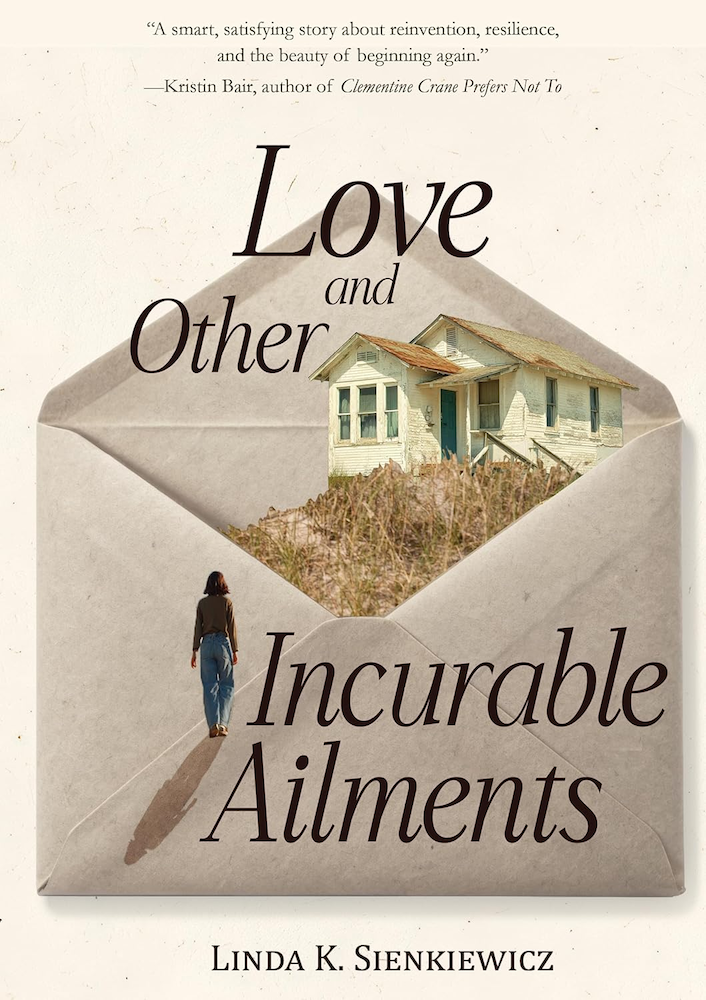
But are three stars really so bad? As an author, I constantly remind myself of this. My forthcoming novel, Love and Other Incurable Ailments, is a story about a 30-something taking a big leap of faith, and despite its twists, doesn’t exactly read like a high-octane page-turner. Some readers may adore that introspection and give it five stars. Others might enjoy it, but not deeply connect, and give it three.
Both responses are valid. Just as it is with chocolate, taste is personal.
My chocolate analogy
Here’s how I look at reviews, through the taste of chocolate.
⭐ ⭐ ⭐ ⭐ ⭐ = Neuhaus Belgian Chocolate
This is the best-book-ever kind of chocolate—a story that engages, enchants, and lingers, characters I fall in love with or hate, and a plot that sweeps me away. Neuhaus has its own cacao farm in Ecuador and they partner with local farmers to master the fermentation process that gives their chocolates richly melting perfection. Pralines from artisanal nougatine, hand-filled with smooth fresh cream or ganache and coated with dark or milk chocolate. Truffles with caramel, cappuccino and speculoos. Cocktail-inspired chocolates with gin, rum, sake, vodka and whiskey. It’s artisanal magic in your mouth. You can’t eat just one, just like you can’t put a five-star book down.
⭐ ⭐ ⭐ ⭐ = Godiva Chocolate
Very good. Smooth, creamy, and satisfying. This is a book I’d recommend in a heartbeat. I enjoyed the plot. The characters were memorable. Solid craftsmanship. Godiva is for chocolate lovers, as is a four-star book.
⭐ ⭐ ⭐ = M&Ms
Sweet with a crunchy shell. Glossy colors. You pop one in your mouth and suddenly you’ve eaten a handful. A three-star book is similarly enjoyable, quick, and hits the spot. Maybe I didn’t swoon or sob, but okay, I was entertained. I’d recommend it to the right person. M&Ms aren’t gourmet, but I seldom turn them down. They satisfy me in a pinch.
A note on lower ratings
There are plenty of nasty chocolates I could compare bad writing to, but as a writer, I don’t publicly give one- or two-star reviews. If a book truly doesn’t work for me, I typically don’t review it unless there is some compelling reason. I know firsthand how much heart, effort, and vulnerability go into writing and publishing. I’d rather celebrate the books I admire than publicly criticize the ones that weren’t for me. My reviews reflect books I’ve finished and found something to appreciate, even if they aren’t Neuhaus-level for my personal taste.
I’d be lying if I said my first three-star review didn’t give me pause. I stared at it longer than I care to admit, rereading it as if some hidden meaning might appear. My mind immediately began its quiet interrogation: What did they miss? What could I have done differently?
But the longer I sat with it, the more I understood what it really was: not rejection, but neutrality. The reader had spent hours with something I created. They had finished it. They had thought about it long enough to rate it. That alone is not nothing.
It was a reminder that books do not belong to their authors forever. They belong to readers, who bring their own histories, moods, and preferences to the experience.
The truth about taste
Would I eat a bag of M&Ms? Absolutely. Would I enjoy it? You bet, just as I enjoy many three-star reads. They satisfy my literary sweet tooth without needing to change my life.
For that reason, three-star reviews don’t discourage me as a writer. They don’t crush me, just as they wouldn’t stop me from reading a book, either. A three-star rating says the reader liked it. Maybe they weren’t dazzled, but they weren’t disappointed, either. Maybe they aren’t fans of chocolate truffles. Sometimes you just need a handful of M&Ms.
Three stars and the working writer’s career
Three-star reviews also reflect something essential about publishing that authors don’t always talk about: a sustainable writing career isn’t built on universal adoration but finding the right readers.
Not every book is for every person. A quiet, introspective novel won’t satisfy someone looking for a fast-paced thriller. A nonlinear literary novel may frustrate readers who prefer tidy resolutions. When readers give three stars, they’re often responding honestly to the intersection between their expectations and the book—not the book’s inherent worth.
This distinction matters. Because when authors interpret three stars as failure, we risk misunderstanding our own audience.
Publishing isn’t about writing a book everyone loves. It’s about writing a book that deeply connects with some readers. Three-star reviews often exist alongside four- and five-star ones, forming a fuller picture of a book’s reach. They signal that the work is circulating, being read, and finding its place. In that sense, three stars aren’t a verdict, only evidence of participation in the larger literary conversation.

Linda K. Sienkiewicz is the author of an award-winning novel, five poetry chapbooks, and a children’s picture book. She holds an M.F.A. in Creative Writing. She serves as Honorary Director of Detroit Working Writers and volunteers with Neighborhood House, a community nonprofit. Love and Other Incurable Ailments is her second novel. Her work explores themes of identity, anxiety, and resilience. She hopes readers see her second book as one that’s worth reading, even if it’s not everyone’s Neuhaus. To learn more, visit LindaKSienkiewicz.com.




Perfect timing and packed with truth! Thank you for this post! A book of mine is getting a lot of three-star reviews on netgalley, but most of these people are saying they would still recommend it. I think it’s hard to reconcile our hope for a five star, with a truly honest review.
We can make whatever analogy is best from how spicy you want your food at the Thai restaurant on a scale of one to five or chocolate to the ABCs of report cards.
Thank you, Gianaclis!
You’ve captured very well my approach to reviewing books. I rarely give five star reviews and I won’t post public reviews of fewer than three stars because they’d probably be attached to books I didn’t/couldn’t finish (unfair since they reflect the fact that I probably wasn’t the right reader for the book). But it’s true that being on the other side of the review as an author can be a downer. Thanks for the reminder that not everyone enjoys truffles!
You’re welcome! I typically don’t review anything lower than 3 stars either.
A great analogy. Thank you for your article.
Thank you. Well said and a helpful perspective.
I was about to write that I have never given a three-star review, but then I checked my reading history and see that I have. And I’m surprised. Because one of the books I have just reread is Pillars of the Earth, and I would give it six if I could. I suspect it may be true of some of the other books whose authors I value. I’m now convinced that 3-stars may be more a comment on the intersection of the reader’s life and when the book is being read. for the reader.
Ken Follett is one heck of a writer.
I’m sure it is. One of my books received an intelligent review full of praise and only three stars. I was puzzled at first, but now I understand there were many aspects of the story that the reader enjoyed, and she chose not to make a fuss over what she didn’t enjoy. So I really appreciated that.
I like how now in many forums you can say “didn’t finish”. There could be many reasons of why it wasn’t finished, as in my own life I’ve sometimes found a non-fiction book to be too similar/offer nothing extra to some topic that has caught me interest. Other times, I was reading a book while going though some sort of trauma (an illness of my own or of a loved one) and I had to put the book down, then I couldn’t return to it as I had negative associations with it that had nothing to do with the book!
As much as we all want five-star reviews (I’m currently working on my first novel and hope people will like it), I’d like to share my husband’s take on 5-star reviews.
He is often skeptical of businesses that have all five-star reviews. He feels some 3 or 4-star reviews can make a business look more legitimate.
I set up a consultation with a dog trainer a year or so ago, and she had dozens of 5-star reviews. My husband jokingly commented in our call that she “had a lot of friends”. I told him to be quiet. She turned out to be the best dog trainer I’ve ever dealt with and was worth the two-hour trip each way to get to her.
But I get his point. We heard about a local restaurant that was pressuring its patrons to leave excellent Google reviews. I’ve eaten there, and it’s not that great.
When I purchase things on Amazon, I trust a product with 3 or 4 stars as much, or more, than a 5-star product. So maybe a few honest 3 or 4-star reviews can lend some legitimacy.
Absolutely true.
Thank you for working to level-ize book ratings (and this works for everything else, too). The book world, especially independent publishing, seems to thrive on as many five-star reviews as possible. It’s the marketing hook we all want, i.e., “A thousand five-star reviews!” as if that alone is sufficient to place our novel on the Mount Olympus of publishing and practically guarantee a film treatment.
But ratings – whether for books, films, cuisine, etc. – are in the eye of the beholder.
In my military career, I had to test for promotion. But another side of that was how the promotion board considered my APR (Airman Performance Reports) and other factors. I knew supervisors that routinely gave out top scores because promotions were so competitive that all other things being equal, an APR rating of 4 instead of 5 could easily cause someone to miss out on a promotion that cycle. I also knew supervisors who graded to the system’s instructions and, as you note, a rating of 3 was average. It wasn’t bad. It meant the person was performing their job to standards. They weren’t exceptional, nor were they substandard.
In my (humble) opinion, what a 3-star rating for my book should do is incentivize me to continue working hard at my craft. A mix of ratings proves to me that at least some of my audience loves the book (or they’re like that first supervisor and are simply giving me five stars because they know to do otherwise is to kick me down the ratings lists).
Honestly? I don’t put too much stock in ratings anymore. For all the reasons you state and according to my (too-long) response, they’re subjective. My goal as a writer is to be the best writer I can be. That’s a long process and any particular low or high ratings I receive along the way are probably off the curve anyway.
One day, I’ll get 100% 5-star ratings. Maybe. Until then, I’m going to keep putting in the work and just say, “Thank you for reading!”
Reviews are so subjective, so I agree, it’s not worth it to get too worked up over lower ratings. And it’s far better to take your approach—work harder—than get defensive. Thanks for weighing in!
What a happy comparison between reviews and chocolate? Instant relief flooded my body when I saw that three-star reviews are like M&Ms. M&Ms are not a treat I typically purchase for myself, but when they are available, I can’t stop eating them. Thank you, Linda, for your insight!
You’re so welcome! I’m glad it helped.
Really insightful and encouraging. Thank you!
You’re welcome. Perspective matters!
Can’t help but appreciate the chocolate analogy, especially since I live in Ecuador. As you acknowledge, we export some of the best cacao on the planet.
Oh, absolutely! The best. And I certainly appreciate that!