

Today’s post is by author Leslie Bradford-Scott.
Twenty-two years ago, I wrote my first award-winning screenplay on Post-its in a car dealership showroom.
At night, after the kids were tucked into bed, I read the books on craft—Syd Field, Robert McKee, whatever the library had. Then I went to work and translated what I’d learned into story fragments, standing by the showroom window, waiting for customers.
A scene on one note. A beat on another. Dialogue on a third.
A screenplay has 90 pages to do the job, and most of those pages are half blank. Every scene has to earn its place. If it didn’t move, it didn’t belong.
That script, Over the Curb, won Best Romantic Comedy at the Moondance International Film Festival. Seventeen producers requested it, but it didn’t sell. I didn’t give up. I wrote an animated short, Neveah Can’t Wait, which won at the Los Angeles Family Film Festival. It was optioned, but the production company went bankrupt.
I kept reading, writing, and sending out queries for another 22 years. Persistence turned out to be my real talent.
In December 2023, I sold my memoir, The Liar’s Playbook, on proposal to Simon & Schuster in three weeks, without an agent. A year later, after I turned in the full manuscript, I paid for a six-month novel-writing course with part of my advance.
Now 60 and retired, I wasn’t chasing a fluke. I wanted a second career as an author.
The course taught me a lot, but the biggest lesson was that fiction and narrative nonfiction have the same underpinnings. Both depend on momentum, and every scene needs to keep that momentum going.
Why I think in trains
I didn’t choose this metaphor just because I like trains, though I do. I needed a clear way to see story structure because I have learning disabilities.
When I thought of a story as a train, I could see it instantly. I could see when it was moving and when it stalled. And most importantly, I could see when a reader would want to jump out of the car and do a combat roll down a hill just to escape it.
The Platform (static)
Openings with no real main event are often world-building. Characters exist. The setting gets established. Backstory starts unpacking.
Those scenes live on the Platform. The train isn’t moving yet. The reader is deciding whether to grab a cup of tea and a blankie or toss this thing onto the DNF pile.
Platforms are allowed, but under no circumstances must you park there.
The Railcar (main event)
A Railcar is a scene with a main event. Every scene needs a main event. Something is at stake, and the story engine kicks in.
- A decision is forced.
- A secret surfaces.
- A boundary is crossed.
- A consequence becomes unavoidable.
You should be able to spot the main event right away. Here’s a quick test: read the scene to someone and ask, “What happened?” If they can’t answer in one or two sentences, you probably don’t have a Railcar yet. You just have atmosphere. See above rule about parking.
The Coupling (transition)
Scenes need to be linked by logic, not just by the passage of time.
Because this happened, now this must happen. Because she said that, now he can’t pretend anymore.
Weak couplings often hide behind time markers like: Later that evening… The next day… Meanwhile… These aren’t real transitions. They show that the story doesn’t have a clear reason to move forward.
A strong connection answers one question: So what? If the answer is “nothing,” you’re not moving from one scene to the next. You’re just moving from one paragraph to another.
If this sounds technical, remember: you’re not building a machine but a ride.
The method in practice: a Before and After
To test this system, I dusted off an early draft of The Liar’s Playbook.
The Before (early draft)
The sunroom was usually my sanctuary, a place where the morning stillness felt like a shield from whatever crisis my company would throw at me that day. I was nursing a coffee when a car pulled into the gravel drive. Mom didn’t make the long drive from London, Ontario, lightly. Usually, her visits were preceded by a phone call and followed by a trunk full of “basement crap” she wanted to unload on me.
When she walked in, she looked smaller than usual. She didn’t say hello. Instead, she walked to the table and dropped a faded blue binder. It hit the surface with a thud.
“It’s garbage,” she snapped. “If you don’t want it, burn it.”
I looked at the spine. Behind the plastic protector was a name I hadn’t seen in years: Jean Claude Garofoli. My father. My mind went back to the years of silence. Why had she brought him here today? Before I could ask, she turned toward the kitchen.
“Do you have anything to drink?” she asked. “I’m parched.”
My diagnosis for why I was stalled
- I stayed too long on the Platform. I started with stillness and “basement crap,” making the reader wait for the story to begin.
- The Railcar was unclear. The binder showed up, but it felt like just another household item, not something that would drive the story.
- The connection between scenes was weak. Going to the kitchen felt like a pause, not a moment that added tension.
The After (The engine starts. Vroom.)
The blue binder hit my sunroom table like a bomb with a thirty-year time delay. Inside were 175,000 words that would shatter everything I thought I knew about my father and me. My mother stood there, arms crossed, lips tight, as if bracing for impact.
She didn’t make the long drive from London to Bailieboro lightly. Usually, her trunk was crammed with boxes I didn’t want. But this time, she had only a small cooler and the binder. My gaze dropped to its spine. Behind the scratched plastic protector was a name I hadn’t seen in years: Jean Claude Garofoli. My father.
“It’s garbage,” Mom said sharply. “If you don’t want it, burn it.”
The air in the room shifted—suddenly colder. What could be in those pages that she wanted reduced to ash? Before I could respond, she pivoted toward the kitchen, her voice switching to something too casual.
“What do you have to drink?”
I picked up the binder. It was heavier than I’d expected. Clutching it to my chest, I followed her, my footsteps hesitant on the cool tiles.
Why the revision moves
In the “After” version, I changed how the scene works:
- Instant railcar: The main event happens in the first sentence. The binder isn’t just old crap from a basement, it’s a bomb. You can start on the platform, but that bomb needs to arrive soon afterward.
- Steel-on-steel coupling: Since the binder is seen as dangerous, my mother’s sudden small talk seems suspicious. Her avoidance creates tension and makes me want to follow her.
- Meaning layer (70% rule): Readers come to feel. The subjective (reflection/emotion) is the point, but it should generally occupy about 70% of a scene once the momentum is established. Action earns the right to reflection.
What if there’s no natural connection between scenes?
In that case, you need to create a connection. Don’t just write “the next morning.” Give a logical reason for the next scene.
Here’s a before and after on a fictional example.
The Stalled Coupling (connected by time)
Henry stood in his mother’s study, his fingers tightening around the Securities and Exchange letter in his pocket. He looked at the antique globe and the scorched stone of the hearth, thinking about the decades of secrets held within these velvet drapes. He remembered being twelve, failing his mother’s high expectations at a dinner party, and the weight of the Castleway legacy felt heavier than ever.
Later that afternoon, he joined the rest of the family in the drawing room. He watched his sister Laurel arrive with her children, the house filling with the noise of a Christmas he wasn’t sure they could afford to celebrate.
This is a sequence, not a train. We have atmosphere and memory (Subjectivity), but the SEC letter (the Railcar) hasn’t done anything yet. The transition “Later that afternoon” is an apology for a stalled engine.
The Steel-on-Steel Coupling (connected by logic)
Henry’s fingers tightened around the SEC letter—a paperweight of guilt that could sink the company. He looked at his mother, Matilda, frail in her velvet chair but still shuffling cards with the flicking ease of a woman who liked her odds. He had rehearsed the confession in elevators and traffic, but the words always evaporated.
Because he couldn’t find the courage to speak, he chose to stay silent—a choice that became a trap the moment Matilda flipped the Queen of Diamonds and looked him dead in the eye.
“You’ve been pacing for ten minutes,” she said. “Either sit down or confess something.”
Now the scenes are locked. The main event isn’t just the letter; it’s Henry’s silence in the face of the letter. That silence creates a “so what?” (Matilda’s suspicion) that forces the confrontation. The train isn’t just moving; it’s accelerating. Choo choo.
The bottom line
Every scene needs three things:
- A Railcar (main event).
- A Coupling (transition/consequence). The piece of logic that locks one scene to the next.
- Subjectivity (the meaning & feeling).
Something happens, and then something else must happen because of it. Build that chain, protect it, and test it. Your story will keep moving because you designed it to work that way.
If you’re struggling to tell the difference between subjective and objective writing, here’s a quick test:
Ask: could a camera film this?
If the answer is yes, the writing is objective.
On a final note, I don’t think about any of this while I’m drafting. I sit down and tell the story I want to tell. Then I go back and run this process over it.
Wherever you’re going, may your engine be strong, your couplings tight, and your readers happy to stay in their seats.

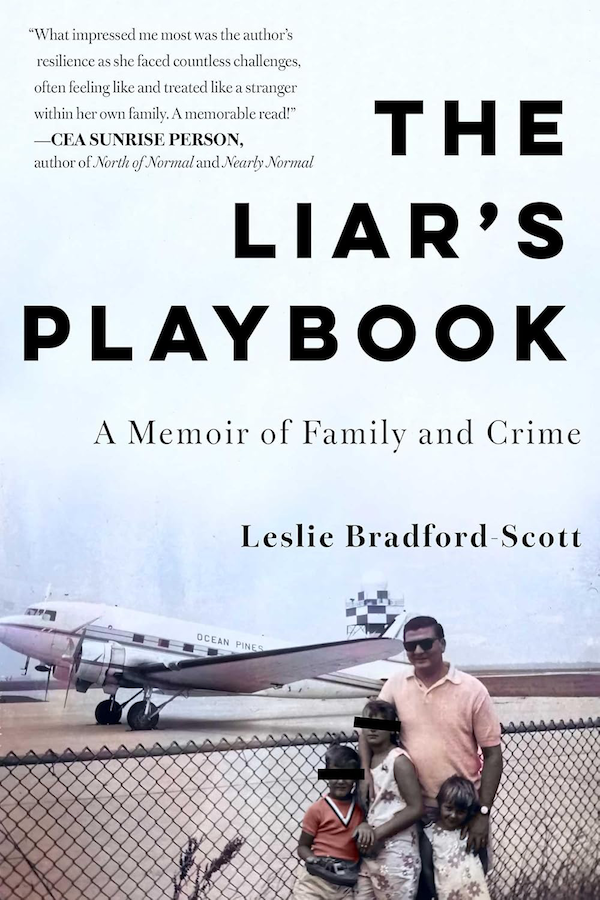
Leslie Bradford-Scott is an award-winning writer, entrepreneur, and author of The Liar’s Playbook (Simon & Schuster, May 2026). She lives in Roseneath, Ontario Canada in the little writer’s cabin of her childhood dreams.



Ms. Bradford-Scott, wow, just wow. Your piece is practical, thought provoking and provides me with the internal visuals to “check” my current manuscript for those Connections etc. Thank you!
Hi Mary, “Wow, just wow” is high praise indeed! I’m thrilled the train-car idea is useful in a hands-on way. For me, everything changed once I had a concrete visual to measure scenes against. Before that, I was laying track in random directions and calling it a novel. I’ll be cheering you on from the the platform as your story pulls out of the station. Leslie
Absolutely what I needed to read right now … a simple, constructive way to diagnose my scenes. Thank you.
Claire, that’s exactly why I wrote it. Scenes rarely need magic. They need clarity. You’ve got this!
This was definitely practical! And drew me in, because I’m writing a rom-com based on a train, so the metaphor was a good way to think about it! Now that I’m in revision stage, this is a helpful way to look at it, and I think my opening is on the platform— my original literally was, but even though I’ve now moved into the railcar, I think we’re still on the platform! Thanks! Back to the revision.
Hi Bridgitte,
Well, this must be the day for being literal because I was actually on a train from Prague to Vienna when I read your comment.
I’m so glad the train-car method clicked for you, especially with a rom-com set on a train. That feels almost suspiciously on theme. If your opening is still lingering on the platform, at least you know exactly what needs to move.
Also, full disclosure: I’ve been inventing an entire backstory for the couple sitting across from me. Writers truly never take a day off.
Happy revising. May your story depart on schedule. Leslie
The train is such a great visual for me! Sometimes, simpler is just better! Thank you so much! Pam
Hi Pam,
For years I over complicated things. Simpler is definitely better. Glad the visual works for you!
Keep chugging along, Leslie
Fantastic piece! So incredibly helpful. I’ve read and re-read your examples several times, and really admire your ability to condense and ‘get to the point’ quickly. I’m using this model to revise the opening chapter of my memoir. Thank you, Leslie!
Hi Susan, Screenwriting drilled that into me. Get in late, get out early, and trust the audience to keep up. I’m so glad it’s translating to the page. Wishing you a deeply fulfilling journey with your memoir. Leslie
As a newby, still working on completing a first draft, I truly appreciated the context provided by the final note. Excellent article all around. Thank you.
Hi Jenna, Glad it was helpful. Best wishes on completing your first draft! Leslie