
Today’s guest post is by author and social psychologist Anne E. Beall, Ph.D, author of The Compassionate Writer.
I’ll be honest. I wasn’t particularly interested in being compassionate. I just wanted to be a better writer. But as I kept getting the same kinds of comments, “This character doesn’t seem real,” or “You’re being overly judgmental,” I realized I had a writing problem.
This was especially true when I wrote about my mother. I tended to describe her as selfish and self-absorbed. She left my father when I was ten and married a man who was more successful. I blamed her for breaking up our family. I didn’t agree with her values. She wanted expensive clothes, fancy cars, and luxurious vacations. My father, who was a college professor, lived simply. He loved to read and write and wasn’t interested in being wealthy. On the page, I made my mother the villain I believed she was. But that wasn’t entirely true.
When I began to see her with compassion, she changed. And so did my writing. She had grown up in poverty. She had little education. And she believed the only way to obtain the lifestyle she wanted was through marriage. She didn’t believe she could provide that life for herself. And to be fair, she didn’t have great career opportunities as a woman with a high school education in the 1970s. When I began to see her more fully, in terms of her struggles and insecurities, she changed on the page. When I saw her as someone who longed for something better and made difficult choices, she became more real.
I also saw something else. She was not nearly as happy as she wanted others to believe. She had made a big decision to leave my father because she thought a wealthy husband would make her happier. Unfortunately, that life didn’t deliver what she hoped. Her new husband made it clear that the money was his and that he would give it to her when he chose. He used money to control her. I felt compassion for her. I was no longer looking at her through the eyes of a hurt child.
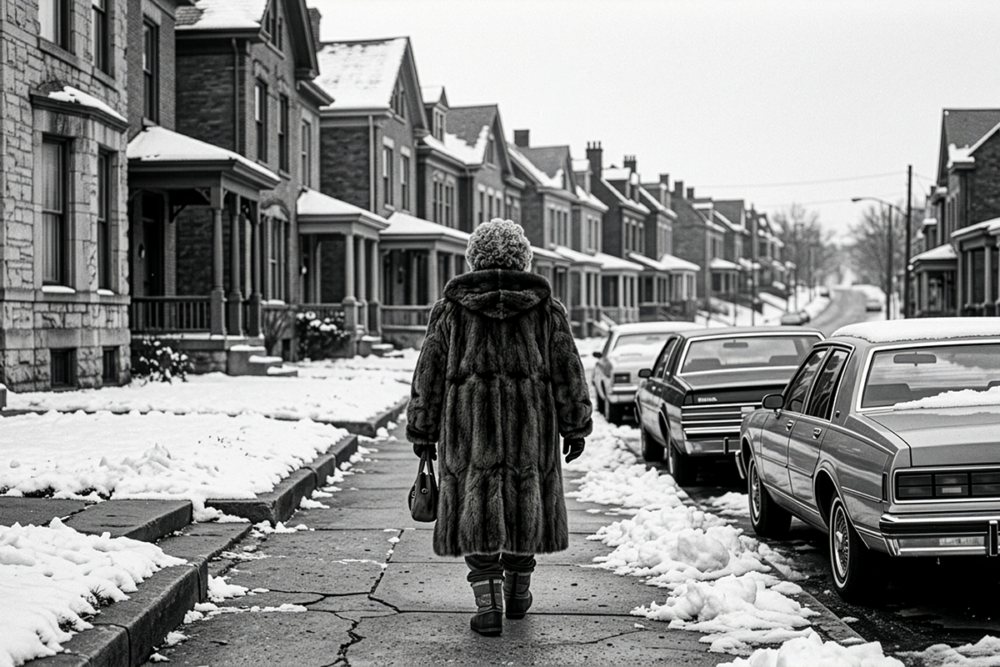
I wrote one piece about a mink coat that she received for Christmas shortly after she married my stepfather. I hated that coat. It represented everything I rejected about her new life—wealth and the display of it. It also represented her connection with my stepfather and the rejection of values my father and I shared. Over the years, I tried to encourage her to get rid of it. Silly, I know, but I did. It was the one thing she refused to part with, even after she stopped wearing it decades earlier. But as I began to view my mother with compassion, I saw the coat differently. It meant so much to her—a promise of security, a way to show she had “made it,” and something that would keep her warm on cold winter days. It represented her hopes. After she died, it was the piece of clothing I had the hardest time parting with because I finally understood what it meant to her and how those promises were, in many ways, unrealized.
The pieces I wrote about her began to get published in literary journals, whereas the prior ones were rejected. It was all in how I viewed her. And it made all the difference. I hadn’t made her more likable. I just portrayed her as more human.
It also allowed me to make some peace with my mother and to forgive her for the pain she had caused me. She was just like everyone else—flawed.
That same shift extended to how I wrote about myself. Memoir writers often struggle when revisiting moments they regret or times they’ve caused others pain. For a long time, I felt only embarrassment about some of my life choices and could not write about them. I’ve had a failed marriage and am estranged from stepchildren I raised for many years. All I felt was blame—from myself.
But as I came to view myself with greater compassion, I gained a deeper understanding. I thought about what I believed at the time and what influences were at play. I could see that the family dynamic was complicated, shaped by four people, and by the fact that the children’s alcoholic mother had died before I came on the scene. I could also see that my ex-husband and I did not share the same values, and that this created major challenges in how we managed the children and how they experienced the family. Although we were all trying to do the right thing and create a happy family, it was a complicated and ultimately impossible situation.
And once again, the writing deepened. Those pieces also found homes in literary magazines.
For a long time, I saw my inner critic as the enemy. Now I view it with compassion, and it’s made all the difference. I’ve come to think of the inner critic as something that, in its own misguided way, is trying to help. So instead of fighting it, I engage with it and figure out what it’s trying to do. In sessions I’ve conducted with writers, I’ve asked them to write a dialogue with their inner critic and explore its motivation. Who are you? Where did you come from? What are you worried about? What are you trying to protect me from?

Just answering these questions has helped many writers. They understand what they’re dealing with and can engage with that voice when it makes sense. For me, this understanding was a turning point. My inner critic is an amalgamation of harsh professors I had in graduate school at Yale who told us we weren’t smart enough. And I believed them. I think my inner critic has been trying to protect me from embarrassment, from the fear that those judgments might be right after all. Once I understood that, I set boundaries and used the inner critic to help me.
The truth is that writing is hard. It requires persistence, vulnerability, and a fair amount of rejection. But I believe that compassion makes writing easier, and more importantly, it makes the writing better.

Anne E. Beall, Ph.D., is an author and social psychologist who writes about the emotional undercurrents that shape our lives. She is the founder and editor of Chicago Story Press Literary Journal and the author of The Compassionate Writer. She holds a Ph.D. in social psychology from Yale—so yes, she can overanalyze your childhood.



Same.
An amazing piece and an even more amazing book – The Compassionate Writer. It’s a must-have for anyone who writes.
Thank you so much! I’m so glad you like the book.
What a beautifully written piece. Really loved reading it.
Thank you so much for reading it. I’m glad it resonated with you.
THIS IS WHAT IT’S ABOUT. We go to MFA programs, and we graduate with all these technical skills, but the MFA doesn’t usually tackle what’s really important. I’ve always argued for a more experiential MFA program: one that takes place outside the classroom, and organizes itself, and its emphasis, on the world beyond: people, places, encounters. My own work as a poet has taken a similar turn as this writer’s, into the world that comes into focus when compassion controls the lenses. We only get one life. The work of the poet, the work of the writer, the work of the artist — maybe the work of all of us — is to heal ourselves before we go about attempting to heal others. Thank you for this beautiful reminder.
Thank you so much for this… you are so right. The lens we uses changes everything.
Written with Anne Beall’s usual blend of clear and deep readability—with the added benefit of touching on an important truth: that we are all of us complicated and multi-faceted. Whatever helps us to write from this ground will make our writing better.
Thank you, Katrina!
Anne, a great compassionate post. Reminder of what is important in writing. My protagonist in historical fiction writing shows her compassion as a nurse. The plights of others, she takes on. Her husband’s dilemmas, she takes on. She takes on friends and people and gives them opportunities to succeed. The protagonist is me in an alternate life. I am an 87 year old, retired nurse practitioner. 📚
How wonderful! I love characters who are compassionate toward others. Thanks so much for reading this piece.
Great article. Many thanks.
Thanks so much for reading.
Life-changing advice. Thank you for this important concept.
Thank so much for reading it. I totally agree.
This really resonates, Anne. The strongest writing isn’t the most polished, it is the most honest, and compassion is what creates that honesty. When we remove judgment of ourselves and others, real connection happens and where the writing truly lands. Well done!
Thank you so much. I agree—honesty is essential, and compassion provides a lens where we can view things a bit more honestly. So glad this resonated with you.
This deeply resonates with me. As a fiction writer, my “mother” characters, mostly inspired by my own, used to be the villains/ most disagreeable of every story. It’s been fascinating to watch them soften as I’ve aged. It turns out that as I changed, the way I saw them changed, too.
So wonderful to hear. I’m glad your characters softened and that your compassion for your mother affected your writing. Thanks for reading.