
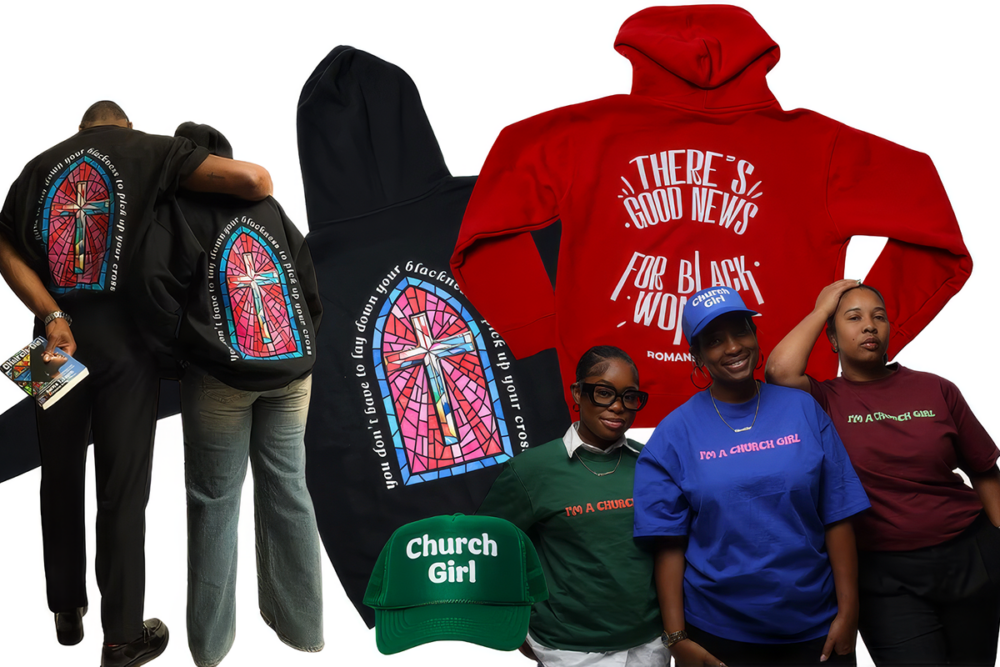
Today’s guest post is by Joel Carpentero, account manager with Tee Vision Printing.
Dr. Sarita Lyons didn’t reach out to us directly. Her manager, Amanda, did, and the first thing Amanda made clear was that this wasn’t a one-off order. Dr. Sarita was gearing up for a book tour, and she needed apparel that could keep up with her. Merch she could sell at events, hand to her audience, and reorder as the tour moved. She needed a printer who would treat it like a relationship, not a transaction.
That context mattered. When we know an author is building something ongoing, the whole conversation changes. Rather than quoting a single run, we’re figuring out how to set up the first order so the next one is easier.
The budget conversation you must have
Amanda came in with a number: she was hoping for $25 hoodies and $12 tees. That’s not unreasonable, but it’s also not what most people get when they price out a single design in small quantities.
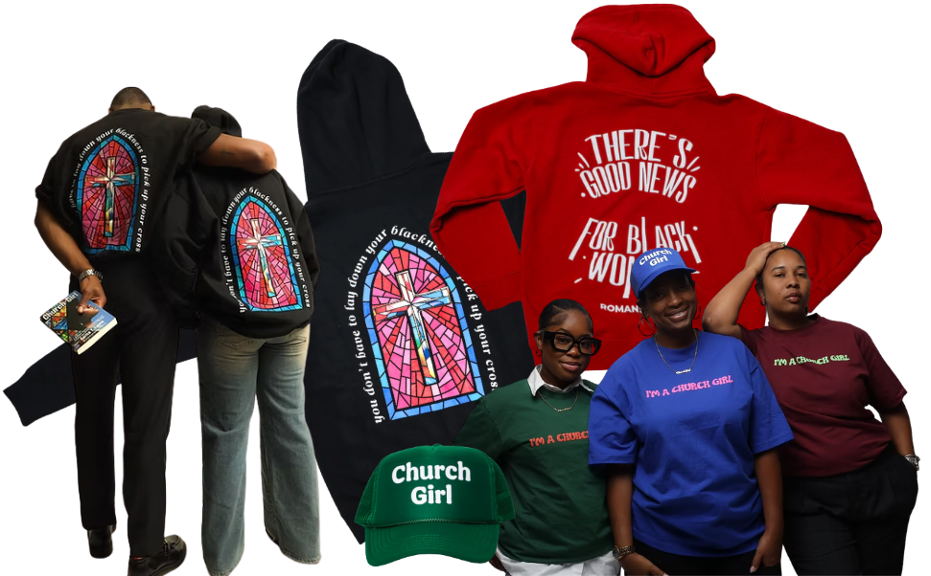
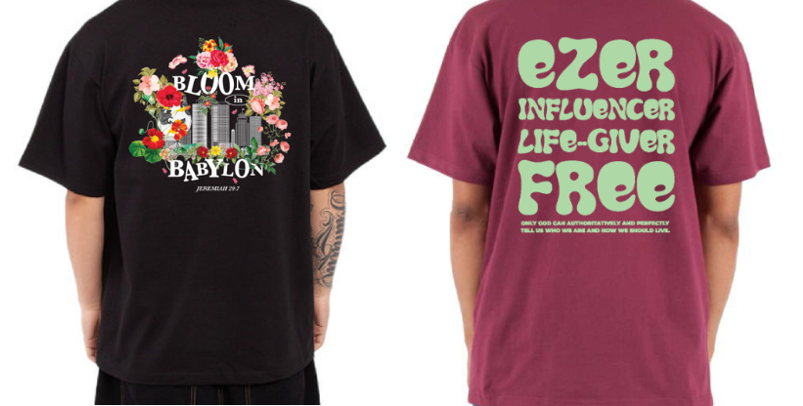
What changed the math was how we structured the order. Dr. Sarita had four distinct designs: Bloom in Babylon, You Don’t Have to Lay Down Your Blackness, I’m a Church Girl, and There’s Good News for Black Women, each going on different garments and colorways. Instead of quoting each design separately, which would have inflated setup costs, we treated it as a single consolidated order and charged additional designs as extra screens. That reduced the per-unit cost without affecting the quality of the garments.
The practical lesson isn’t complicated: tell your printer your budget before you start talking about designs, and tell them how many designs you’re working with at the same time. A good printer will find ways to structure the order around what you can spend.
Design complexity can change everything
Two of the designs, Bloom in Babylon and You Don’t Have to Lay Down Your Blackness, had multiple colors in the artwork. Screen printing can handle that, but at low quantities, it gets expensive fast because each color requires its own screen setup. We had to have an honest conversation with Amanda about whether to go DTG (direct-to-garment) on those, which handles color complexity without the setup cost, but doesn’t scale down in price the way screen printing does at volume.
For the I’m a Church Girl tees, Dr. Sarita specifically requested a puff print, a technique in which the ink is raised off the fabric, giving it a tactile, dimensional feel. That’s not a standard request, and it matters because not every printer can do it well. It also affects which blanks you can use. We went with the Shaka Wear heavyweight for most of the tees and the AS Color Classic for runs where Dr. Sarita wanted a more tailored fit.
These aren’t decisions you can make in a vacuum. They come out of a back-and-forth where you actually understand what the author is trying to do with the merch.
Don’t underestimate logistics
Dr. Sarita needed specific and tight turnaround—not easy when you’re talking about a multi-design, multi-garment order with proofs that need approval. During that process, Amanda caught a missing line item on the invoice, a colorway that had been left off, and we corrected it and sent updated proofs the same day.
That kind of back-and-forth is normal in a meaningful production relationship, and it’s not a problem. It’s just how orders work. The authors who struggle most are the ones who assume everything is finalized after the first email. The ones who do well treat it like a collaboration. They review proofs carefully, ask questions, and don’t wait until the last minute to flag anything that looks off.
What happened after the order
The Church Girl designs connected with Dr. Sarita’s audience in a way she hadn’t fully anticipated. The shirts started showing up organically on TikTok and Instagram. People were wearing them in public, sharing them in photos, tagging her. Her website started getting traffic from people specifically looking for the merch.
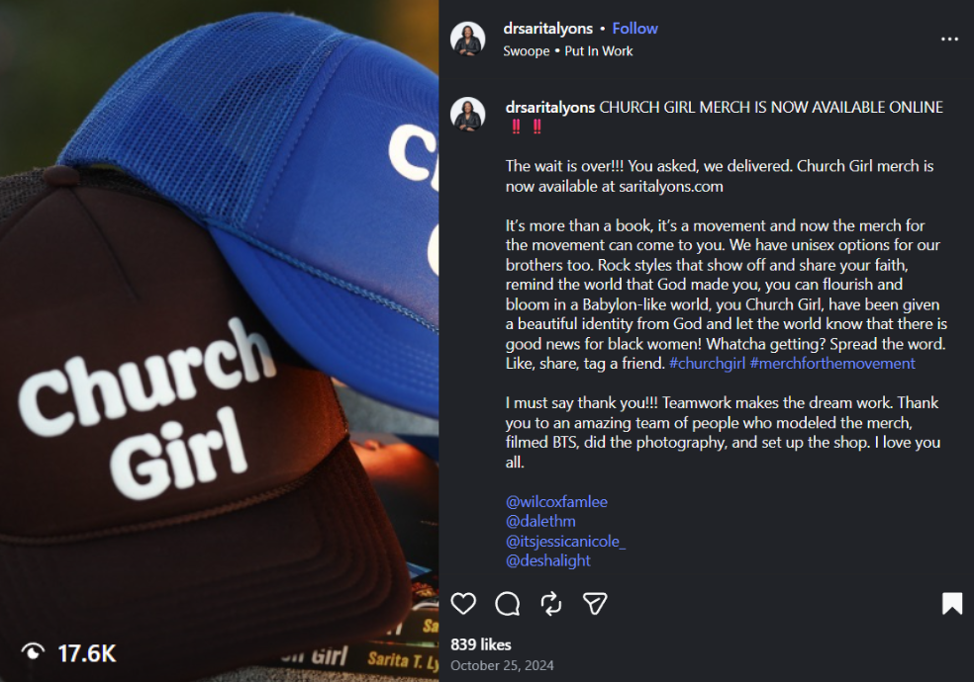
That’s the thing about physical goods that digital promotion can’t replicate. A social post disappears from a feed in hours. A shirt that someone wears to the grocery store keeps working. For certain audiences, especially tight-knit communities built around shared identity and faith, merch isn’t just swag. It’s something people actually want to be seen in.
Dr. Sarita ordered the first run as promotional samples. What she got was the start of something her readers actively sought out.
A few things worth knowing before you get a quote
If you’re an author thinking about merch for a book launch or tour, here’s what helps the process go smoothly.
- Share your budget first and be specific. Don’t wait to see the quote.
- If you have multiple designs, bring them all at once to save money.
- Know where the merch is ultimately going—in-person event merch, online stores, and reader gifts call for different things.
- Review your proofs line by line, not just visually. Check every colorway, every style, every size run.
- And if you’re planning to reorder, say so upfront, because it changes how the first run is structured.
If you’re in Philadelphia or need a printer that ships nationwide, look us up at Tee Vision Printing. Most conversations start with a budget and a rough idea. That’s enough.

Joel Carpentero is Account Manager—Inside Sales & Client Relations with Tee Vision Printing. He lives in Davao del Sur, Philippines.


I really appreciate this concrete and clear info about merchandise — the planning for it and the process to help make it happen smoothly. Knowing the questions that need asking is half the battle. Thank you.
I think wearable merch works better with non-fiction authors like Dr. Sarita, unless the fiction author is super well-known and their characters are immensely popular. That said, I remember a delightful detail: a reader once sent me a pair of earrings made with the cover of one of my books. I still have them 🙂