
How to Write a Great Story: A Roundup of Best Advice
A round-up of the best and most popular advice on writing craft and technique I’ve featured since 2010.

A round-up of the best and most popular advice on writing craft and technique I’ve featured since 2010.

Ultimately, concept is far less important than character when it comes to determining the overall quality of your story, but your audience is attracted to your story based on your concept alone. Does your concept have what it takes to draw people in?

When embarking on a process that is new or unfamiliar, often you don’t know what you don’t know. A checklist helps you recognize what you don’t know, so that many months later, you’re not beating yourself up for complete ignorance. Without further ado, here are some of my most favored checklists, from sources I trust.

Before you buy another pen-and-pencil set for that writer in your life, consider some gift options that take their digital lives into consideration.

Some stories require greater scope, more voices, or a different context than can be delivered through the eyes of one protagonist. When you find this to be the case, consider using multiple viewpoints. However, you must think about several factors before launching into this greater undertaking.
But being able to truly see if you’ve been successful in writing a compelling work requires objectivity and distance than can be hard to achieve on your own—and this is where a professional editor comes in.
This week, I was a guest on the Create If Writing podcast, discussing traditional and independent publishing.

The most successful people in every industry use goals as road maps to help them reach their desired destination. It’s no different for writers.

Getting traction for your online presence—especially a new blog—can feel like an impossible task when you’re an unknown writer. But it can be done.

Author Kurt Rheinheimer discusses how the most precious vein for material is from just before he knew who he was and what was going on.

If I could teach only one key to great writing, it would be this: Make every word count. Recognize the power of a single, well-chosen word. Trust it to do its work. As a rule, the more economically you use language, the more powerfully you will deliver your message.

There are countless ways to defeat ourselves, but the biggest and worst is to make the task too big and then feel daunted before we ever start
Watch my 30-minute talk on how to bring together the art and business sides of your career in a way that doesn’t feel like a bad marriage.

The No. 1 disappointment of published authors is the lack of marketing support from their publisher. Here’s how to prepare for what will—and won’t—happen.

Every action in your novel should be justified by the intersection of setting, context, pursuit, and characterization. They all need to make sense. They all need to fit. If you have to explain why something just happened, you’re telling the story backward.

If you want to sell books and have people read them, you have to meet other people and tell them about it. Learn the best networking strategies for people who hate networking.
Reddit is an online community where you can get your book in front of hundreds of thousands of readers for free. That is, if you have the right strategy.

A short-term marketing campaign is a series of strategies designed to reach a goal in a defined period of time, and include projects such as book launches. A short-term campaign has four definite phases: planning, pre-launch, launch, and follow-through.
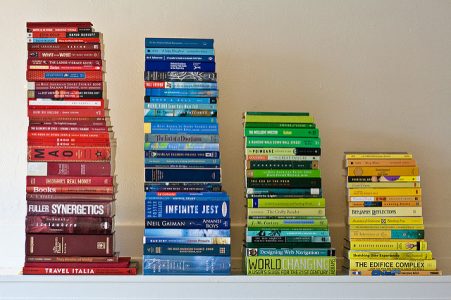
Book cover designer Joshua Jadon offers nine tips for creating a visually intriguing book cover.
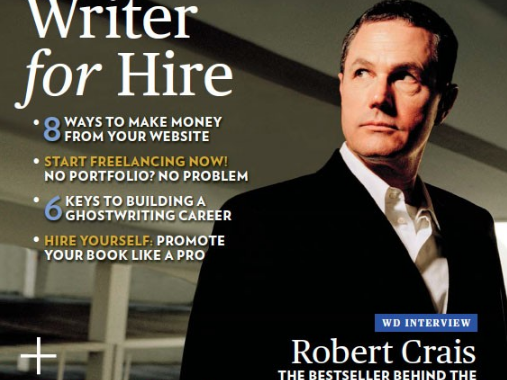
I’m proud to have a feature in Writer’s Digest magazine on how to monetize your website and blog. I detail eight methods.

Author Martha Conway discusses optimizing Facebook ad settings to ensure a realistic click-through rate, and her overall results with Facebook ads.

When deciding whether to write for free—or for exposure—here are 5 questions writers should ask.

Last year, I began regularly contributing to Publishers Weekly on the topic of independent authorship and publishing. Here’s a list of all my columns so far:

Just about every writer would love to have more readers—more readers of their books, their blog, their articles, or whatever creative work they’re producing. But few writers have given much thought to having a call to action that’s associated with their work.

If you want to be successful at selling today, you need to quit pushing your needs (please buy my book) and messages at potential readers and concentrate on figuring out how to pull them in by putting their needs above yours. Give them something valuable.

Author Melissa Yancy shines a new light on what failure brings to the writing life—and it isn’t the usual reflection on rejection.
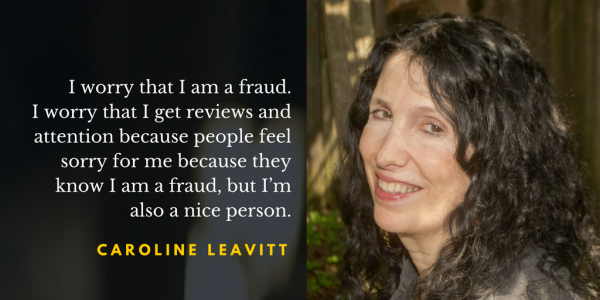
Author Caroline Leavitt reveals the fears behind her middle-of-the-night writer anxieties, the contents of her colored book tour folders, her reaction to the praise her latest novel is receiving, and more in this 5 On interview.

Traditional publishers are experiencing a slump, and the decline of Barnes & Noble isn’t helping. A look at news and trends in book publishing in 2016.

Social media and marketing expert Andrea Dunlop lists five questions you should ask yourself when starting to plan your book launch.

Kirsten Oliphant explains how to reach out to others who can help you build your author platform and how to generate a great pitch for collaboration.

Author Robert Wilder explains the concept of pods (spheres of influence) and how to use them to help promote your book.

Author and social media expert Frances Caballo discusses the CARE acronym and how to use it to guide your interactions with readers on social media.

Author Daniel Parsons offers five tips for improving your Twitter interactions as a creative professional.

When writers talk about where their ideas come from, the answers are as varied as wildflowers
The way we write can define (and transform) the way we live. Author Sage Cohen believes ferocity is our best compass for finding our true way forward.

You can find depths of meaning in the shared language and goals you’ve developed with the writers around you.
Author and social media expert Kirsten Oliphant explains how to manage your platform-building activities on social media sites.

How do you treat subscribers after they sign up for your email newsletter? An autoresponder can usefully and effectively welcome people to the community.

Author and freelance editor Maya Rock offers six pointers for vetting a freelance editor.
Author and speaker Dorit Sasson offers tips on how to build author platform through local speaking engagements.

Pop-ups have long been despited by the Internet world, but the difficulty is: They work. Here’s how to implement them in a way that won’t annoy visitors.

Sangeeta Mehta interviews agents Bob Mecoy and Kristin Nelson about how agents can assist the hybrid author.

Writing coach Angela Ackerman discusses how influencers can help you market your book, how to identify potential influencers, and how to reach them.

Why are we so curious about authors’ own lives in relation to their books, and the ways that they do (or don’t) bring their own stories into their work? Why do we wonder what’s “true”?
Before you can take someone else’s advice, you have to develop a realistic picture of who you are, what your tendencies are, and what you’re willing and able to change.

Author and editor Jessica Strawser offers guidance on how to write through illness, grief, and other major life events.

Author platform is one of the most difficult concepts to explain, partly because everyone defines it a little differently. Here’s what agents and editors mean by platform, plus a clear definition of what platform is NOT.

Kirsten Oliphant discusses various ways to grow your email subscriber list.
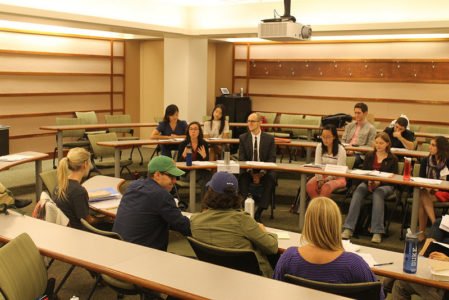
Most writers want an MFA for one of three reasons: They want to teach writing, they want to get published, or they want to make room in their life for writing. It turns out these reasons for doing an MFA are actually based on myths.
