
Free


Writing Fiction: Does It Feel Indulgent?
In the literary fiction world, it’s often taken as an article of faith that writing is an intrinsically important activity to be engaged in. Is it?
A Warning About Writing Novels That Ride the News Cycle
Thriller author Todd Moss discusses the pitfalls of using current events as the basis for a novel.

The Author Website: Your Central Marketing Hub
The primary function and value of an author website is marketing related.
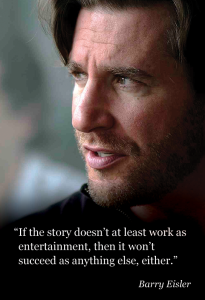
5 On: Barry Eisler
Author Barry Eisler discusses the pros and cons (where they exist) of legacy, Amazon, and self-publishing; research and editing; selling book rights; and more.

A Former Book Publicist’s Advice to Traditionally Published Authors
Andrea Dunlop, a former Doubleday publicist, discusses how to approach a book launch from a publicist’s point of view.
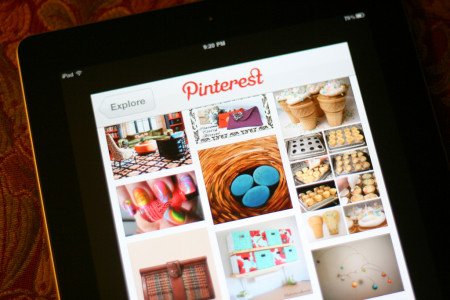
Pinterest for Authors: A Beginner’s Guide
Learn four reasons writers might want to use Pinterest, how to best use the platform, and best practices to get the most traction for your work.
How to Find and Work With a Book Publicist—Successfully
What every author needs to know before they hire a publicist, and how to work with one successfully.

Storytelling Across Media: Q&A with Agent Laurie McLean
Agent Laurie McLean discusses the platform and book launch strategy for author/musician Simon Curtis.
Selling Your Books Internationally
Helen Sedwick and Orna Ross discuss selling international rights to your book.
5 On: Reggie Lutz
Author and radio broadcaster Reggie Lutz discusses her tendency as a writer to synthesize fiction genres, recommends qualities to look for in a writing critique group, offers advice on pitching and interviewing with radio hosts, and more.

Author Collectives and Co-ops: What They Are and How to Start One
Writers’ collectives can help independent authors gain an advantage in quality, cost control, and marketing.
Are Paid Book Reviews Worth It?
The majority of authors will not benefit from paid book reviews, and should invest their time and money elsewhere. Here’s why.

5 Steps to Creating a Great Audiobook
Jay Swanson, the creative mind behind real-time fantasy blog Into the Nanten, explains how to develop a compelling audiobook.


5 On: April Eberhardt
Literary agent and publishing consultant April Eberhardt discusses effective book promotion, what makes writing exceptional from a publishing perspective, her preference for representing women’s fiction, and more in this 5 On interview.
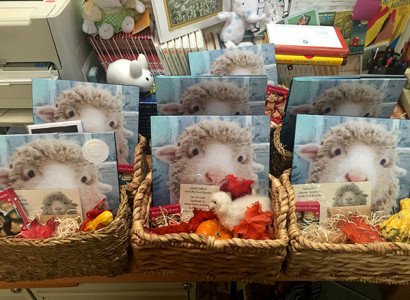
Shepherding a Self-Published Picture Book to Success: A Conversation with Literary Agent Brenda Bowen
Sangeeta Mehta interviews agent Brenda Bowen about the success of the children’s picture book Sweet Pea & Friends: The SheepOver.


Digital Publishing and Authorship in 2016: A Discussion with Joanna Penn
In conversation with Joanna Penn, I discuss digital publishing trends and what authors need to know as they head into 2016.
How to Find and Work with Beta Readers to Improve Your Book
Editor and writing coach Kristen Kieffer discusses how to get the best out of a beta-reader experience.

Details Help Writers Overcome Their Fear
Memoirist Benjamin Vogt discusses how evoking sensory details in writing can banish a writer’s fears.

How Writers Can Craft an Effective Setting
Setting is often an afterthought when writing a scene, but it can affect characterization, tension, pacing—and more. Bestselling author Mary Buckham shows how to create effective descriptions for any type of narrative.

5 On: Patrick Walsh
Book publicist Patrick Walsh discusses effective social media promotion, what it takes to make the same old book-marketing advice work for you, questions to ask yourself when trying to decide whether your story should be a book or a screenplay, and more.

How Writers Can Optimize Their Book’s Description on Amazon
Author and editor C. S. Lakin offers guidelines on crafting your Amazon book description to maximize sales.

What Does It Mean to Read Like a Writer?
Learn what it means to see and read the world in terms of narrative design.

Traditional Publishing: What’s It Good For?
No one used to question the value of a publisher, but now everyone’s wondering: What are they good for?

How to Write a Query Letter: Nonfiction and Memoir
Learn how to pitch your nonfiction book to agents and publishers—whether you’re writing memoir, narrative nonfiction, or prescriptive nonfiction.
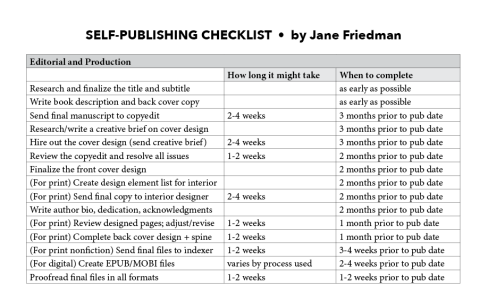
The Self-Publishing Checklist: Editorial, Production, and Distribution
This printable and interactive checklist guides your self-publishing project to completion, to ensure you don’t miss any important steps and to help you hit your target pub date.

5 On: Ashley Scott Meyers
Screenwriter Ashley Scott Meyers (@AshleyMeyers) discusses the critical writing lesson he learned over time, what it takes to make a living as a screenwriter, and what it felt like the first time one of his scripts was produced

5 Industry Issues for Authors to Watch in 2016
The most important publishing industry headlines and stories that every writer should keep an eye on in 2016.

Best Practices for Author Facebook Pages and Groups
Kirsten Oliphant discusses how to effectively use Facebook pages and groups.
Overcoming My Fear of Twitter
Chris Jane, who writes the biweekly Q&A series 5 On, discusses overcoming her fear of joining the Twitterverse.
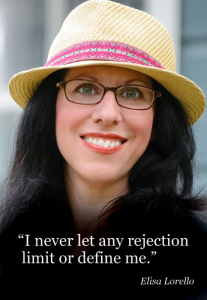
5 On: Elisa Lorello
In this 5 On post, bestselling author Elisa Lorello discusses authenticity, using social media to connect with readers, rejection, and the differences between self- and traditional publishing.
The Myth of the Everyreader
Editor and writing coach Rebecca Faith Heyman discusses myths surrounding appealing fiction, YA novels, and readership.

How to Use Facebook Contests & Giveaways to Build a Fan Base
Social media marketing expert Chris Syme discusses how to use Facebook contests and giveaways to turn fans into super fans.

Do Men Receive Bigger Book Advances Than Women?
Do males or females receive higher advances? I look at Publishers Marketplace deals data to find out.
The Secret to My Productivity, Or: Thoughts About Luxury and Privilege
I’m often asked: How can I be so productive? Or how does one balance creative work and other life demands? Here’s the most truthful answer I have.
The Sussman Productivity Method
For every 45 minutes that you write, do 15 minutes of something else. But there’s one catch.

Engaging Audiences through Twitter in 15 Minutes a Day
Writer and blogger Kirsten Oliphant explains how to build your platform on Twitter in only 15 minutes a day.

The Agent’s Role in the Digital Age: A Conversation with Jessica Faust
Literary agent Jessica Faust discusses how she helps authors self-publish.

The Big Reason Why Agents and Editors Often Stop Reading
Agent Paula Munier explains how to imbue your writing with narrative thrust to keep your readers turning the pages.

5 Ways to Use Instagram as an Author
Writers Tee Morris and Pip Ballantine explain all the ways authors can use Instagram to build their readership.

3 Ways You’re Sabotaging Your Chances with an Agent
Editor and writing coach Rebecca Faith Heyman discusses three ways you might be sabotaging your prospects with an agent (and how to improve your chances).
The Fatal Flaw in Weak Descriptions
Author and editor Rachel Starr Thomson explains how to use descriptive detail to illuminate character and move plot forward.

Magazine Writing: How to Break In at the Very Top
Writer and editor Zachary Petit discusses breaking into the freelance market with big-name publications.
The Basics of Point of View for Fiction Writers
Writer Joseph Bates explains all the point-of-view options for your novel and how to choose the best point of view for your narrative.
Can You Promote a Book without Making Yourself Miserable?
Author Ed Cyzewski offers insight into building authentic, sustainable practices in book marketing and promotion.