How to Grow an Email Newsletter Starting from Zero
Here is a step-by-step guide to building an email list of thousands within one year—primarily through giveaways and Facebook ads.

Here is a step-by-step guide to building an email list of thousands within one year—primarily through giveaways and Facebook ads.

Voice: It’s either there in the writing or it’s not. And some writers haven’t developed or “found” their voice yet.

One of the hardest things to do—for any individual, organization, or business—is to define a vision and strategy. It involves diving deep into one’s strengths and weaknesses, and understanding the market opportunities and threats. Talking strategy usually means dealing with uncomfortable realities, as well as risking disagreement with others.

If a character is repressing an emotion, real-world behaviors can show it. Readers will catch on because they’ll recognize their own attempts to hide their feelings.

When I finished my biography, I studied how to get it published. Websites advised: platform, platform, platform. But I had no relevant background. Now what?

While it’s possible to write memoir from your own authorial POV (because you know more today than you did then), the most engaging memoirs are ones in which the author sticks to their POV at the moment of events.

Although the world of submissions can be complex and expensive, balancing your submission budget doesn’t have to be. Here are some tips to help you minimize expenditures and maximize profit.

Writer Anthony Doerr once told me something his father told him, and I’ll paraphrase it poorly here: You’re going to get your neck sunburned looking up all the time.

Before writing a scene, determine what type of scene it’s going to be. Will it be a narrative scene? High-action scene? Low-energy dialogue scene?

Building a supportive network takes time and courage. It’s worth starting to cultivate community early on, even if your instinct or preference is to work alone.
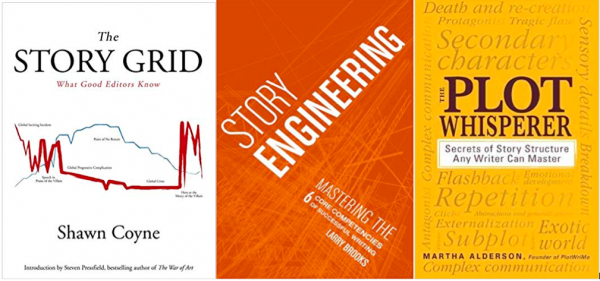
Plot and structure books aren’t necessarily calling for adherence to a formula—in fact, they warn against it. Here are 3 story planning methods to consider.
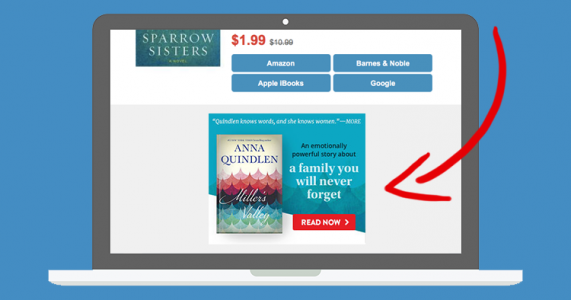
Many authors use Facebook and Amazon to advertise their books. If you’ve tried these platforms without success or hesitate to spend the money, consider experimenting with BookBub ads.

If you’re pitching a nonfiction book, at some point, an editor or agent will expect you to describe the readership that your book is intended for.

Focusing on the smallest thing you can accomplish: this is the magic trick to making progress or getting unstuck.
If you’re a writer, how do you know if it’s worth the risk of leaving your current agent? Does past representation impede your ability to find a new agent?

When you understand your SWOT as an author, you can take control over your time. You can stop fighting fires, and start focusing on the things that will truly help you in the long run.

How do you describe a character with Asperger’s—especially if your story takes place before such a thing had a name?
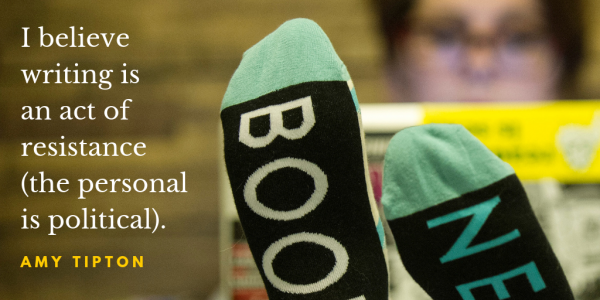
Freelance editor and former literary agent Amy Tipton discusses her love of young adult and middle grade fiction, the “unlikable female character,” whether agents who don’t want a manuscript will be likely to pass it along to an agent friend, her personal editing style, and more.

Meaningful swag offers the reader something connected to the book and something that’s memorable—but you need something that doesn’t break the budget.

The irony of commitment is that it’s deeply liberating – in work, in play, in love. The act frees you from the tyranny of your internal critic,

I regularly read and report on marketing trends that affect traditionally published and self-published writers. Today I’m sharing the most useful articles I’ve found and shared thus far in 2018.

Misconceptions pervade popular science fiction. Many, if not most, could have been avoided if the writers spent some time doing research.

Readers start their journey to find new books in a broad sense, but eventually gain experience and understand more about what they are looking for. By understanding the awareness level of a reader, we can better position our books and gain long-term fans.

It can be challenging to make back the cost of your books and the price of a table when exhibiting at a book festival. So, finding cheap but cool things to use at book events is essential.

Publishers and authors can use sophisticated language to describe books—to sound unique, clever and smart. But readers describe books in more direct ways.

When children cannot find themselves reflected in the books they read, they learn a powerful lesson about how they are valued in society.

How do you navigate the writing life when you have an intense day job? Does such a thing as work-life balance exist?

Novelist Cai Emmons discusses how a van tour to meet booksellers in person helped her overcome her timidity toward book marketing.
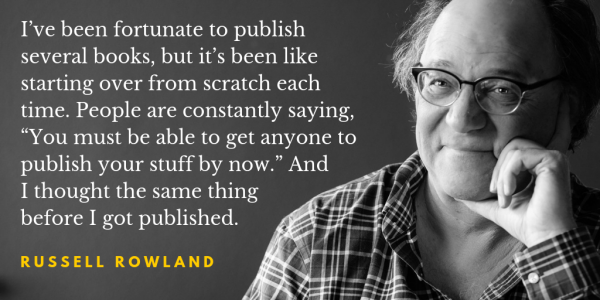
Author Russell Rowland discusses the big mistake he made with HarperCollins, whether the journey of writing is truly its own reward, why his Indiegogo campaign worked so well, and his experiences with publishing—from one of the Big 5 to self-publishing.

No matter how many books have been written about a topic, there is probably some important facet that has not yet been covered thoroughly or well. A key driver behind success is understanding how you fit into the existing landscape, what distinguishes your work, and why it is likely to appeal to a particular audience.

Do you write write according to your own internal motivations or creative impulses—with the intention to create serious art—or do you write hoping to create a bond between writer and reader?

Younger generations (and older ones!) flock to Instagram for its feed of beautiful pictures. So how can writers use Instagram to their benefit?

Public speaking skills are more akin to musical or athletic skills than intellectual knowledge alone. Mastery does not take place simply in your brain; it takes place in your body, in the “doing” of it.

Writing a novel requires the creation of a living, breathing, fully populated world. Deities can pull off a trick like that in six days, but how long should it take to write a book?

Learn how to simplify the writing process for how-to books and write them in a way that provides maximum value in an information-filled world.
A trade distributor is a partner company who takes over the tasks and responsibilities of selling your books to trade accounts like bookstores and wholesalers.

Few of your readers care about what you know, no matter how many years you have spent accumulating that wisdom. They care about what they need or want to understand.

For beginning fiction writers, focusing on place is one of the easiest ways to improve stories that aren’t quite working.

I’ve been air-quoting “reading” since my first legitimate introduction to audiobooks this past winter.

A checklist for repackaging and republishing your own backlist after you get rights reverted from your traditional publisher.
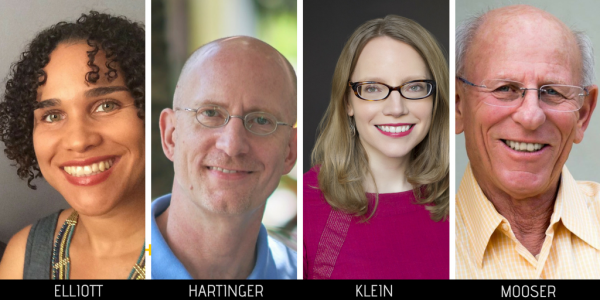
A Q&A on children’s self-publishing with authors Zetta Elliott, who has released several books under her own imprint, including picture books; Brent Hartinger, who self-published a young adult series and a new adult series; Cheryl Klein, the author of a self-published a work of nonfiction; and Stephen Mooser, who released a middle grade book on his own.

For every new venture, there is a learning curve. When it comes to self-publishing your book, however, that curve can be steep.

I used to laugh at the “Christmas-in-July” ads until I promoted my first holiday-related book. We actually started the promotion in July, and July turned out to be the perfect time.

Subplots help you pace your story and keep the tension rising. Unfortunately, the name “subplots” wrongly suggests they are somehow inferior or substandard.

Broadly, traditional print book sales continue to grow at about 2 to 3 percent per year, but growth is driven by nonfiction, backlist titles, and children’s/YA. Fiction sales have been flat for several years now, with frontlist fiction down 5 percent due to a lack of big titles.

I don’t trust author-income survey results and I question their usefulness in improving the fortunes of writers. Too often it feels like propaganda from writers’ organizations, with the outcome boring and predictable.
Rule No. 1 for flashbacks: until and unless you’ve invested us in a scene, don’t flash back (or away) from it! The point of a flashback is to illuminate the scene from which it digresses, to add dimension and tension to it.