
How to Evaluate Small Publishers—Plus Digital-Only Presses and Hybrids
As the publishing industry has transformed in the digital age, small press activity has proliferated. Here’s how authors can evaluate their offerings.

As the publishing industry has transformed in the digital age, small press activity has proliferated. Here’s how authors can evaluate their offerings.

To some degree, we get to pick and choose our publishing and publicity tasks. Sometimes we forget this and freak out because we think we have to do it all.

In many ways, a portrait photographer encounters the same great issue as fiction writers, chiefly, creating and revealing character.

It’s one thing to know how to setup something technical like an advertisement, an email system, or your book’s sales page on Amazon. However, crafting them so a potential reader will take action is something else.

A problem with fictional dreams is that they ask us to invest emotionally in an experience only to have that investment rendered null and void when the experience turns out not to have been real.

Unless you are Harper Lee, you are probably going to launch more than one book during your career. For the introvert, learn six ways to keep your head above water not just for your first book, but also for the long haul.

Silence—or, in fact, just saying less—is an art that can be strategically practiced by authors who seek attention. It is also a critical strategy when trying to influence people who hear about new books all day, every day.

On the whole, stories are about change. And scenes are a boiled down, less intense, mini-story. They should do the same thing your global story does: upset the life value of the character and put them on a path to try and restore it.

Writing about addiction is tricky business. While most stories have a single protagonist, addiction narratives are usually about two people: the addict deep in the throes of their addiction, and the recovered narrator looking back objectively on the experience.

Despite the notion that we are voiceless, the challenge of a good creative writing instructor is to teach students that they do indeed have a voice and that their voice, that all our voices in concert, have meaning.

Now and then my students and I broach the unavoidable question: What makes a work of art? The question can be stood on its head: What makes art work? They’re the same question, really, with (to me, anyway) the same answer: a true work of art is something that doesn’t merely elicit our emotions. It confronts us with emotions that don’t quite fit into any of our ready-made boxes.

It can happen to you. Your carefully built author business and your reputation can come under attack and threaten to disrupt your livelihood and your personal life. But you can help prevent a crisis in the first place by using some simple engagement strategies.
Hiring an outside publicity firm is a big decision, and knowing what to expect on the front end can help you make the right selection and get more out of the experience.

The only stories that matter are those we inhabit personally, not just with our minds, but through our senses. Remember: the fiction writer’s job (or that of any storyteller) isn’t to report experience, but to create it. And experience is processed in the mind by way of the senses.

If you’re determined to transition readers quickly through various scenes occurring at discordant times, skillful handling of tenses, and particularly of the no-longer-taught past perfect or pluperfect tense, becomes vital.

Some story openings happen to get the author’s pen rolling, to blow some warmth onto the icy blank page, to get the narrative blood flowing. Those not charitably inclined will call it “throat clearing.” However it’s characterized, throat clearing should be cut. It’s there for the author, not for the reader.
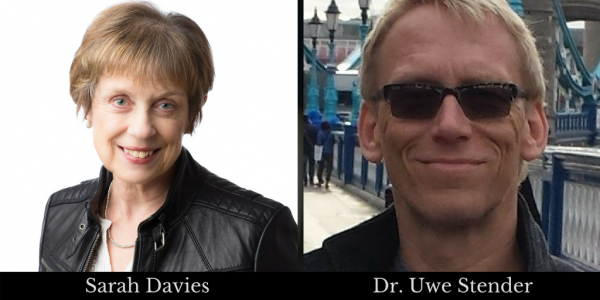
Seven-figure deals seem to be given to more 20-something debut writers than debut writers in any other age group, yet Pulitzer Prize winner Annie Proulx started writing at 58—and Frank McCourt began writing in his 60s. Were these writers more talented than younger writers trying to break in at the same time? Or has the industry started gravitating more toward younger writers in recent years? Two literary agents, Sarah Davies and Dr. Uwe Stender, offer their thoughts on the publishing industry’s attitude toward age.

Book relaunches can take a variety of forms. If done right, they enhance your overall brand, as well as your book sales. Their first and foremost benefit is the new publication date. Having a new book opens up access to bloggers and media who might not have been available to you with an older book.

Where to begin? Of all the questions that harass novelists and others with a story to tell, it has to be the peskiest. The question comes down to structure. Not what happened, i.e. the series of events that make a story, but the order in which those events are conveyed.

In many ways, it’s never been harder to get a traditional book deal. At the same time, there have never been more ways to establish a career as an author.

Violence can be too sanitized, too tamed into a generic, pre-packaged mold, and so it can’t yield the kind of interesting questions or meditations readers crave, and writers must eventually confront.

Writing for businesses is a way for skilled writers to earn a good, dependable income. Someone is responsible for writing all the websites, brochures, and marketing materials out there. Why not you?

Sometimes everything we need for our story openings is there, more than we need, in fact. It’s just a matter of cutting and rearranging.

“If you build it, they will come” is the biggest crock of sh*t ever foisted. The second biggest is my own mental script: “If I write it, The New York Times bestseller list will come.” Nope. Wrong answer.

With modifiers, you want to choose your battles. Just because every noun offers itself up for modification(s) doesn’t mean you should modify it. Think of adjectives as ketchup or hot sauce; put it on everything and it quickly wears out its welcome.

“True” suspense raises the question, “What’s going to happen next?” It arises organically and authentically from characters and their actions as conveyed to us through a firmly established, consistent viewpoint. “False suspense” is generated by an author who, intentionally or otherwise, withholds information.

Over the last month, I’ve been talking (and writing) about how to build a business model for career that suits your particular strengths as well as the unique quality of your work. Here are my latest appearances.

Telling readers what to think or feel is the job of a propagandist. A storyteller’s main purpose, on the other hand, is to create experiences for the reader, to involve us so deeply, so convincingly, so authentically in those experiences that we feel what characters feel.

Many people I know are ambitious about their writing. Ambition is not bad in and of itself. But it definitely interferes with your writing. If even before you begin a writing project, you are thinking about where you want it to be published and who, you hope, will review it, you are opening the door to anxiety.

Routine is important. Without routine the extraordinary events that make for a plot have nothing to work against or to set them into relief. But that routine also needs to evoke character to make us feel something.

A smart and strategic author should evaluate their platform strength on three levels: (1) ability to reach new readers, (2) ability to engage existing readers, and (3) ability to mobilize super fans.

When a character “change” feels beautiful, it’s because the character has confirmed what we’ve hoped or suspected all along. Maybe the character hasn’t changed at all, but rather has finally been put in a situation where her truest self can be revealed.

As writers, we’re always either setting up some moment or scene, or paying it off. Since scenes are the building blocks of narrative, we should always be writing scenes.
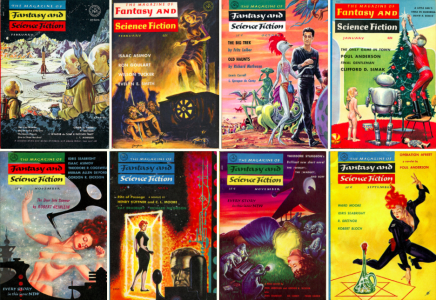
While fairy tales are ancient, dating back to the Bronze age, fantasy turns out to be a revival movement, rising from the grave of the recent dead. Mention of the word fantasy is minimal through through the twentieth century, with some peaks here and there depending on your source. Around 1945, fantasy took flight, soaring up and up, well into the twenty-first century. Why the change? What summoned the word fantasy back to life in 1945?
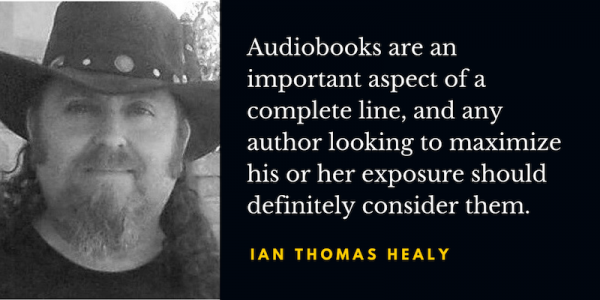
In this 5 On interview, author and publisher Ian Thomas Healy shares what he learned from his experiences with literary agents, what to look for when submitting to small press publishers, his feelings about Amazon KDP Select, and more.

First and foremost: Set realistic goals. Is this book going to change your life? No. After publication, you will not be a different fifty-plus-year-old person. You will be pretty similar to the person you were before, only this fifty-plus-year-old person has written a book. So ask yourself: What are you hoping to get out of the experience?

Literary fiction’s subsumption by other genres and vice-versa has become so pervasive one must wonder what distinction if any can still be claimed by “pure” literary fiction beyond pretentiousness.

In 2014, I made the leap from conventional employment to a full-time freelance career. Here’s how I did it—and what I earned, down to the dollar.
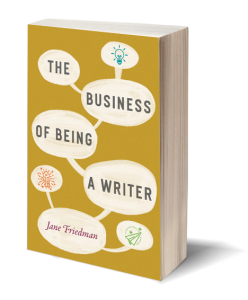
My newest book, The Business of Being a Writer (University of Chicago Press), takes it on principle that learning about the publishing industry can lead to a more positive and productive career. It helps writers feel empowered and confident to navigate an ever-changing field.

Why should you care that there are only two story types? It actually matters. Like a chef, knowing what defines the concoction you’re about to create will help you figure out how to make it work. And how to stop it from failing.

One reason behind the supremacy of the writing rule “Show, don’t tell” is that telling is, frankly, harder. To gain and hold a reader’s attention through action and dialogue is one thing. To do so through exposition is another.

For AWP 2018, I hired a team of writers to help me cover business-related sessions, as part of the launch for my newest book (official release date: March 16). Their blog posts are available over at the companion website for the book.

Sometimes going back is going forward—especially if you refashion the old, sloughing off what became untenable. This is why I’m going back to blogging. While every writer won’t find my reasons of interest, plenty of writers might want to explore their possibility.
To those who may object that the mere fact of two opposite-sexed people sharing the first scene of a novel (and a cockpit) doesn’t—necessarily—imply a romantic future between them, all I can say is … yes, it does.

If your readers are going to put themselves in your skin and live your experiences, you need to be hyper-conscious of what those experiences looked, felt and sounded like before you write them.

Writer Jane Delury discusses the importance of showing up and writing regardless of the conditions you find yourself in, no matter how you feel.

I have had mixed feelings about ghost narrators. As narrative sleights-of-hand go, it strikes me as a little too easy, a bit too glib. It also requires suspension of all four laws of thermodynamics.

When I began working as a freelancer, I wanted to find clients to pay me in the thousands. Once I figured out how to land writing jobs, I was working long hours, always seeking more clients, and somehow still getting paid next to nothing. I was missing something on the business side of things—an essential piece of the puzzle.

When we read about routines in fiction, or in any kind of story, most if not all the pleasure we get from the experience derives from our anticipation of seeing the routine shattered, or, at the very least, disrupted.
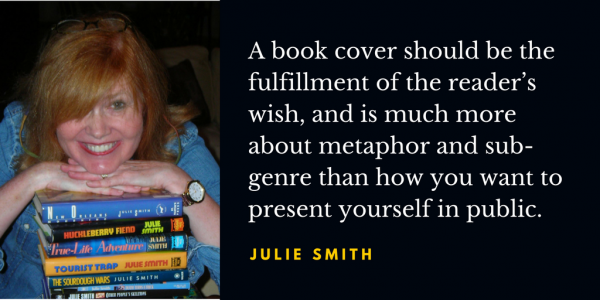
Author, publisher, and book marketer Julie Smith shares what she loves to write—and read—in a mystery, how her writing obsession evolved into marketing, the mistake many authors make with their book covers, and more.