
As a creative writing student—both undergraduate and graduate—I encountered two predominant philosophies among my professors. (This is stereotyping to some degree, but stick with me for a moment.) One philosophy says: You have to write according to your own internal motivations or creative impulses. If you’re serious as an artist, you’re not thinking about the reader or the audience—doing so leads you astray from the purpose of art, which may discomfit or challenge the reader.
The other philosophy is more concerned with establishing a relationship with the intended audience. How would readers react to or be engaged by the material? How do you create a bond between writer and reader? How much can you demand of them?
Here’s another stereotype: the more literary the work, the more likely the author ascribes to the first philosophy. The more commercial or genre-driven, the more likely the author has concern for the reader.
But that’s not to say the two approaches don’t co-exist in the same author or in the same work. I was reminded of this when reading Victoria Alejandra Garayalde’s piece in the latest Glimmer Train bulletin. She writes:
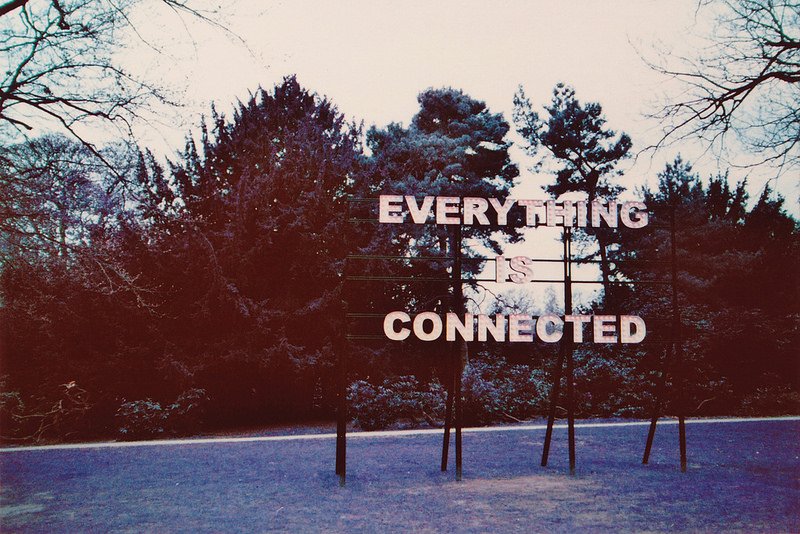
Mostly, I write because I need you and see you, and I write out of the desperate and fragile hope that you might see and need me too. I see writing as a way for me to create a path of connection to others, to this life, and to myself. It’s not easy to forge a path through all the debris of self-doubt, fear, self-hatred, and outside messages of selfishness and expectations. This is why I write in the mornings, because that is when anything and everything feels possible—or at least enough to warrant an attempt.
Read her full essay, I Write for You?
Also this month in Glimmer Train:
- Vast by Valerie Trueblood
- The Curious Border Between Fiction and Nonfiction by Nellie Hermann

Jane Friedman has spent her entire career working in the publishing industry, with a focus on business reporting and author education. Established in 2015, her newsletter The Bottom Line provides nuanced market intelligence to thousands of authors and industry professionals; in 2023, she was named Publishing Commentator of the Year by Digital Book World.
Jane’s expertise regularly features in major media outlets such as The New York Times, The Atlantic, NPR, The Today Show, Wired, The Guardian, Fox News, and BBC. Her book, The Business of Being a Writer, Second Edition (The University of Chicago Press), is used as a classroom text by many writing and publishing degree programs. She reaches thousands through speaking engagements and workshops at diverse venues worldwide, including NYU’s Advanced Publishing Institute, Frankfurt Book Fair, and numerous MFA programs.



[…] via Writing for Connection Brings Both Hope and Fear — Jane Friedman […]
Can’t believe no one has commented on this one.
I write novels about things I am passionate about. When we are passionate about a particular vision of the world, we naturally want to share it with others. We hope other people will be passionate about it too. If they aren’t, there is a lack of connection. So, as I see it, “writing for yourself” and “writing for others” are the same thing in this situation.
Related is the issue of whether we respect our readers. Sometimes I read something that seems condescending, as if the author is thinking, “This will blow their tidy little minds!” They are writing about their passion, but they are assuming the readers are too dumb, or too cold hearted, to naturally share that passion, and have to be shocked or manipulated instead.
So I guess the formula, if formula we can call it, is to have an animating vision of your own, but also respect for your readers.
Excellent point.