
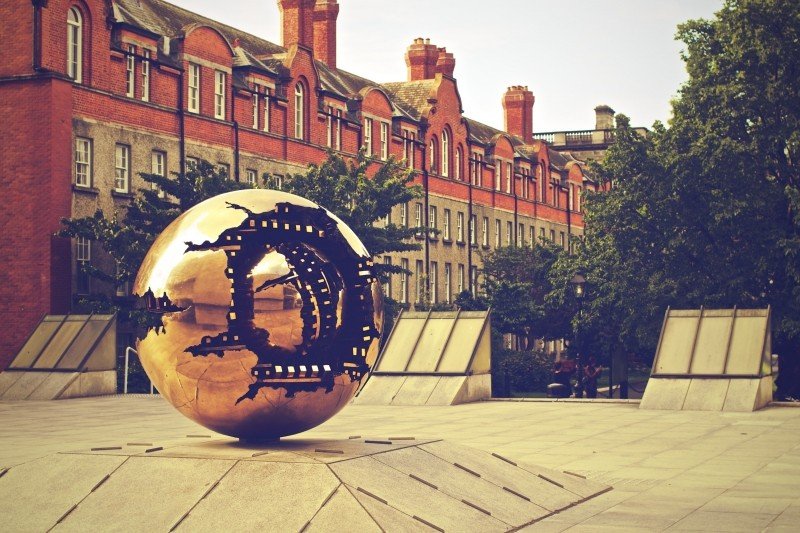
About a year ago, I formed a small writing group that meets every month to discuss each other’s works-in-progress. One of the group members reliably asks, for nearly every piece, questions about the setting. Oftentimes, even if the piece is fairly clear about where the action is taking place, there is missing context or grounding detail about the environment.
Hearing those questions frequently has, of course, sparked me to ask them pre-emptively when crafting my own work—to take the setting more seriously as a character in and of itself.
I was reminded of this recently when reading Marian Crotty’s piece for Glimmer Train, Committing to Place. She writes:
For beginning fiction writers, focusing on place is one of the easiest ways to improve stories that aren’t quite working. Doing so requires almost no imagination—simply looking closely, paying attention, mining your memory and/or conducting research. Paying attention to place, though, often addresses many of the common problems that plague the early stories of beginning writers—lack of detail and specificity, unrealistic characters and situations, and reliance on factual information that taxes readers instead of creating a sharp, sensory world that can simply be experienced.
Also this month in Glimmer Train:
- Notes on Writing by Laura Furman

Jane Friedman has spent her entire career working in the publishing industry, with a focus on business reporting and author education. Established in 2015, her newsletter The Bottom Line provides nuanced market intelligence to thousands of authors and industry professionals; in 2023, she was named Publishing Commentator of the Year by Digital Book World.
Jane’s expertise regularly features in major media outlets such as The New York Times, The Atlantic, NPR, The Today Show, Wired, The Guardian, Fox News, and BBC. Her book, The Business of Being a Writer, Second Edition (The University of Chicago Press), is used as a classroom text by many writing and publishing degree programs. She reaches thousands through speaking engagements and workshops at diverse venues worldwide, including NYU’s Advanced Publishing Institute, Frankfurt Book Fair, and numerous MFA programs.
The setting should be treated as a character as it has a lot of the same characteristics: distinct smell, mood or atmosphere, temperature/temperament, and flavor (?). Leaving Hannibal Lechter out of this, flavor could be interpreted as sweet/sour, mild or spicy. Just sayin’.
Thanks Jane for calling attention to story setting and Marian Crotty’s post on Glimmer Train. I couldn’t agree more. Though my mystery thrillers are based in familiar New England, I love sending characters–and readers–to exotic locations: an ancient souk in Morocco, the twisting cobblestone streets of Prague, an archaeological dig in Egypt. Setting can add suspense before the story begins and answers that first question, Where am I?
[…] not quite right with your story? Jane Friedman suggests fixing your story by focusing on place, and Ellen Tanner Marsh clarifies the 5 most common mistakes that bog down your […]