
Does the Idea of Promoting Your Book Make You Feel Queasy?
As an author, marketing your work will always be your job, but it doesn’t have to be a chore. To do it well, think beyond self-promotion.

As an author, marketing your work will always be your job, but it doesn’t have to be a chore. To do it well, think beyond self-promotion.

For writers who prefer to work without a roadmap, here are some tips for reaching your NaNoWriMo goals.
Envision your inner critic as an adjustable dial: turn it lower to let ideas flow freely, and higher when it’s time to analyze and revise.
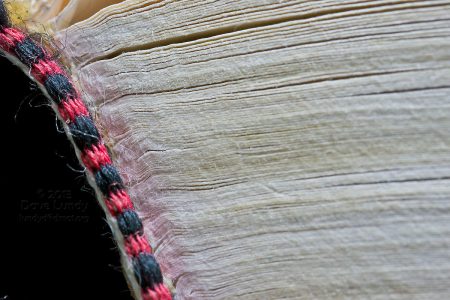
Choosing the right materials for your printed book affects not just its appearance but how a potential customer perceives its value.
Your story’s adversary might come in many shapes or sizes. Most important, ensure that the conflict they present has a reason for existing.

Just as coaches help athletes, writing coaches can help authors be more productive, proficient, and proud of what they accomplish.
Only a fraction of participants reach the finish line. Setting your sights on the more compact novella form might help you go the distance.

Does library lending help or hurt author and publisher income? The debate continues.

From paper manufacturing to ocean cargo, books continue to be buffeted by a variety of supply chain challenges.

When sociopolitical discourse seems entrenched, good fiction can dig deeper with honest curiosity about all facets of the human experience.

Being a freelance editor requires lifelong curiosity, persistent self-education, ruthless support—and the ability to do all this quickly.

In this excerpt from her book The Joy of Writing Journal, Lisa Tener offers three prompts to help you see story ideas all around.
When your ms is complete, it’s time to think about semantic structure—a digital map that allows computers to identify the parts of your book.
The SWING author discusses the pre-order campaign for her self-published book, the importance of social media engagement, and more.
Despite pre-publication buzz, one author found her book orphaned when the publisher was fired and the imprint dissolved.

Whatever your writing goals are in November, a bit of planning can help set you up for success.

Identifying your story’s “why”—why it haunts you, why you care—will give your book power that readers can feel.
As an author’s career progresses, the publicity needs change—and what worked for the first book might no longer be appropriate for the third.
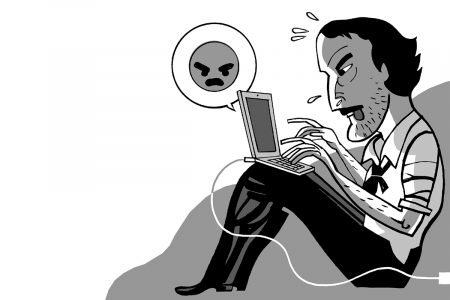
Edgar Allan Poe was a 19th century troll, virulently critical of other writers—but also engaged in literary citizenship for work he admired.
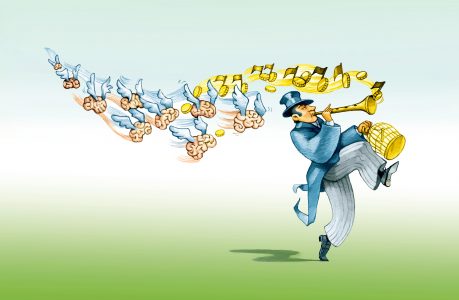
Substack makes it easy for non-tech people to harness the power of email newsletters, and that’s a good thing. Just beware the hype.

An author who only set out to write one book wrestles with the question—do I really have a second book in me?
One successful self-publishing author discusses the importance of multiple formats, licensing, thinking like a publisher, and much more.

Time reshapes how we view and frame the chapters of our lives. Since a memoir inevitably can’t tell the whole story, we keep writing.

One self-publishing author who opted-out offers a dozen other avenues on and off the Internet to help spread the word and drive book sales.
This is an introductory guide to the major self-publishing options available to authors today, and how to choose the right service for you.

In the last of a three-part series we examine the advantages and disadvantages of starting with theme, as opposed to character or plot.

Any self-publishing author can easily make a book available to Amazon, bookstores, libraries, etc. But availability doesn’t mean visibility.

Framing the overall story, as well as each scene within it, through these key elements will help create a consistently propulsive plot.
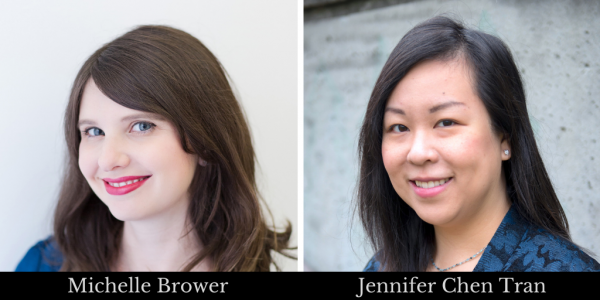
Literary agents Michelle Brower and Jennifer Chen Tran discuss the pros and cons of small presses, querying strategy, and much more.

Traditional publishers often center marketing campaigns around community support—sometimes growing an author’s platform in the process

Writing in dual perspectives can easily tie you in knots, but it also opens the door to new opportunities between characters and story lines.
Here are the most common arguments against teaching the business of writing in an MFA program—and why such arguments are flawed.

Both writing coaches and therapists dig deep, listen attentively, and meet regularly. But hiring one versus the other depends on your goals.
Masterful writers keep their readers in a constant state of tension. How to get tension on every page? By focusing on microtension.

What makes readers open a book and keep turning the pages? In part, curiosity and tension.
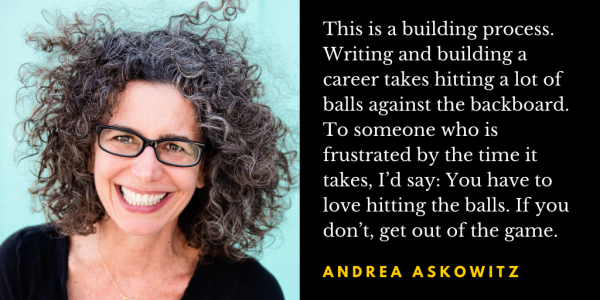
The author and podcaster discusses what she learned from going the wrong kind of viral, the power of vulnerable truth in writing, and more.

Writers focused on plot are often strong when it comes to world-building and “big ideas,” but there are inherent challenges as well.

Developing voice is important, but finding a topic that excites you—and others—could be a better first step for a new writer.

There are many kinds of memoir, with one thing in common: their authors must ultimately possess the ability to artfully render the moment.
This choice has nothing to do with the act of writing, but everything to do with how you talk to yourself about your vocation.
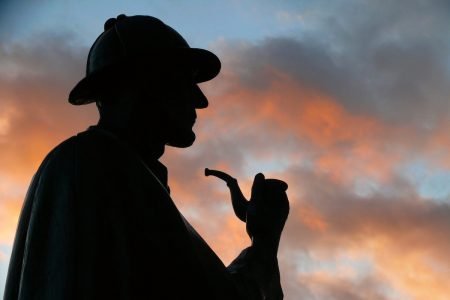
Copyright law is written to protect stories, not characters, but over time the law on character protection has evolved.

During peer review, expert scholars evaluate your proposal. Their suggestions can improve your book if you synthesize them thoughtfully.

Publishing a book can be an exciting prospect which often ends in anticlimax. One indie author examines the emotional roller-coaster.

A look at how the sources of my income shifted between 2016–2020, with online teaching now earning the lion’s share.

Donna Ward is an Australian writer whose first book, She I Dare Not Name, has just been published in the US.

Hype aside, an NFT is not equivalent to registering a digital work with the Copyright Office—and it’s no barrier to unlawful reproduction.
Self-publishing offers so many paths and options that it can seem intimidating. One debut novelist shares her journey, with valuable tips.

Fiction writers who start with character, as opposed to plot or theme, have certain advantages—and certain challenges.
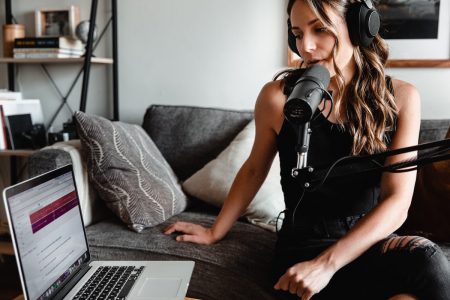
Learning these basic skills will help you relax, enjoy the conversation, and hopefully turn a podcast’s audience into yours as well.

TikTok has evolved into an entertainment and educational hub, with a remarkably engaged community of book buyers.