Today’s post is by author and book coach Susanne Dunlap.
I’ve been a published author for over twenty years. But when I took the leap into self-publishing Regency romance a little over a year ago, much of my previous publishing experience was not relevant. I was, to all intents and purposes, a debut author. Yes, it was possible that some of the readers of my previous historical fiction would follow me to this new world. But my backlist had gone very, very quiet, so those readers were unlikely to be numerous.
A year on I can honestly say that going on this journey has been an exhilarating, terrifying, humbling experience. In the end, all of it was worthwhile, and I’m eager to continue down this path with my next series.
Of course, I also wish I’d known some things at the beginning that I have come to understand as I’m about to release the sixth and final book in my Double-Dilemma Romance series into the Amazon ecosystem.
I thought I’d share some of what I know now that might be helpful to others at different stages of their journeys. Bear in mind that the publishing world changes all the time, and I can honestly say I’m still learning. What I talk about here is based on my own lived experience—and lots of effort to benefit from the wisdom of those who know more than I do.
Day One
The book is out. You should be celebrating. Maybe you had a launch event. Maybe not. Instead, you’re refreshing your Kindle Direct Publishing dashboard, checking Kindle Unlimited reads, watching sales flicker, and trying to decide whether the launch is “working.” Yes, I have most definitely been there.
You may have had dreams of runaway sales on that first day. But with very few exceptions, that simply doesn’t happen—especially if this is your first book. It takes time for readers to discover even the most brilliant stories. Having few sales on launch day is no indication of failure.
In fact, launch day is one tiny data point. I use the word data advisedly. Because once you indie publish a book, you have made a significant transition: you are no longer simply an author. You are now a publisher. An author craves reassurance, but a publisher has to believe data over emotion.
So step back and let the idea of a single launch day go. Instead, look ahead to your first 30 days after launch.
Week 1: Focus on verification
The first week after publication is not the time to attempt to interpret every nuance of your KDP dashboard. It’s time to make sure readers can find, buy, and read your book. Check, for instance:
- Is your book showing up everywhere you intend it to?
- Have you downloaded/bought your own ebook so you can see how it behaves for an actual reader? (The good news for indie authors is that you can upload new files pretty easily if you spot a problem.)
- Are all the links working—website, socials, back matter, newsletter, etc.?
- Check the categories your book is ranked in on Amazon. Are they correct? Do you need to contact Amazon to change them?
- Don’t forget to thank all the people who helped you along the way—beta and ARC readers, for instance.
Even when you’re meticulous, things can go wrong: metadata misfires, categories behave oddly, and retailer systems are not always as transparent as authors would like.
Week 2: Focus on visibility
Your launch-week bump may extend into the next week (depending on how much you supported your launch with advance review copies, virtual tours, newsletters, and advertising). But it’s normal for sales and page reads to slow down.
It’s your job to keep renewing that visibility—but not by just repeating “Buy my book!” to anyone who will listen. Instead, find ways to keep discussing your book.
- Use tropes, premise, character hooks, setting, research details, quote graphics, behind-the-scenes details, and reader-facing emotional promises in your social media and newsletter.
- Maybe make a heartfelt video about how it feels to see your book out in the world.
- Getting any great reviews? Share a few pull-quotes.
- Whatever you do, avoid making major changes based on one bad day.
In all honesty, I always feel a terrible letdown in this second week, even if everything is going as I hoped or planned. Sometimes the only way to get over that is to start working on the next book. (And that’s something you can talk about too!)
Week 3: Patterns emerge
You still don’t have a lot of data, but you may well begin to see patterns, things that clearly indicate when something worked or not. Take into account:
- Sales
- Page reads (if in Kindle Unlimited)
- Reviews and ratings
- Newsletter clicks
- Ad clicks and cost-per-click (if you’re doing paid ads)
- Which posts or emails got the most response
- Which description/trope/angle on social media seems to resonate
Ask yourself:
- What did readers seem to respond to based on comments and likes on social media or review content?
- What efforts felt like moving mountains and which were a walk in the park? For some authors, social media is an unpleasant chore. Others see it as an opportunity to make connections with readers and enjoy the challenge. Not everyone reads their reviews, either. If that’s you, maybe have a friend comb through and find positive tidbits for you.
- What would you be willing to do again? If you want a career as an author, there will be a next book.
Week 4: Time to act
Once you have close to a month’s worth of data, you should be able to get a better idea of what’s working and what you need to improve on. You might consider:
- Revisiting the book description—if you noticed readers seeing your book differently than you’d imagined, or having a different reading experience than you anticipated.
- Adding reader quotes or review snippets to marketing materials—see above.
- Planning a second email or “in case you missed it” reminder, with an update for your newsletter list about how things are going.
- Doing other paid promotions—Amazon or Facebook ads for instance—to kick up the sales.
But these are still early days. What you do going forward, your release schedule (if it’s a series) and other things will affect future launches.
You define success based on your goals
As is always the case, a successful book launch looks different for every author and depends on where they are in their career and what their goals are. There is no universal first-month benchmark in sales that indicates whether a book has launched well or not. A first book with no list, no ads, and no promo support may sell only a handful of copies and still by no means be “dead.” A newer indie author selling 50–150 copies has likely had a solid launch, and probably spent money supporting it. A launch with 150–500+ paid sales is more unusual, and indicates possibly a well-established newsletter list and significant ad spend and promo support.
Depending on spend, even an initial month with 500 sales could not be profitable. It all depends on your goals.
KU reads (if you participate in KDP Select) are often a significant driver of success. Debut authors especially can benefit from the fact that KU readers are more willing to take a chance on someone unfamiliar. The absolute number of pages read is again highly variable. In the case of the author with no list and no promotional activities that number could be fewer than 5,000 KENP, where those with a more solid foundation might reach up to 150,000 KENP in that first month. But that is unusual for a debut author.
Number of reviews can also be factored into the “success” formula. That said, it’s not unusual for a debut author in that first, unsupported category to garner only two or three reviews in the first month. A debut author who has a strong advance review copy team and a good newsletter list might get more than fifty.
Here are my results
So Susanne, you might ask, how’d it go for you?
I’ll cut to the chase and say I did not leap out of the gate as a roaring success. But I’m reasonably happy with how the first book in my series performed. Here are the numbers from the first month:
- Sales: 150
- KENP: 47,000
- Reviews: 37
I was not profitable in the first month because I did a blog tour and used an ARC service, as well as ran a BookBub New Releases for Less promotion. But my goal wasn’t measured in dollars. I wanted to get as many readers as I could to feed into the coming books in the series. I probably could have done it better based on what I know now. But after a little over a year, I think I’m in a strong position with my series. I have over half a million KENP pages read and the first book is currently at 247 reviews. Because I have a series, every new point of visibility can still send readers back to book one—even though the books can be read out of order.

Parting thoughts
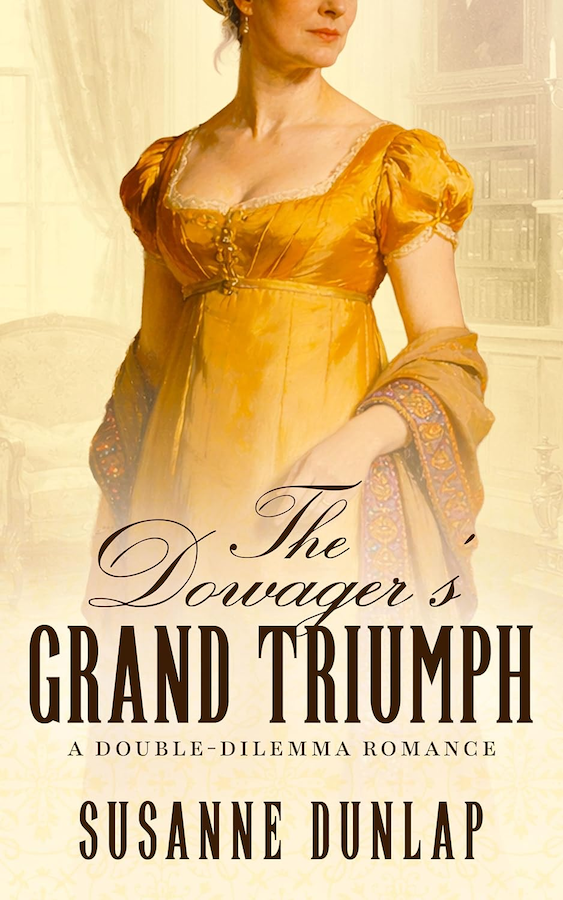
It is understandable that launch day feels like the biggest event for your book. And of course, in many ways it is! It’s just not necessarily the day that determines how well your book will fare, how many readers it will ultimately attract, and whether it will serve as a strong foundation for what comes next.
The uncertainty and volatility is part of what makes this publishing path so exciting. As I said, I’m learning constantly, and that—along with getting to actually write books that I’m proud of—is so worthwhile.
So be brave, and don’t judge yourself, or your book, too soon. Launch day is not judgment day. It’s the beginning of a much longer, stranger, and more interesting ride.
Susanne Dunlap is the author of over a dozen historical novels and a Regency romance series, Double-Dilemma Romance. The first two books in the series, The Dressmaker’s Secret Earl and The Soprano’s Daring Duke are available now, and book three is on its way. To stay informed about forthcoming books, get early access to discounts, and the free novella Miss Winthrop’s Vanishing Viscount, sign up for her newsletter.