
You Can’t Sell an Idea
Ideas are a dime a dozen. What matters is expressing an idea in ways that are unique to the artist and specific to the time and culture.

Ideas are a dime a dozen. What matters is expressing an idea in ways that are unique to the artist and specific to the time and culture.

To create the alchemical magic of emotion in your fiction, you need to approach the challenge from more than one angle.

It’s impossible to fire on all cylinders all the time, so dedicate some of your writing time to stoke the flames of creativity.

The most useful work is that which tests our limits and forces us to write something we didn’t realize we were capable of producing.

Your community might be all too willing to help promote your book. The hard part is overcoming the fear of asking.

If you write knowing how the story will end, you’ll deprive readers of the tension that comes from putting obstacles in your characters’ way.

Freelance writing—even for little or no pay—offers a low-stakes way to gain publication credit, hone your skills, and raise your visibility.

Paying attention to your own visceral reactions and thoughts can help you create richly developed characters who leap off the page.

Showing the moments of normalcy brings the reader more fully into your life, and heightens the drama when traumatic events occur.

What you earn is about what business model you can envision or build for yourself and whether it’s sustainable for you over the long term.

When you’ve finished your story, it’s time to step into a stewardship role to place it in the best position to connect with readers.

True forgiveness can take years to achieve. That’s why memoirs take longer to write than novels. But it’s worth the effort.
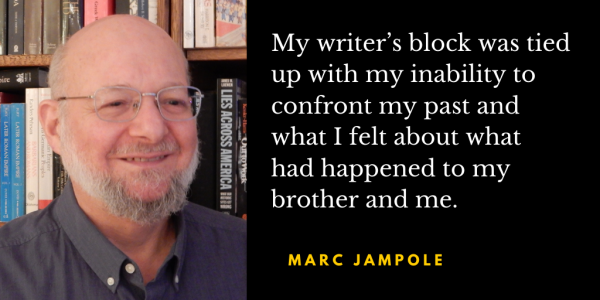
The poet and author discusses writing through trauma, his novel’s path to publication, adjusting details to suit a higher truth, and more.

Identifying comparable titles helps agents and publishers understand where your book fits in the market and who your most likely readers are.

Building direct-to-reader relationships may help publishers shift the balance of power in a game where Amazon holds most of the cards.

In writing memoir, internal voices—with competing interests—can emerge to inform the narrative. A rounded story is careful to balance them all.

One author struggles to prioritize between major writing projects when time and energy are limited.

What keeps many writers from a book deal isn’t a polished manuscript or proposal. It’s a sense of the publishing landscape as it really is.

When placed intentionally, crafted well, and set up via emotional context and backstory, scene might be the writer’s most powerful tool.

Authors report payment issues with Diversion Books, a digital publisher that has expanded over the years into traditional publishing operations.

The dramatic shifts to online sales makes it critical that publishers and authors adjust marketing strategies and build new skill sets.

Without insight into how your characters will react in even the most mundane of circumstances, you aren’t ready to plan or pants your plot.

Word doesn’t export to EPUB, but you can still produce an editable file quickly, without buying software or using a “meatgrinder” conversion.

When the pandemic thwarted a debut author’s launch plans, she had no choice but to jump into the deep end of social media.

Hybrid publishing is like hiring a contractor: You pay them to oversee the design and construction and, when it’s done, you own the result.

Even a small email list is better than no list at all, because it likely represents your most devoted, true fans.

Mentorship programs are a popular way to gain knowledge and exposure, but as their popularity has risen the competition has gotten tougher.

Guest blogging allows you to leverage someone else’s existing audience as a way to reach new readers and grow your own audience.

Given that many of us sidestep endings in real life, it should not be surprising that writers have trouble concluding book projects.

Factual details can be great fuel for your writing, but it’s crucial to recognize when adherence to them is getting in the way of the story.

Misguided feedback, which can damage your manuscript, often arises from a common mistake: asking the right question of the wrong person.

Despite our best efforts, artistic jealousy affects us all at times. But how we perceive another’s success is never the whole picture.

Mom writers are wired to succeed at writing (and querying) because they can multitask like no other.

Deep third pulls readers into a character’s world view, but pronoun ambiguities and apparent point-of-view shifts push readers away. These 6 tips keep prose sharp.

Finding the right editor or critique partner is important, but so is being mentally prepared for the feedback you’ll receive.

A free email newsletter is the better strategic choice when it comes to long-term career development. Blogging works better for reaching new readerships.

When do you decide that it’s time to pursue Plan B? Taking stock of these considerations will bring you that much closer to knowing.

Just as we might be conflict averse, it can be tempting to keep revising a story’s beginning instead of proceeding into the messy middle.

There’s a good chance that getting these essential elements right are among the biggest challenges you’ll face with your novel.

Like story arcs, individual scenes also have shapes. Understanding yours can help you improve the ones that are falling flat.

Whether you use giveaways, blog tours or paid ads, generating reader reviews will drive sales and create opportunities for further marketing.

The key to an author’s emotional wellbeing and continued productivity is creating a support system, and knowing which part to call on when.

The idea of universal story archetypes is not a new one—but its corroboration by an A.I. brings a new dimension to the debate.

There are hundreds of ways to market. The secret isn’t to do them all—it’s to find the few that work for your product and focus on just those.

There’s only one thing that any novel must do if it’s going to succeed, and that’s arouse the reader’s curiosity.

Third-person POV dominates the current publishing market, so it’s helpful to learn to navigate its many facets.
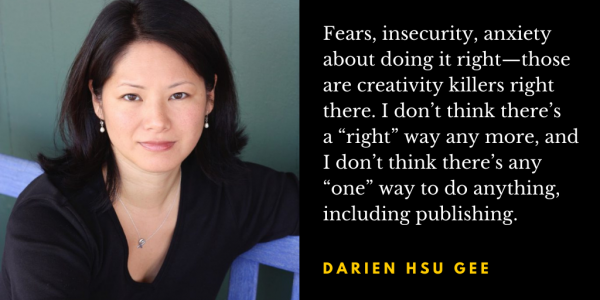
Author Darien Hsu Gee discusses writing and publishing across multiple genres, going back for her MFA at age 50, and having faith in her creative process.

Your calendar will never be suddenly free of urgent distractions. To finish that book on the back burner, you must actively bring it forward.

New authors are often confused about what level of editing they need. Here’s some insight into the differences.
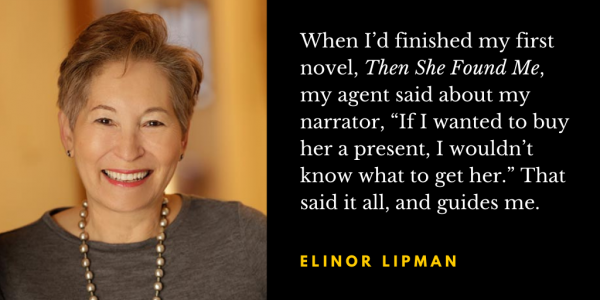
The author discusses film adaptation, writing effective humor and natural dialogue, using a light touch with character description, and more.