Why Don’t Publishers Believe in Author Websites?
It’s not unusual for authors to be told by their publishers that author websites aren’t necessary or effective. Should their insight be trusted?

It’s not unusual for authors to be told by their publishers that author websites aren’t necessary or effective. Should their insight be trusted?

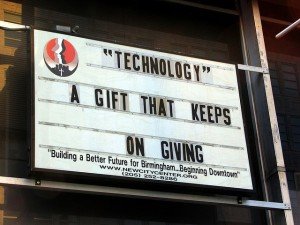
The internet and other technology keeps us on insanely high alert, ultimately producing an effect where we attend to everything and we attend to nothing (deeply). This high-alert state is producing a fatigue that’s detrimental not only to our psyches and relationships, but also to the quality of our professional output.

Bestselling author Michael J. Sullivan proposes that publishers give authors permission to send free ebooks to readers who have purchased print editions.
Five things to consider as you begin planning book events to spread the word about your book.

What does it take to launch a new website and online community? A Q&A with author and entrepreneur Alexis Grant.
Business is personal. In the long-run game, anyone who treats business as though it is not personal is going to end up stepping on toes and leaving a trail of poor impressions.

One of the most useful and powerful devices for the fiction writer is understatement. You tell the reader less so that the reader knows more. Instead of having everything spelt out, the reader is given, in a very careful way, just enough information for the imagination to go to work. From understatement the reader can derive great pleasure and satisfaction.

Best Business Advice for Writers is a monthly link round-up where I share the best online articles focused on the business of writing and publishing.

Learn about four of the biggest pitfalls in story beginnings: false suspense, prologues, dream sequences, and too much backstory.

The widow of Elia Kazan writes about the disruption of her writing routine, and how it was eventually restored.

Learn how self-published novelist Ransom Stephens landed a two-book deal with Amazon—without even querying.

In this talk from the 2013 Midwest Writers Workshop, I explain the process of growing my readership since 2008, then share a few key principles I follow to make it an enjoyable and sustainable process.

Some writers think a small press is something you have to make the best of. Yet small presses can often serve as a first—even best—option. Three case studies show why.

Is social media a waste of time for writers? Is it possible, in the end, to just focus on writing?
One of the biggest challenges in publishing today is discoverability, particularly at Amazon and other major online retailers. You can ensure your book is found more easily by optimizing your metadata—here’s how.

What’s wrong with overly nice characters? To begin with, they’re boring. This is because they can’t abide conflict, and smooth it over every chance they get.

Regardless of when or why you use Facebook, never consider it a replacement for an author website you own and control. Here’s why.

I had 7 an overflowing shelf of rejection notices when John Grisham—a friend and neighbor—took me under his wing and taught me his writing secrets.

If you’re having trouble finding your audience, your message may not be connecting with readers on a personal level. Here’s how to fix the problem.

Writers are often advised to fill their scenes with rich detail—to show, not tell. However, taken too far, you can clutter or bloat your story with too much irrelevant description.
Editors can tell within a couple pages if a manuscript will be acceptable to them. How? What makes this decision so clear to an editor and so muddy to an author?
Best Business Advice for Writers is a list of the best online articles focused on the business of writing and publishing.
If you’re ready to hire and work with a freelance editor, learn how to find qualified candidates, plus how to properly evaluate them.
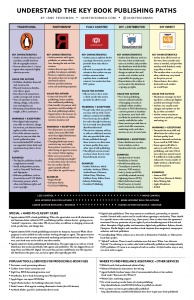
This infographic breaks down the key 5 publishing paths, their value to authors, the potential pitfalls, and examples of each.
Self-publishing is not for every writer—you must have specific traits. Ask yourself the following 15 questions before you decide to go it alone.
“The way in is something I’ve always struggled with. To write, I need to enter a whole other state of mind, where time slows down.” —Ella Mei Yon

To maximize the effectiveness of your author website, it’s necessary to study the data behind how people find your website, navigate it, and use it. Here are three of the most important areas to watch carefully.
How authors, especially novelists, can start using Pinterest in a way that’s a natural outgrowth of their work.

There are no “rules” for agent-assisted self-publishing, but the biggest drawbacks are usually loss of control and loss of royalties. All authors should negotiate a contract beforehand that protects their rights and lifetime earnings.
A reader is drawn into a story in one of two ways: shocked or seduced. This is called the hook, and it must be in the first three paragraphs of the text, preferably in the first sentence. The hook also sets up the initial pace of the story, which is maintained through the beginning of the tale.

Most writers are aware that the publishing industry is undergoing a range of transformations, new beginnings, failures, and consolidations. But there’s so much change it can be difficult to weed out and understand the most relevant and important changes—especially when hundreds of opinions seem to surround the smallest change. Based on industry conversations I’ve had in the last six months, as well as reports I’ve read by people I trust, here are five trends that writers should keep a close eye on.
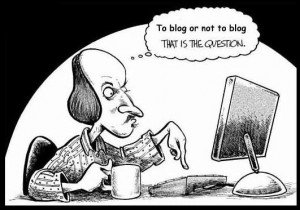
Author L.L. Barkat argues that writers who already have experience—as well as authors trying to promote themselves—should stop blogging.

The notion of “plot” is a misconception that leads too many writers to get confused and focus on all the wrong things. Instead, writers should focus on using the plot-free concept of series. A series is the repetition and variation of a narrative element within a story, the process of improvement or deterioration which creates the narrative arc.
Best Business Advice for Writers is a monthly link round-up where I share the best online articles focused on the business of writing and publishing.

I answer a few questions about the publishing industry today, and what I think has changed about the writing community since I got into the game.