
Create a Book Map for Your Nonfiction Book
A book map—a visual representation of your book’s structure—will help you maintain momentum and ensure a smooth journey for your reader.

A book map—a visual representation of your book’s structure—will help you maintain momentum and ensure a smooth journey for your reader.

Planning a book launch can be daunting for introverts. But finding strategies that fit with your skills and personality can make it easier.

When hosting a retreat, whatever the subject, providing small, achievable steps lets your participants feel that what they’ve done matters.

While there are no fixed conventions writers need to adhere to, there is nonetheless much to think about and be aware of.

If confidentiality prevents a freelance editor from sharing samples of prior work, how does an author gauge who to hire and what to expect?

Focus on the main story’s forward momentum, and use backstory as the seasoning that makes the stew.

The key to creating successful content as an author-creator lies in the same ingredients that make your stories so great.

Your audience won’t remember the chapter where your hero took a breather. What’s memorable are the forces of antagonism, and how your hero reacted.

Before spending time on a story that doesn’t work, ensure you’ve addressed the critical questions of character, plot, goals and motivations.

If you have reason to suspect your story is not quite “there” yet, a professional edit may be what’s needed to push you across the finish line.

A roundup of new publishers, agents, and other book-related ventures announced in 2022.

Three editors discuss the types and stages of editing, whether publishing industry experience matters, hiring guidelines and much more.

Even with an excellent query and opening pages, you’ll still get rejections. A lot of them. Success comes to those who refuse to give up.

If we were to reposition blurbs as affirmations as opposed to marketing tools, would that also shift the way we traffic in them?

More than just a tool to sell your book, your synopsis is a roadmap to making the next draft of your manuscript much stronger.

Like writing, editing and revision are skills that take time to learn, and they develop only with practice.

Here are four ways to help create the mindset that we can realistically accomplish something we’ve never tried before.

To build an audience, close the gap between your offline-self and online-self by showing up with consistent value on your core topics.
![Image: an antique wooden signpost on a white background. Painted on the sign is "Welcome to [blank]".](https://janefriedman.com/wp-content/uploads/2022/11/annesi_arc_signpost-blogpost-450x300.png)
It might not be essential to impose a standard arc structure on a character who’s non-traditional or isn’t affected by the story’s actions.

We writers know that critiques are an integral part of improving our work. But we rarely learn how to receive feedback or what to do after.

The author of dark- and paranormal romance discusses negative attitudes toward the genre, why sex scenes are the hardest to write, and more.

Central to most of Michael Lewis’ works are larger-than-life characters who find themselves at the center of major industry or societal shifts.

When completing a readable draft left one author exhausted and overwhelmed, these three steps helped him start writing again.

If your subject already has a large existing fandom, how can you quantify that audience, using the data to impress agents, publishers, and editors?

Whether you’re a planner or a pantser, this brainstorming document can take your story to places it might not have gone otherwise.

A prologue can open the door to your story and entice the reader in, or throw up a barrier that delays or prevents their engagement.

A great villain character should have complex motivations and be able to evoke sympathy from readers.

The writers who get their books into the world are those who find a middle ground between refining their work and endlessly tinkering.

Switching POVs within the same scene should only be tackled by experienced fiction writers, and only when it reveals something important.

Science says these three techniques can draw your readers in, keep them engaged, and provide them with a compelling experience.

If your agent or publisher wants to pitch your book to Hollywood, they need to know the rules—or at least, the rules of the day.

You can mine the first paragraphs of well-written novels for four critical components that keep readers hooked.

What makes a good writer? Relentless internal drive, a thick skin for editorial feedback, and reading voraciously across many genres.

From appealing to short attention spans to offering no-fuss ways to play in another sandbox, short story writing has many benefits.

Writing a book with multiple authors requires trust, vulnerability and patience. But done right, group writing has some surprising benefits.

When we’re dealt life-altering circumstances, how do we stay true to creative ambitions while finding a whole new way of existing?

When editorial feedback entails rebuilding a manuscript, one writer struggles with not taking it too personally.

Your writing might soar to new heights when you make weather—and the words describing it—an important element in your characters’ lives.

Along with sex and death, money is a topic with evergreen appeal. So when you write about money, you put the odds of a breakout on your side.

Some writers struggle with ever getting one word of their Great Idea down on the page, for fear of crafting an imperfect beginning.

In an excerpt from her new book on cover design, Jessica Bell offers tips regarding how to utilize space and color for maximum effect.

Is it best for unpublished authors to trust the editorial guidance of their agents and editors, especially when it comes to sensitive issues?

Some writers can finish a book all by themselves, but even more of them have support systems, deadlines, teachers, exercises, instructions and help.

To write something that connects on a universal level, concentrate on specifics. Small truths are easier for readers to identify with.
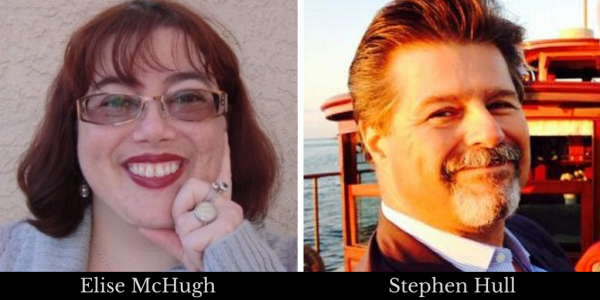
When a Vermont author’s book was accepted by a New Mexico university press, she decided to ask its editors about the acquisitions process.

It’s possible to create connections with readers by utilizing some fun and interesting ways for them to interact with your book.

An elaborately structured plot, without clearly-defined character goals and motivations, is like mapping a trip and calling it a vacation.

A successful nonfiction book proposal addresses market demand and cements the writer’s authority throughout the entire document.

The big dogs will remain the big dogs. Mega advances will still be paid, and it will remain challenging to make a living if you’re the average author (as it has been throughout history if you depend on book sales alone).

Shifting from memoir to fiction allows painful memories to be expressed, while sharing the hard-won wisdom we’ve gained through experience.