
How to Develop a Complex Protagonist
With these four elements you’ll be able to create a more compelling protagonist and, as a result, a more interesting story.

With these four elements you’ll be able to create a more compelling protagonist and, as a result, a more interesting story.
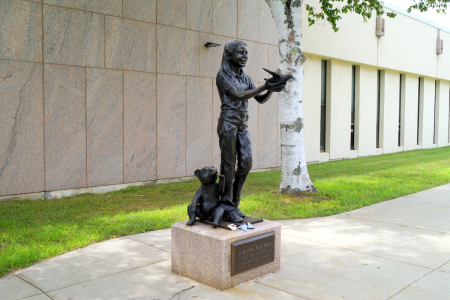
An amateur historian finds that her passion has led to enough expertise and authority for her book proposal to be taken seriously.
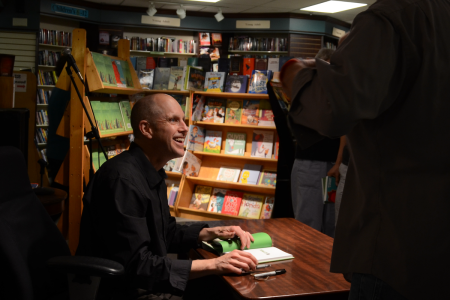
Here are some tips on what to do before approaching a published writer with questions about how to get your book published.

Serving as someone’s beta reader doesn’t mean agreeing to read whatever a writer throws at you. It’s okay to set some expectations.

If your publisher’s suggested cover design feels wrong, put your foot down when necessary but also listen—really listen—to the professionals.

Worried you’re not enough of an expert to write your book? That’s OK. You don’t need to be the annoying expert who knows it all. There’s another—far more effective—approach you can take when talking to readers.

In a new feature, our Ask the Editor column reviews the first pages of an unpublished work.

How one author leveraged a sizable social media platform to breathe new life into a self-published book.

Authors who’ve been using Mailchimp for their email newsletter might consider moving to Substack, as it offers several benefits—and it’s free.

When an author’s article went viral, she didn’t have the tools in place—a website, a social presence—to capture and leverage that audience.

Authors should consider using AI for historical research—not as a replacement for primary sources, but as just another useful tool.

According to neuroscience, scenes make the reader feel as if they are actually in the world of the story. And that makes scene the most memorable way to share information with the reader.

If your writing project has hit a wall, consider whether it really wants to be a different form than the one you’re trying to shape it into.

When self-publishing be sure to determine a distribution strategy, avoid gotchas when using POD, and get pricing and metadata right from the start.

An editor advises that when writing a true crime story it’s best to lean in to the lurid details that will hook readers up front.

In this nexus of fact and fiction, writers can mine, select and transform their real life journeys, turning points and discoveries into story.

Building up courage to own your identity as a writer starts when you realize you need to ask someone for an objective opinion on your work.
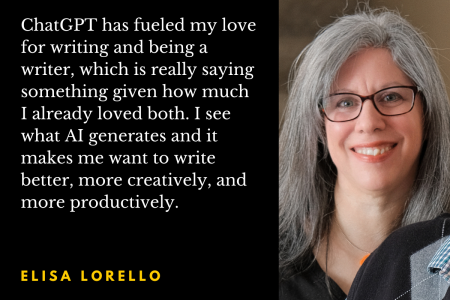
Author Elisa Lorello’s exploratory dive into ChatGPT led her to discover its usefulness—rather than threat—to fiction and nonfiction writers.

Asking yourself the right questions about why, when, how, and how much your characters speak will help you craft more powerful dialogue.
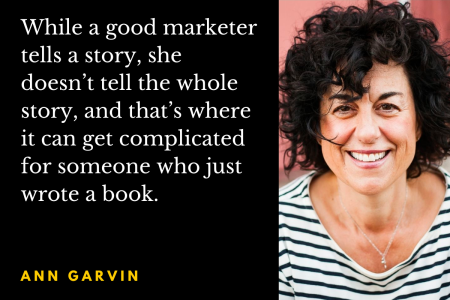
A book pitch requires an author to distill character, plot and stakes into one or two juicy sentences that entice a reader to ask for more.

A genre author seeks advice on letting stories unspool more organically while also honoring the reliability of the three act structure.

One of the hard parts of working on a book is that day-to-day progress isn’t readily visible. Give yourself credit for all the small achievements.

These five steps will help you find your ideal comp titles for your query letter or book proposal, using ChatGPT. Includes sample prompts.

Submitting work shouldn’t be an act of desperation, and not every publishing deal aligns with your goals for your book—your “why”.

Marketing strategically for 30–60 minutes per day can ensure your time, money, and energy go toward activities that move the needle.

Finished a first draft and unsure where to go next? Here’s a 5-point checklist of what the second draft revision process should accomplish.

It’s still possible to write on social media to communicate our ideas, our topics, and our point of view to people who become our audience.

With a regular five-minute meditation you’ll become a master of focus, able to dismiss distractions before they even fully form as thoughts.
The recently published LISTEN, WORLD! is a page turning biography of Elsie Robinson, the most read woman journalist of the twentieth century.
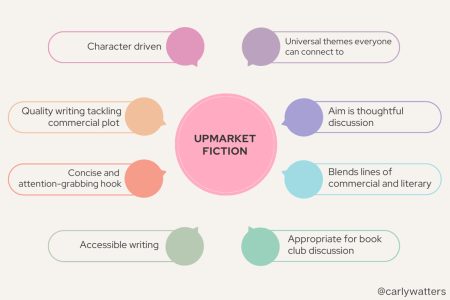
Upmarket fiction is a blend of commercial and literary fiction, but how it gets blended is where writers and industry members can’t always agree.

When we lean into stigmatized topics, we invite readers to wrestle with the same complexities we’re examining in ourselves.

Writers of both genres have to make decisions that somehow mold real people and events into a story with a shape, an arc, and meaning.

Even lesser-known authors can experience legal issues if they don’t perform their due diligence while writing and revising their books.

A Choctaw author offers tips on researching and connecting with First Americans in order to write respectfully and without stereotypes.

Consider the benefits and limitations of each POV, along with the feel each might lend to your story and how well it fits the tone, tenor, and genre.

Bridging the gap between research and personal experience can become a book’s greatest strength—but it might require Herculean effort.

Three successful authors who are outside of Wattpad’s key demographic discuss why they contribute to Wattpad and how it’s furthered their careers.

Having a gut-punch reaction to being edited is part of the cost of doing business for writers. Here’s advice on how to survive the process.

In a new feature, our Ask the Editor column reviews the first pages of an unpublished work.

When her indie publisher goes AWOL, an author finds the community and resources she needs to pick up the pieces and persevere.

It’s hard to get someone to take a risk on an unknown author. A giveaway can make your book known to thousands of readers in one fell swoop.

To truly put your reader in the emotional position of your POV character, focus on conveying body language and internal narration.
Acknowledgment pages allow us to peer into authors’ lives, and reveal the fascinating web of the publishing world.

There is no formalized career path for freelance editors. From the hosts of the Independent Editor Podcast, here are tips on what to expect.

Memoirists can take steps throughout the writing and publishing process to minimize fallout and family strife.

Marketing your book to bookstores—like marketing your book anywhere else—requires research and shoe leather.
Here’s how two self-published authors have been successful in their marketing and promotion efforts on TikTok.

Writers often view themselves as without power, but you can’t wait for permission or the “right time” to negotiate a better deal for yourself.
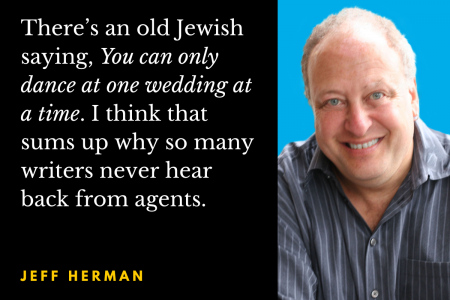
Jeff Herman is the author of Jeff Herman’s Guide to Book Publishers, Editors & Literary Agents, 29th Edition.

Every effective brand—even an author’s—has three essential characteristics: uniqueness, consistency, and authenticity.