
Hybrid Publishers and Paid Publishing Services: Red Flags to Watch For
If you’re an author seeking a hybrid publisher or self-publishing assistance, it’s important to know what to look out for.

If you’re an author seeking a hybrid publisher or self-publishing assistance, it’s important to know what to look out for.

Aspiring writers are inundated with rules to follow—but writing is creative, so don’t look to prescriptions or those who preach them.

Publishers and literary agents know this, even if they pretend otherwise to conveniently reject you and your work.

Whether you write novels or nonfiction, a press release is still an essential tool for raising awareness and sharing your work’s core message.

Memoirists owe it to readers to tell them the truth. But what do you do when the truth isn’t black and white?

Even with the best promotion, there’s no guarantee your book event will fill the seats. Here are some tips for making the best of it.

Writer’s block is an excuse, based on fear, that gives us permission to quit as soon as writing gets hard.

If your older book is no longer performing well on Amazon, updating the description, metadata, or cover can show them that you mean business.

Twists feel “twisty” because the author has carefully engineered the story to mislead readers via the protagonist’s journey and assumptions.

Ghostwriters, whose literary contributions have often been made in secret, are creating more community and visibility for their work.

If you’d love to go on a writing retreat but worry about whether the investment will “pay off,” here are five ways to reap rewards.

While you can’t publish a book without sitting down to write, there are many times when we can gain insight by looking away from our work.
On the release of her sophomore novel, one year after her debut, a writer reflects on what she’s learned about the business of authorship.

One way to cultivate a loyal audience is by sharing compelling content, but it’s important to understand the needs of your target audience.

This excerpt from the new book How to Get on Podcasts by Michelle Glogovac focuses on the importance of creating a basic media kit.

A new book, The Grim Reader, helps authors understand how to write convincingly about drugs and their use.

By paying attention to how you are impacted by story, you can learn to trace those effects back to the techniques that elicited them.

Three distinctive monthly bestseller lists: top 50 hidden gems, top 50 self-published ebooks, and top 50 self-published print books.

A good novel has everything teen brains are primed to crave—excitement, emotion, and escape.

To ensure you’re giving value to your audience, make sure you know who your newsletter is for and what they get from it.

When seeking an agent, it helps to research what they’ve actually repped and sold versus what they claim they’re looking for.

A roundup of new publishers, imprints, and agents announced in 2023, as covered in The Hot Sheet.
For a memorable story, give your main character a strong motive, a flaw, and a series of escalating decisions leading to an impossible choice.
Insufficient sales are the primary reason that imprints close, in addition to greater efficiency and even corporate politics.
Three distinctive monthly bestseller lists: top 50 hidden gems, top 50 self-published ebooks, and top 50 self-published print books.
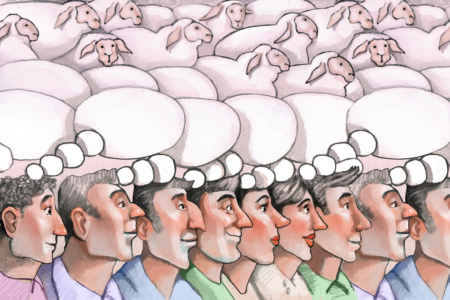
It doesn’t bode well for the publishing industry’s future when acquisition decisions are based solely on an author’s past sales history.

Like a pot of broth simmering on the stove, the contents of our journals nourish us and provide the basis for countless delicious creations.

Going too fast is one of the biggest mistakes storytellers make. When you arrive at a moment readers have been waiting for, slow things down.
In partnership with Bookstat, we’re thrilled to offer three bestseller lists that showcase what’s selling outside of the Big Five publishers.

A well-crafted book blurb gives us just enough to care, to empathize with the protagonist’s plight, and leaves us wanting just a bit more.

It takes practice to write immersive descriptions that draw readers in, without going overboard and risking boredom or loss of attention.

An author considers how we often try to turn ourselves into other kinds of writers instead of following our internal compass.

Shonda Rhimes’s Netflix series is a master class in amping up stakes and keeping viewers invested in the characters’ outcomes.

Today’s post is excerpted from How to Enjoy Being Edited: A Practical Guide for Nonfiction Authors by editor Hannah de Keijzer.
Creative planning is the act of mapping out where you are, where you want to go, and how you are going to process today’s challenges.
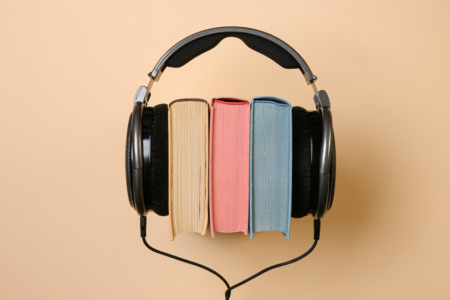
Too many books and not enough time? One author learns that speed-reading print and audiobook versions simultaneously can enhance retention.
In marketing, “proof of concept” means testing an idea for sales potential before going all-in. Here’s how to apply that to your book.

Literary citizenship—freely sharing your knowledge with those in need—can reap substantial rewards for authors and editors.
All hail the newly published author—or not. When your book’s released but there’s no parade or marching band, here are some other takeaways.

Evocative scene-setting can be wonderful, but be careful of letting it get in the way of your story’s action and momentum.

Make the most of your writing practice by understanding which brain waves are active during the day and best support specific writing tasks.

As with abstract painting, fiction can find worth in technique rather than specific meaning—emphasizing not the What, but the How.

When author and readers have little in common, what makes writing relatable? A teacher examines Anne Lamott’s Bird by Bird to find out.

The euphoria of hitting the top spot on Amazon can quickly give way to the realization that it hasn’t fundamentally changed much at all.

To create unforgettable scenes, purposefully choose settings that trigger character emotions, intensify conflicts, or evoke specific moods.
Writing advice is everywhere—newsletters, podcasts, workshops—and it can leave you feeling anxious and unproductive. Here’s what to do.

To be vivid on the page, each character you write should display life-long emotional responses to wounds that occurred in their past.
Flashback can be a potent tool for presenting essential backstory, as long as you apply it without interrupting the story’s forward momentum.

One author shares what she’s learned about using voice dictation to write in any setting: on a walk, washing the dishes, even lying in bed.