
Jane’s Guide to Getting the Most Out of a Writers Conference
Here’s what I’ve learned over 20 years about making the most of any writers conference, whether you’re an attendee or a speaker.

Here’s what I’ve learned over 20 years about making the most of any writers conference, whether you’re an attendee or a speaker.

If there’s an organization whose mission aligns with your story or characters, a partnership might help both parties promote one another.
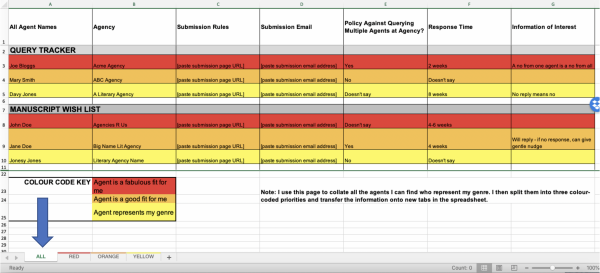
You can’t control rejections, but you can control your next steps. Staying organized and focused helps isolate and minimize the impact of any one rejection.

The query letter has one purpose, and one purpose only: to seduce the agent or editor into reading or requesting your work. The query letter is so much of a sales piece that it’s quite possible to write one without having written a word of the manuscript. All it requires is a firm grasp of your story premise.

No two publishing paths are the same. When choosing an agent, find someone you can stand strong with, whether lashed to the mast or gliding in calm waters.

A book is often the product of teamwork. The ability to revise—to accept feedback and apply it with diligence and insight—is essential to success.

Book coaching is much more than editorial support. Coaches help clients complete a transformation—from someone who wants to write a book into someone who has created a book they are proud of.

While it’s not wrong to open in these ways—and a great writer can make even the most pedestrian series of events read as fascinating—consider if you can find a more advantageous way to begin.
In this Q&A, literary agents Jim McCarthy and Paula Munier discuss the priorities and responsibilities—to yourself and to others—of being a working writer.

In conversation we describe dialogue simply—”She said,” “He asked”—but writing enables a broader palette. How do we decide which words to use, or not use?

It may be on the wane for reasons ranging from linguistic evolution to feminism, but one writer says exclamation point usage is a simple kindness.

Like trying to outrun a semi bearing down in your rear-view mirror, writing serially for release in real-time can be both exhilarating and exhausting.

The point of line edits isn’t to say, “My way is better!”, but to give a fellow author the gift of a fresh pair of eyes and ears and alternatives to reflect upon.
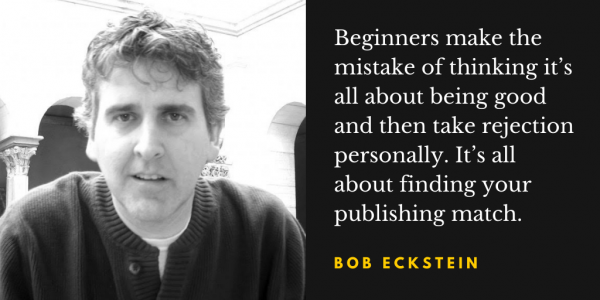
In this interview, Bob Eckstein discusses art vs. commerce, newspaper/magazine cartoons vs. TV as communication delivery systems, the influence of just the right validation, and much more.
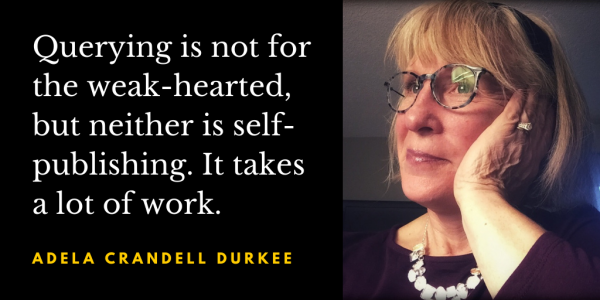
In this interview, she discusses discovering writing in mid-life, how she knew when her writing was ready, why she opted to self-publish, and much more.

Effective “defamiliarization”—an unexpected comparison—results in readers viewing the commonplace in new ways, but beware of employing it in half measures.

Description alone won’t bring a character to life; it must be supported with evidence of a personality—and the more concrete, the better.
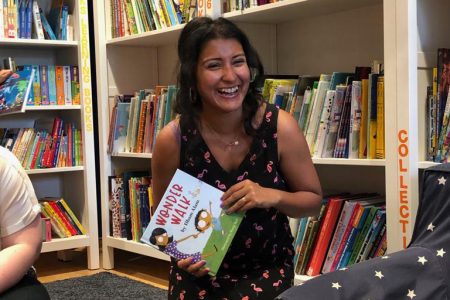
When you’re a one-person marketing team, try these foundational tips for approaching libraries about having your book added to their collections.

When your narrator walks readers into the story, hand-in-hand, make sure you’re really going somewhere and not just blowing smoke.

An unpublished writer describes how she built a five-figure Twitter following within a year, by helping other writers and engaging on a personal level.

Exposition works when it arises organically from a scene. But a scene that only exists to deliver exposition might leave readers disengaged.

A debut novelist surveyed readers on Facebook. The result? In publishing, as in life, first impressions matter—and we do judge books by their covers.

Our lives contain an abundance of indelible experiences, but a good memoir isn’t just about us—it’s about illuminating a facet of our shared humanity.

Skip the book signing; there’s greater reward in identifying and connecting with the audience that already shares a passion for your topic.

To read your work aloud well, you must train like a pro. From public speaking coach Gigi Rosenberg, here’s a guide to what you need to do to show up with confidence.

To convey a sense of immediacy, nothing beats the present tense. But for readers to want to stay in that moment, your scenes must be suspenseful and compelling.

Research shows that most people reach peak cognitive performance under moderately noisy conditions—roughly the sound of a coffee shop on a busy day.

You don’t need an influencer’s clout to make your book and brand successful, but it can help expose your work to a larger audience. Before you reach out, here are some important do’s & don’ts to keep in mind.

The point of fiction is to make believers out of us. Small details provide authenticity, making an invented world feel real enough to invest in emotionally.

The rise of Millennial nostalgia and graphic novels, the decline of political tell-alls and publisher-driven marketing: all of this and more in 2019 trends.

At times when reading seems like a chore and writing every day is like squeezing blood from a stone, try nurturing your creativity in different ways.

To convey a scene clearly, your narrator must experience it clearly—from a specific, well-defined perspective rather than a vague, general one.

Ensure that your work continues to generate earnings for you and your heirs by staying on top of contracts, royalties, licensing, and available formats.

Loss can make fiction feel like an obnoxious waste of time. And maybe it is. But what if all of this loss is the exact reason to read? To write?

When you’ve taken your work as far as you can, a manuscript evaluation can address problems before you begin querying and submitting.

Used judiciously, metaphors and similes can help readers see more clearly. Overuse, or ones that seem forced, can draw attention away from the story and onto your writing.

Most people don’t read websites; they scan. The same is true for your book description. In this guest post, Penny Sansevieri offers tips to make your promotional copy appealing enough for readers to linger.

With low barrier to entry, livestreaming can be a great way to give your audience a chance to fall in love with you and your message. Here are some essential tips from the team at Best Seller Builders.

Knowing your audience is key to book marketing and sales success.

Obtaining readers for your book is hard enough. Once you have their attention, how do you make the most of it? Dave Chesson suggests “reader magnets”—incentives that turn strangers into subscribers.

In a story that straddles multiple genres or narrators, they can’t all have equal weight. Avoid confusion by making one dominant and others subordinate.

To write in plural perspective—articulating the inner thoughts of a group—ensure you’re also giving enough personal expression to your narrator.

Mastering POV—a particular sensibility operating from a specific vantage point—can make the difference between bland and vivid storytelling.
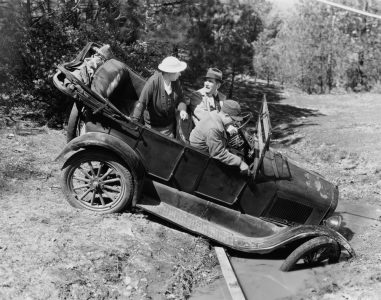
Readers come to a memoir in hopes it will shed light on their own life experiences. Stay on the right track by focusing on what makes your story unique and engaging.

Writing takes grit and so does publishing, but your odds are better if you understand what you’re up against. In this guest post, author and educator Susan DeFreitas shares some “secrets” everyone should know.

The funny thing about being any good as a publishing commentator: it requires talking to many others, learning varied perspectives, and writing about ideas you didn’t come up with.

A series of setbacks can easily lead to feelings of failure. In this guest post, author Rachel Pieh Jones offers lessons on overcoming discouragement, refocusing, and getting back on track.

Even a trivial detail can justify its place in your first sentence, so long as it achieves every sentence’s ideal goal: rendering a distinct character.

Who, what, when, where, why and how: An effective opening doesn’t necessarily address them all, but presents the best ones to serve the reader on a particular journey.

There’s a big difference between writing a book for ourselves and writing one for the reader. In this guest post, nonfiction coach and memoirist Tanja Pajevic offers five steps to keep in mind when crafting your story.