
6 Principles for Writing Historical Fiction
Whether grappling with believable world-building or adherence to historical accuracy, these six tips will help you navigate this daunting genre.

Whether grappling with believable world-building or adherence to historical accuracy, these six tips will help you navigate this daunting genre.

Editorial reviews are one of the most underrated tools in a self-publishing author’s arsenal. Learn what they are and how to manage them.

The former editor-in-chief of Cosmopolitan discusses how a grounding in nonfiction can both help and hinder fiction writing, and much more.

Every book is a gamble, and publishers ask the same two questions any capitalist or gambler asks: how much should we stake, and how much might we profit?

Online or in person, the basics of public speaking are still what matters most: be captivating, interactive, and take your audience on a journey.

If your goal is to see your book become a movie, it’s important to understand the rights you grant—and the money you earn—during initial development.

Promoting a book isn’t a one-off event. It’s a series of actions: long-lead strategies, mid-range tasks, and sudden opportunities.

Why sweat the commas? To save your reader from working to decode syntax-level meaning, enabling full focus on your protagonist, your plot, and your prose.

One author’s experience with the pros and cons of promoting a new book to his community in the era of limited social gatherings.
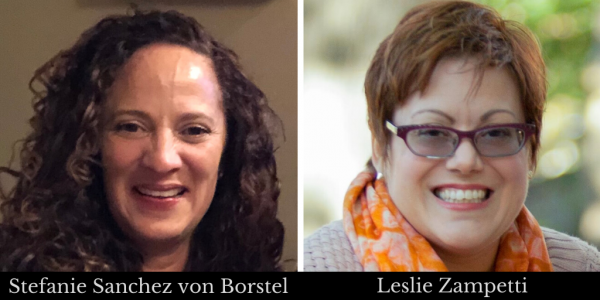
In this Q&A, agents Stefanie Sanchez Von Borstel and Leslie Zampetti tackle the complications of authorship and literary citizenship in the pandemic age.

If the idea of facing a blank page gives you the sudden urge to do chores, the problem might be that you’re trying to write in a way that doesn’t suit you.

Writing about the people you are closest to can be one of the most rewarding experiences a writer can have—but also the scariest.

Every author must have a frank conversation with their publisher about book marketing—the earlier the better. Here’s how to approach the conversation.

Librarians and teachers are clamoring for more history nonfiction for younger students. Author Tim Grove offers tips on writing to this unique segment.
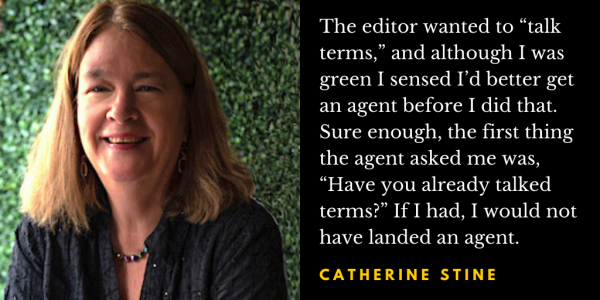
In this interview, she discusses writing to trends, the limits of writing what you know, taking the time to discover your identity as an author, and more.

Unless a metaphor spontaneously suggests itself from your creative, subconscious mind, it’s probably forced and phony-sounding—and far from “literary”.

A goal 10 times bigger than what feels achievable is a psychological kick in the pants that gives you the motivation to achieve liftoff and sustain effort.

The science suggests that repetition can make a new practice reach the “second nature” part of your brain sooner, creating a habit that’s hard to break.
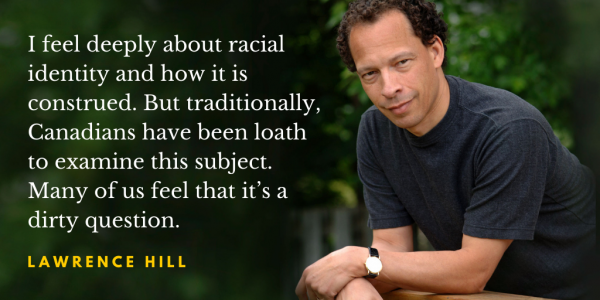
In this Q&A, Hill discusses why he wanted his memoir to incorporate the observations and life experiences of other Canadians of mixed racial heritage.
This post explains four critical types of book editing, why you need an editor, how to choose one, and what your editor can and cannot do.

Your friends and fans want to celebrate with you. When public gatherings aren’t an option, you can take the party online at virtually no cost.

Employing the science of captivating rewards is one way to keep yourself excited about and engaged with a big writing project, all the way to The End.

Your protagonist must directly influence or engineer her own destiny. If she doesn’t, she isn’t the hero; she’s a passenger in the story.

Learn how to craft a strong novel synopsis, while avoiding the most common mistakes, including the dreaded “synopsis speak.”

For first impressions to occur as quickly on the page as in person, try this basic foundation to help readers achieve familiarity with your characters.
In some ways, the idea behind neurohacks is simple: Fake it till you make it. Or, fake it until it feels real, because your brain can’t tell the difference.

For some, the most intimidating part of writing a novel is the plotting. Here’s one way: Puzzle-Piece the story together from details you already know.

How authors can blog successfully for long-term platform and book marketing efforts, with tips for online writing, strong headlines, and good SEO.
Many dream of publishing a book, but actually sitting down to write one seems hard. Preparation and limiting your choices can make writing feel easier.

Past perfect is less common in the internet era, but isn’t just a formality. Without it, readers are ever so slightly more adrift in your ocean of words.
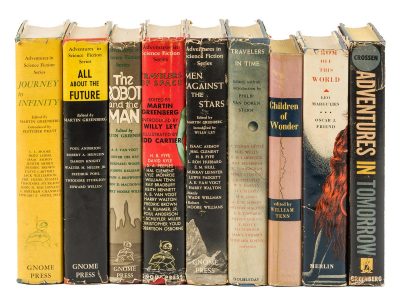
Because an anthology includes many authors, it can connect to the fan bases of all those authors and ultimately be greater than the sum of its parts.

A lot of the people who genuinely want to write a book never do so, because they never find a reason to prioritize their writing practice.

Too much free time can actually hinder momentum. That’s why it can be useful to focus on small challenges, always aiming just beyond your comfort level.

Don’t feel like you have to go it alone—others are on the same journey, ready to offer encouragement and applaud your hard-earned victories.

Everything you need to know to start sending an effective email newsletter.

In Maslow’s hierarchy of needs, the top rung is where creativity happens—after our sustenance and security are met. Many of us are just not there, yet.

Studies show that making meaningful progress toward big goals is best served by focusing on the small steps that will get us there.

Developmental editors, critique partners, sensitivity readers, friends—feedback comes from different people, for different reasons, at different times.

Small presses are their own ecosystem. To understand the landscape, study the review sites, awards, and distributors catering specifically to that market.

Approach networking with belief in your own value—while remaining honest and respecting everyone’s time—and you’ll see long-term results and minimal stress.

You can get your readers behind a character they don’t want to grab a beer with—if you allow enough humanity to show through.

We’re often told to read the best books first and apply their lessons to our own work. Here’s a wrinkle: Books you don’t like can be great teachers too.

Everything authors need to know about the audiobook market, including retailers, distributors, and payments.

When used properly, flashbacks can be illuminating. When used haphazardly, they detract from the narrative and leave the reader confused (or worse, bored).

I strongly advocate all authors start and maintain a website as part of their long-term marketing efforts and ongoing platform development. But it’s an intimidating project because so few authors have been in a position to create, manage, or oversee websites. Where do you even begin?

The human condition in its alienation, pain, and joy yearns for a faithful scribe. Memoir offers readers that ultimate safe harbor: the knowledge that they are not alone.

You’ve got something that corporate brands don’t—yourself. Nurture a relationship with your readers, and they’ll do the marketing for you.

Is your reader being told a story, or experiencing it by your protagonist’s side? When revising your novel, here are four important red flags to look for.

Unless you’re a celebrity, your expertise in a field may not be enough to interest publishers. A partner can increase your book’s credibility and reach.

A big mistake authors make is assuming that the influencer needs to read a copy of the book—or have a copy—in order to support it. Not true.