

Today’s post is by author Cynthia Swanson.
My debut psychological suspense novel, The Bookseller, sold to Harper in 2013 in a pre-empt. I’m not going to lie—it was an amazing deal. The type of deal that compelled me to ask my husband, when I called to break the news, “Are you sitting down?”
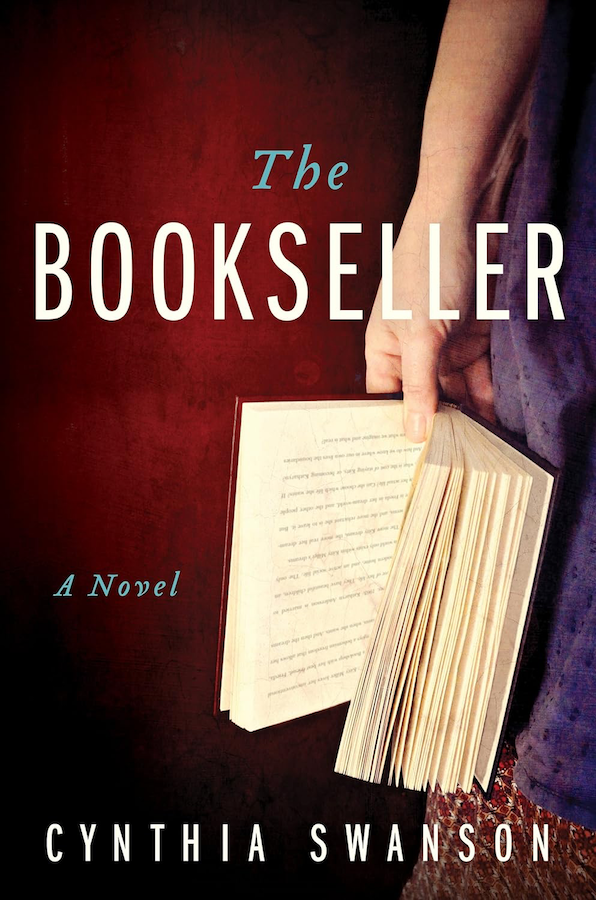
By the time The Bookseller released in 2015, Harper had been throwing around the marketing and PR muscle that every author dreams of. They sent out hundreds of advance review copies. They got reviews in major trades, arranged interviews, pitched the book diligently to booksellers in hopes of seeing it make the Indie Next list (which it did), and ran strategically placed ads. For my part, I hired an outside publicist to help me with social media, because I knew exactly zero about building a platform. I cultivated a loyal following, particularly among book clubs. Librarians and booksellers wanted to get to know me—and with my foot in those doors, I fostered now-longstanding relationships with both groups. None of that turned me into a household name, but it was significantly more than a middle-aged, unknown author from Denver would have ever expected.
It also gave me a sense of having “made it.” By all appearances, I had. My agent sold international rights in eighteen countries. For a few glorious weeks, The Bookseller was on the New York Times bestseller list. Julia Roberts’s production company, Red Om, came calling, and I happily signed an option agreement.
Easy street, right?
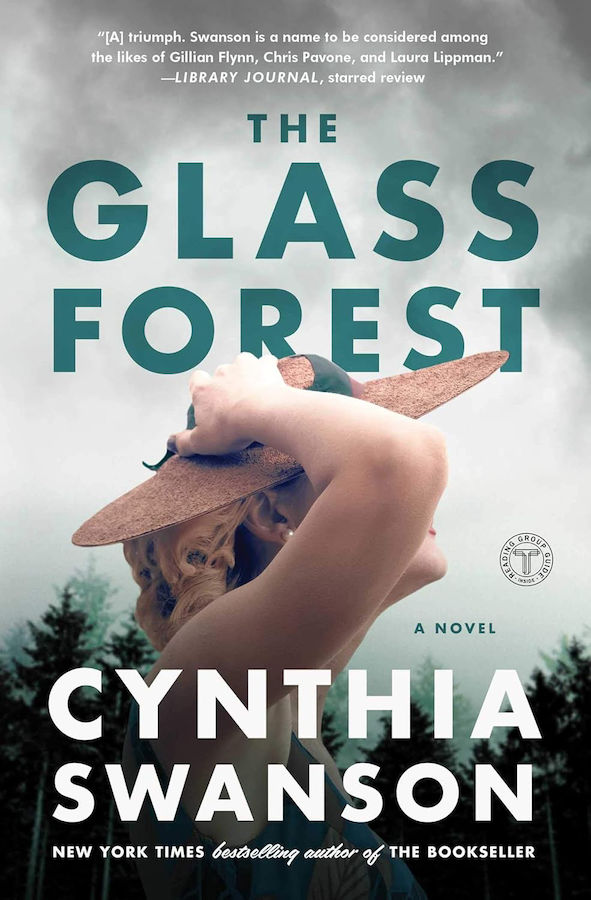
While all that was going on, I confidently wrote my second novel, The Glass Forest. But by the time I finished it, my editor had retired from Harper. The editor who took over, more interested in publishing nonfiction than fiction, politely passed.
No worries—my agent took The Glass Forest out on wide sub, and I landed at Touchstone, an imprint of Simon & Schuster. Touchstone was full of smart, sophisticated people who did a fine job with The Glass Forest. It didn’t get the advance, nor the fanfare, that The Bookseller did, but it sold internationally in seven countries and hit the USA Today bestseller list.
I was still on my game. All was well.
Less than a year later, Touchstone announced they were closing their doors. Current Touchstone books were farmed out to other Simon & Schuster imprints—who had their own lists, of course. Unsurprisingly, The Glass Forest was nobody’s priority except mine.
Orphaned twice yet undaunted, I began writing another novel. A pandemic came along, and with it a godsend: the opportunity to edit a collection of stories set in my home city of Denver. Published by Akashic Books, part of their Noir series, Denver Noir was the best group project I ever did. It wasn’t going to launch me (or any of the other thirteen story contributors) into instant fame—but it was gratifying, uplifting, and a hell of a lot of fun to celebrate when we emerged in spring 2022 to promote the finished anthology.
All this time, I was writing my third novel, Anyone But Her. When my agent took it out on sub that summer, we received gracious passes. Lesson learned: despite my street cred, the novel wasn’t ready and shouldn’t have been on sub. I rewrote it, but my agent didn’t share my enthusiasm, and we parted ways.
Within a month, I landed a new agent, who loved the book. She took the rewritten Anyone But Her out on sub in summer 2023. But after an editor has passed on one version of your book, rarely can an agent go back to that editor with an all-new version. “Your previous agent’s list was comprised of many of the same editors I’d have sent the manuscript to,” my new agent said. “They won’t give it a second look, because that’s how the business works.”
Fine, no problem. There are lots of editors out there, and I had a solid reputation and good sales numbers. But again, the passes arrived. “While the writing is wonderful, I don’t see this as Cynthia’s breakout book,” was a common theme.
Herein lies a disconnect between what big publishers want and what many authors want. Most authors are thrilled simply to see their books in print, garnering respectable sales and a developing fan base. However, for a Big Five publisher or midsize house to consider your manuscript, they have to believe that major sales numbers are possible. Generally, this means you’re either a household name or a debut they’re willing to take a chance on, thinking you could be the Next Big Thing—knowing, of course, that for most authors things won’t click, but if they do for some, coupled with the household names, things even out.
Another option is to establish an ongoing relationship with a house or editor. This might not lead to big sales numbers, but if the house and editor know you and your work, often they’re willing to accept more modest sales projections for your books. For many such midlist authors, as long as their editor and/or house sticks around, they’ll likely be okay.
For me, however, that ship had sailed—twice. So, time to give up, right?
Nope. Time, instead, to hire the developmental editor I’d worked with on The Bookseller. A former agent herself, she has an impeccable editorial eye, and I trust her implicitly.
I asked her straight out, “Is this book publishable? Because if it is, I’m thinking about self-publishing it.” Her assessment resulted in a subtle yet important shift to the storyline. I made that shift and the novel is significantly stronger for it. So, I decided to forge a new path.
If you’re among the many authors out there looking for your next (or first) book deal—whether previously published or not, whether agented or not—where does this leave you? Certainly, writing the best book possible should be your top priority. But being realistic about your writing, your career—and the very good odds that at any point, things might go sideways—is also vital.
I’ve shelved fully written books in the past. I expect I’ll shelve others in the future. Sometimes, that’s the right thing to do. But sometimes, it’s not.
Sometimes, the right thing to do is trust your gut and just keep going.
Ironically (or maybe not), the entire premise of Anyone But Her—a mother-daughter story about grief, knowledge, and intuition—is learning to trust your gut. It’s a skill that can be lost in this business when authors feel the crush of self-doubt on a regular basis.
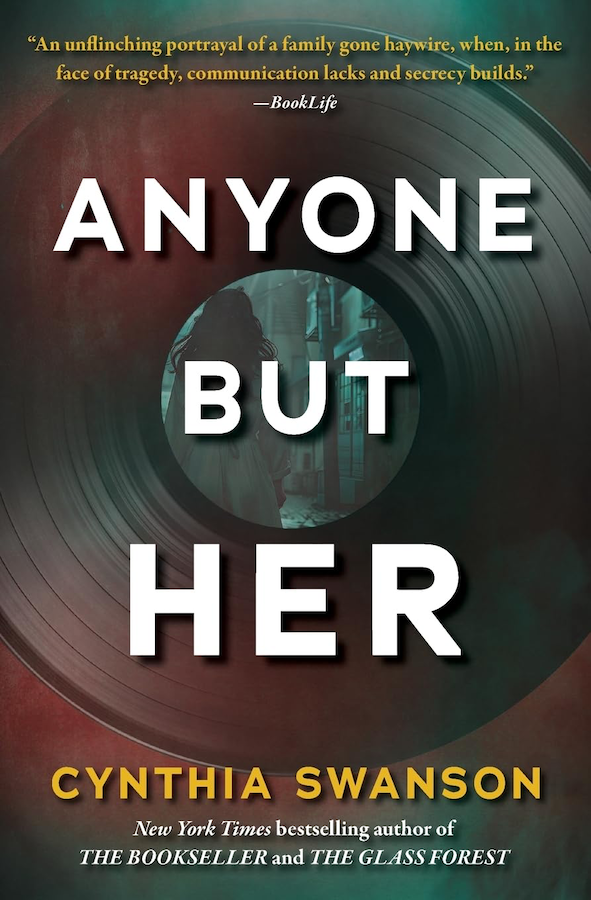
Not this time. I’m self-publishing Anyone But Her in ebook and print, and it releases today, September 17. My agent sold the audio rights, and an audiobook is forthcoming from Tantor Media. Advance reader and trade reviews have been great. My followers, fans, and book clubs who have been waiting years for a new novel are excited—and so am I.
This process has taught me lessons I’d never have learned if I’d landed on the easy street I anticipated when The Bookseller released. Become accustomed to expecting the unexpected. It’s essential that before you leap, you learn all you can. Be realistic. Run the numbers. Assess your risk tolerance. That goes for anything, really.
But in the end, you have to just do the thing. Might work out, might not. But if you never try, you’ll never know.

Cynthia Swanson is the New York Times and USA Today bestselling author of the psychological suspense novels The Bookseller, The Glass Forest, and Anyone But Her. Cynthia is also the editor of the Colorado Book Award winning anthology Denver Noir. She lives with her family in Denver. Find Cynthia online at www.cynthiaswansonauthor.com and follow her on Facebook (Cynthia Swanson, Author), Instagram (cynswanauthor), and Threads (cynswanauthor).

Boy, do I know this story. My first novel, NAKED AMBITION, hit number one in thrillers on Amazon in less than three weeks. Then my publisher closed up shop leaving me hanging with a sequel no one wanted. Publishers do not want a sequel if they didn’t publish the first book even if you have a track record of proven sales. They don’t want to help the competition by the sequel boosting sales for the first in the series, even if they are virtually guaranteed a healthy profit themselves.
That scenario happened to another friend of mine, too, except she was between books 3 & 4. Just have to keep going. Are you going to self-pub the sequel? It’s a ton of work, but I love having more control over the process.
I had ‘orphaned sequel syndrome’ too. Eventually I got the rights back to book 1 and published the whole trilogy somewhere else, but it took years. The patience of a writer, surely? Saints have nothing on us.
Nick, your last line above made me smile! Someone should write a poem or song with that as the title.
Thanks for this. While not nearly as successful as your work, my first book, a YA fantasy, was published by a small press. I had a three-book contract for a series but the press (one of those quirky, difficult ones, as it turns out) canceled the contract between 2 and 3 because I refused to purchase the bookstore returns (yes). I got the rights and republished the series, including the third book for the first time. The covers were infinitely better (a wonderful designer) as was the internal design (by me). My lesson learned is that writers are adapting to new ways of story-telling and platforms and getting rid of the all-or-nothing path of traditional publishing. Good luck with the launch!
Thanks, Robin. I agree, it’s all about being able to pivot. Authors who are able to do that stand a much better chance long-term. Congrats on republishing your books!
Brava! My first essay publication was in :The New York Times,” and I thought publishing a book would be as easy. Ha! The day I committed to self-publishing was the launching of the most creative period of my life. I congratulate you on this fabulous decision. I think you’ll thrive.
Thank you, Debra! I feel optimistic…we’ll see how it goes, but so far, so good! Glad to hear from another self-pubbed author about the creativity—the most vital aspect of the process, right?
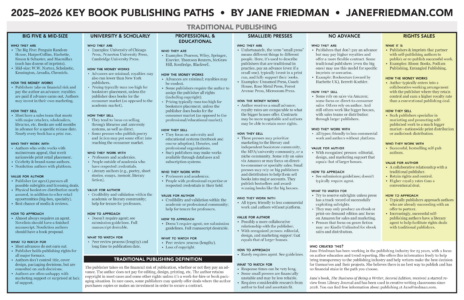
What an important post! Everyone on Jane’s list best take the time to read your story through. Congratulations on the release of “Anyone But Her.” Congrats too on seeing the forest and trees both. This whole game of novel writing sure is a strange one! I always think my work is part Solitaire, part hopeful lemonade stand management, and part singing in the shower with the button pushed for “Record” My songs are intended to be enjoyable and even important someday whether I’m still here or not. Thanks for your experience and insights!
David, I love that analogy! All of those and more. It’s a wild ride, isn’t it? Thanks for your support and encouragement.
This is a GREAT article and emphasizes that we can take MANY paths to publication. It’s the READERS who also benefit, who want your words, no matter whose label is on the spine.
Indeed, Jendia! And there are so many tools and resources these days for ensuring your self-pubbed book is as professional in content and appearance as a trad-pubbed book. That was one thing I was committed to—ensuring the final product for Anyone But Her is as professional as my previous books. Trade and reader reviews so far suggest it is.
I wrote my first (very successful) novel with Holt decades ago. Then (well-received) scholarly work with university presses. A year ago, I started learning about the present, and to my mind, very unsavory world of tradional publishing; this while pitching a brief history of the medical suppression of incest, written both for the general public and classroom use. The more I learn, the more I realize it’s not for me. So if possible, I’d like to know more about who Swanson first reached out to for help once she made her decision. The sense of relief once the decision was made must have been heady!
Susan, as mentioned, the first thing I did was hire my developmental editor that I used for my first novel, The Bookseller, to do an assessment of the manuscript for Anyone But Her. By then, I’d also had a number of beta readers, and my new agent, when we began working together, made many helpful suggestions (which I implemented). After that, I reached out to successful self-pubbed authors I knew and asked for their insight, which was incredibly helpful. I also read a ton about the process, attended webinars (including one that Jane hosted a few months ago with David Wogahn), and set up a timeline and budget. It can be done, but it’s a lot of work. Rewarding, though!
I also want to say that I have nothing against traditional publishing. The trad-pub world has been very good to me, and I’ve worked with excellent people at all 3 trad presses when I’ve been previously published. Will I go back to trad-pubbing after this? Time will tell. I’m writing a new novel now, and when I feel it’s ready to be out there in the world, I’ll make the decision about whether to pursue a traditional deal or self-pub it. Either way, it’s nice to have choices!
What a fabulous story and testament to all that’s confusing about publishing today. I’m working on something now that, because it’s in a new direction from my previous traditionally-published work, may fare better self-pubbed. This industry is due for a major overhaul, and kudos to you for taking your work into your own hands. I wish you all success, and please keep us apprised.
Thank you, Janet—I appreciate your kind words. I had that exact conversation with an author friend not long ago. She’s writing the “book of her heart” and doesn’t see it as something her publisher will likely be interested in, so she’s considering self-publishing it. I believe that when self-pubbed authors do all they can to ensure their books have the same quality in both content and presentation as trad-pubbed books, they’re on the right track. Good luck with your new project!
Pretty much a standard these days. When Jennifer Crusie and I marketed a series a couple of years ago, we did get an offer but it was pretty sad. We self-published the series and make more in a week than the offer. You hit a key– publishers either publish a bankable known quantity or gamble on a debut author. But the higher sell-through lower sales equation is a killer for midlist and even high midlist authors. Good luck on the book.
Thanks, Bob. Time will tell how this works out, but so far, I’m enjoying the process. Self-pubbing has a steep learning curve, but it’s ultimately rewarding in terms of control. Congrats on your series!
Times are changing! I’m so happy for you!
Thank you, Lisa! Times are indeed changing. I’m glad authors have so many options these days.
Great article! This spoke to me :). My first novel had 3 editors and despite a great advance it was lost in the shuffle. My next effort had 2 editors and the same thing happened. This happens a lot! Editors move around, leave the biz, start something new. I’m glad to see you shining a light on it. Best of luck with new book – I’m going to pick up a copy today!
Thank you, Beth! I hope you enjoy Anyone But Her. Yes, it’s a wild business, with very little predictability. Authors need to be willing to adapt, because even when you think you know what’s coming, anything can change at any moment. All the best with your writing!