Big publishers may be better positioned to weather industry changes, but regardless of role or position, everyone has shifted focus to reaching readers directly and increasing digital access
While it’s too early to know for sure what the book industry might look like in another year, there is a remarkable sense of optimism that the community has escaped the brutal fate of some other economic sectors, at least for now. That doesn’t mean there isn’t a lot of financial need among bookstores, publishers, and authors, with a potential crisis looming for small businesses—only that, overall, the public’s interest in books and reading has remained strong. Here we’ve gathered insights about the industry’s fortunes in the near term and how the business can survive, or even thrive, in some instances.
The summer and early fall look crowded with new releases
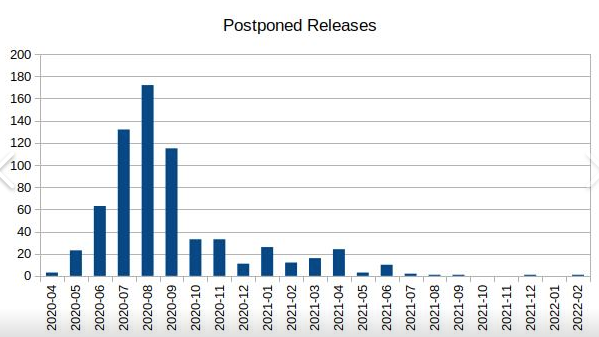
In an analysis of delayed release dates (as reported by Publishers Lunch and Publishers Weekly), UK-based author Russell Phillips discovered that July, August, and September are the most popular months—notable for being well before the US presidential election. The managing director at Atlantic Books told The Bookseller, “If a book needs retail display, publishing it now is quite pointless.” Authors should be aware of the greater competition they face during this time and plan accordingly. Long-time author Kristine Rusch suggests indie authors not delay their release dates, despite the crowding.
Deal-making remains steady, with a drop in high-dollar deals
Publishers Lunch recently evaluated its own stats on publishing deals in April 2020 versus April 2019 to see if and how the coronavirus has affected acquisitions volume (subscription required). While there were 8 percent fewer deals this year, it was in fact the second busiest April for deals over the past five years—and April 2020 deal volume was 5 percent higher than past four-year average. Children’s deals performed the best, experiencing their best April in five years.
The total number of six-figure deals has been steady, but the biggest change is the decline in reported “major” deals ($500,000 advance and up). Cader writes, “We recorded 15 major deals in March and April for 2020, the lowest number over the past 5 years. Big deals spiked in 2018, when we had 31 major deal reports, with 19 reports in 2019 and 2017, and 23 in 2016.” Possibly it will be tougher this year for authors to secure those major deals if publishers’ cash flow is threatened. Some publishers are backloading payments to authors still receiving big advances.
Author Jason Sanford reports that editors are flooded with pandemic, viral-outbreak, and end-of-the-world stories. He says obviously you can still write these, but now may be a less-than-ideal time to submit them. He suggests this Twitter thread to consider how you can set your story apart. As for what type of fiction is primed to perform well in a pandemic or post-pandemic world, UK editors speaking to The Bookseller emphasized (subscription required) a desire for uplifting and escapist fiction—or a distraction from the virus. This piece by Heloise Wood at BBC Culture is an interesting exploration of what’s traditionally sold well in times of trouble and what trends point to now.
While big publishers expect 2020 revenue declines, the overall book industry will adapt and bounce back
As we discussed in the previous item, big publishers anticipate revenue declines of anywhere between 15 and 40 percent for the full year, with educational publishers—at least those dependent on sales of print materials—more at risk. However, finance firm PwC predicts that the virus will not affect the health of publishing in the long term, although small publishers and booksellers may disagree with that assessment if diversity in the field is diminished and more market share shifts to conglomerates or Amazon.
The future of small publishers is precarious
In the UK and US alike, small publishers fear they won’t survive the year. The Bookseller conducted a survey of several dozen publishers, most of whom have fewer than 10 employees and focus on literary fiction and poetry as well as writers from disadvantaged backgrounds. The majority face closure without financial assistance, and a quarter cannot afford to acquire new books right now. Because print books make up the bulk of such publishers’ revenue, they are reliant on sales through bookstores as well as events. While we haven’t seen a similar survey yet in the US, an analogous constituency of publishers would be members of the Council of Literary Magazines and Presses, those distributed by Small Press Distribution, and/or those who exhibit at AWP’s Bookfair. UK publishers may face the greater threat, though, as overall retail print sales have remained more stable in the US, down by 2.2 percent so far for the year, at least according to NPD BookScan.
Publishers who reach consumers direct can survive, regardless of size
What’s become clear as the pandemic has unfolded is that publishers who have developed the ability to reach readers directly, such as Belt Publishing or Wolfpack Publishing, are more likely to survive. Here’s a recent profile of Wolfpack, a genre fiction publisher, now enjoying increased sales during the pandemic.
PRH UK says (subscription required) they will focus resources on their own direct-to-consumer channels to connect with readers and bookstores online. Similarly, the CEO of Wonderbly (a children’s publisher) says the pandemic has exposed many businesses (publishers and booksellers alike) to the perils of not having an ecommerce solution or means of selling direct to consumers. In the future, there will be no excuse to not have an online shop.
We spotted a fascinating mention of the Financial Times (a digital news subscription success story) consulting with PRH on “subscription expertise.” Might an ebook subscription service be in the works from the biggest trade publisher in the world? Literary agent Jonny Geller, in a Twitter conversation with The Bookseller, says that some publishers are definitely thinking about this, but everyone remains cautious. “Some subscription could work,” he writes, “but the ‘all you can eat buffet’ style would destroy authors’ incomes and reduce choice. This is the time, though, to experiment with other models.” He told The Guardian that publishers should be more aggressive in selling books direct, rather than pumping money into “ailing chains.”
Along the same lines, industry vet and marketer Sam Missingham suggests in The Bookseller (subscription required) that now is the time for publishers to shift energy and resources away from short-term frontlist book marketing around publication date to long-term audience development: “The long game of audience building also sells books, but more importantly it builds trust in our content, adds value to our audience, and is a more efficient and cost-effective way of marketing our books.”
Virtual author events may become an important part of that direct reach effort. As reported by Publishers Lunch (subscription required), late Simon & Schuster CEO Carolyn Reidy said that virtual author promotions will “become a much bigger added portion of what we do, because it’s successful and it extends our reach.” She expected that S&S would continue to refine what works best in converting digital events to sales—and that overall the changes being made now will save money and help the publisher work more efficiently. And PRH US already has considerable experience in developing online events, with a consumer marketing department, video team, and in-house studio that’s been in operation for several years; Publishers Weekly looks at their recent efforts.
Customers may be trained to shop for books outside of Amazon
Isobel Dixon, the president of the UK’s Association of Authors’ Agents, believes (subscription required) that customers may now have a greater awareness of the need to support a diversity of booksellers, and after the pandemic ends, they may continue to shop in a more mixed fashion. Faber’s Stephen Page agrees: “One thing that must come out of this is a model where online selling is more plural.”
The indie author community expects to be insulated from economic shocks
When you lurk in Facebook author groups or read leading industry voices such as Kristine Rusch or David Gaughran, the predominant conclusion among self-publishing authors is that they are positioned to perform better than traditionally published authors no matter what happens. This argument makes sense: digital book sales are up, and indie authors benefit more as discovery and sales shift online. If more people stay online, the advantage of brick-and-mortar retail merchandising (and events) greatly diminishes for traditionally published authors. Indies also have the ability to push prices lower when needed and offer special promotions to readers who may have less disposable income than before. And last but not least, self-published authors can easily add their books to popular consumer and library subscription services, such as Scribd, Storytel, Hoopla, and Kindle Unlimited—right when traditional publishers have been pulling back from such services.
Bottom line: For big and small publishers alike, we expect to see renewed or redoubled investment in digital marketing of all kinds, particularly email marketing, social media, book metadata optimization (for backlist discovery), and virtual events. Subscription services might present an appealing opportunity for the largest publishers or for enthusiast and genre publishers (especially if such initiatives were already underway), and publisher-run book clubs may see renewed interest if they can be run cost effectively. Publishers have difficult decisions ahead when it comes to making ebooks and audiobooks available in established subscription services (e.g., Scribd or Storytel), which could become more popular over time with cash-strapped consumers—as could the library.

Jane Friedman has spent her entire career working in the publishing industry, with a focus on business reporting and author education. Established in 2015, her newsletter The Bottom Line provides nuanced market intelligence to thousands of authors and industry professionals; in 2023, she was named Publishing Commentator of the Year by Digital Book World.
Jane’s expertise regularly features in major media outlets such as The New York Times, The Atlantic, NPR, The Today Show, Wired, The Guardian, Fox News, and BBC. Her book, The Business of Being a Writer, Second Edition (The University of Chicago Press), is used as a classroom text by many writing and publishing degree programs. She reaches thousands through speaking engagements and workshops at diverse venues worldwide, including NYU’s Advanced Publishing Institute, Frankfurt Book Fair, and numerous MFA programs.