

Today’s post is by author Eva Langston.
Well, to be honest, the first thing I did, after my second manuscript didn’t sell, was spend a week wallowing in despair. But I’ll get to that.
First, let me set the scene. I have been trying to become a published novelist for nearly twenty years. First, I got my MFA and wrote several terrible drawer novels. Then, in 2014, I signed with an agent but, after working with him on revisions for nine months, we parted ways and I went back to the query trenches. When I couldn’t find another agent, I wrote more books. I queried for many years with multiple projects. Eventually, I found a new agent. We worked on revisions to my YA suspense novel and I thought: This is it. Finally, I would have a published book to my name.
But the book didn’t sell. It was rejected by every editor who read it. No worries, I told myself. While on submission, I’d been writing and revising another YA novel, so my agent sent that one out to editors. When, a year later, that second YA novel died on submission, it felt like a little piece of me died, too.
I had written another manuscript while the second book was on sub, and it needed major revisions, but I struggled to find the motivation to do them. Give another year of my life and another chunk of my soul working on yet another novel that wouldn’t sell? I felt more depressed than I’d ever felt in my life.
So here’s what I did.
1. I tended to my mental health.
I was really down. For a few days I felt like I’d been flattened by a steamroller. I barely ate, and I felt physically incapable of smiling. I let myself feel my feelings, but I knew I needed to do something to get out of this funk. So I talked to my therapist, and I scheduled phone calls with my friends. I scrounged up the energy to take brisk walks. I spent time with my family. I made a list titled “ways to feel better” and started checking off items on the list.
2. I filled my creative well.
Since trying to work on revisions to my newest manuscript was fueling my feelings of fear, anxiety, and failure, I read books instead. I forced myself out of the house on artist dates: a sculpture garden, a museum, a long hike. In fact, on the drive home from the sculpture garden, I had an idea for a new novel, but we’ll get to that in a minute.
3. I started a project that was 100% in my control.
You can’t control whether or not an agent signs you, or a publisher offers you a contract, or a reader buys your book, or your book wins an award. In this business, one of the only things you can control is the writing itself.
But I was feeling discouraged with writing. I was feeling depressed that all my manuscripts were likely going to sit in the depths of my computer, unread and unappreciated, for the rest of time.
So I decided to do something I’d been wanting to do for a long time: start my own podcast. It was something I could create and put out into the world totally on my own. I didn’t need anyone to tell me yes. I could just do it. And having that control felt really good.
I started working on my new podcast The Long Road to Publishing with Eva Langston. I interviewed guests who had traveled a long and bumpy road to publishing their books. I talked to authors who had spent years in the query trenches, weathered hundreds of rejections, had manuscripts die on submission. In fact, a lot of the authors I’ve talked to so far have had at least one book die on submission; it’s way more common than people realize. And, honestly, that makes me feel a lot better.
I’m so happy I’ve created this podcast. These interviews have not only been fascinating, they’ve been healing. I’m not the only one struggling. Pretty much everyone who finds success in this business has traveled a difficult road to get where they are. The people who make it are the ones who put in the work and don’t give up.
Of course, starting a podcast was my dream project. For others it might be making a quilt, taking dance classes, playing music, or creating an author website. The point is to do something that’s in your control, and maybe involves putting a piece of yourself out into the world.
4. I channeled my feelings into a new low-stakes novel.
Writing is such a big part of who I am, and I knew I’d feel better if I was working on something creative. But for the sake of my mental health, it needed to be low stakes. Instead of trying to revise the manuscript I’d written, I decided to write something new, just for fun. No word count goals, and I’d keep my expectations low. Just sit down five times a week and write for an hour, I told myself. Find joy in the creative process: the words, the experimentation, the discovery.
Remember that idea I’d had while driving back from the sculpture garden? It was for an adult thriller, and I decided to pursue it. I created a character who was struggling with her career and falling into a pit of despair. I poured all my feelings of anxiety and anger and dejection into this character. And because it’s fiction (and a thriller), I dialed everything up to eleven and made her behave in ways I never would.
It was very cathartic.
And this low-stakes novel that I told myself to simply have fun with I finished it in three months! My agent absolutely loved it, and she’ll be sending it out to editors soon. I think this is my best novel yet, and I never would have been able to write it if my first two books hadn’t died on submission.
Getting traditionally published is incredibly hard at pretty much every step of the process: writing the book, revising it, finding an agent, getting a book deal. You have to hit the right agent/editor at the right time with the right project. And, from what I hear, it doesn’t get much easier after that. The publishing road is full of potholes and detours, even after you get a book deal. That’s why it’s so important to find joy in the writing itself.
Note from Jane: You can listen to Eva’s conversations with guests such as New York Times bestseller Julia Bartz, YA and MG author Kern Carter, and novelist Courtney Maum on The Long Road to Publishing. It can be found on Spotify, Apple Podcasts, YouTube, or wherever you get your podcasts.
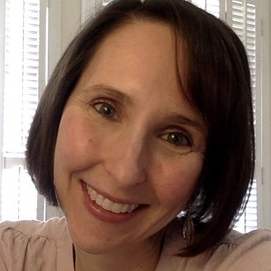
Eva Langston received her MFA from the University of New Orleans. Her short stories have won a variety of prizes, including a Pushcart nomination, and she has been an instructor at The Writer’s Center in Bethesda, MD for over nine years. Eva is co-host of the podcast This Mama is Lit! and creator/host of the podcast The Long Road to Publishing (launching in July 2025). She works as a writing coach, and her writing resources newsletter on Substack has nearly 6,000 followers. She is represented by Ali Lake of O’Connor Literary.


Wonderful ‘hurts all over’ article, Eva. And in the end, a brilliant choice of subject matter – never a loss of loss! There must be millions out there with this kind of butt-busting blues. I have my own tale of woe after feeling corralled into self-publishing. But I think you hit on a VERY good and serious point…how to stay in love with life, the writing life, and even yourself in this horribly competitive world of writing. I think it is so important to not get caught up in the status quo of the market, like any form of artistic endeavour, which may mean ‘dying a thousand deaths’ of the mind and/or one’s ego to clear a path to what is a really true, honest and creative expression for someone. Congratulations on finding your way out of the ‘dark night of the write’ and finding the light of life again. Prayers for those who still roam the darkness of industry standards, trying to be someone they are not, to fit those standards. 💗
Have the BEST fun with your podcast!
I’d really like to talk to you about the pitfalls of self publishing after going through some of the hell you’ve described. Because I’m about to try it.
Thank you so much!
Wow, you do have persistence! Good going, Eva. I think the most arduous path is going the agent/traditional publishing one. It’s a hard, steep climb with high competition, and most authors become exhausted with disappointment. I have 5 novels indie-pubbed, my newest with an excellent mid-size publisher who is generous with book promotion and advertising—5-star in my opinion. I can say that this business is a marathon and there’s really no finish line, even with a good publisher. Keeping sales going by building an author platform, book exposure, readership, reviews, promoting on social media and blogs, doing interviews and podcasts, etc., is a never-ending task because you need to compete in the marketplace with thriving sales. Fiction is especially competitive. Your suggestion about doing what you can control is a good one. I have a friend who went the agent/traditional route and her book didn’t sell well on Amazon, got mixed reviews, etc. The publisher dropped her, the agent dropped her, and she found no traditional publishers to take her novels on. She’s now self-pubbing and doing much better, mostly because she is controlling her book production, marketing, and promotion. She is building her readership one by one. Good luck and buy yourself a new pair of running shoes!
Thank you so much!
Congrats on the awesome podcast, Eva. Such a great idea and what a wonderful way to both deal with your own grief and make an important contribution to the literary community. I think hearing these stories is going to be healing for a lot of folks! I know I learned a lot from our conversation!
Thank you, Robyn!!
First to Jane, I always always always love your articles! You have inspired me in so many ways. And to Eva. Your story hits home. I have been working on one YA novel for too long to mention. And the reason I stick with it is because the protagonist is physically disabled and this is a such a marinalized area. For every editor I have worked with I have had positive feedback. But each rejection sends me into despair. So my creative outlet, aside from writing, has finally taken off. And that is a huge emotional boost. I will go back to submitting, but for now, I have to take the pleasure of a certain amount of creative success to feed my soul.
Good luck with your novel, and, yes, feed that creative soul!!
Thanks for sharing, because in spite of all those triumphant shouts of congratulations and well deserved I might add, to those who “get through with traditional publishing”, there is indeed a silent wave of those who don’t. And as much as creativity churns, the rejection hits and one must find ways to reset, redirect and rebuild – the mind, heart and soul. For as writers those three things are our engine. So, thanks again for sharing and providing paths forward, as we continue to navigate this writing.publishing journey. Continue being, striving and creating!
Yes, I was thinking about how the people who “get” to tell their stories are the ones who struggle and finally make it. But what about the ones who struggle and don’t make it to a traditional book deal? Who have to pivot and maybe shift their expectations and goals. Those stories are important, too.
Great read, and thank you for the post. I feel I have had a similar path…having gone through multiple agents and several books dying on submission, I have decided to take control of my own career. I think all authors dream of that illusive traditional publishing contract, but many times it’s not meant to be and that’s okay. Thankfully today, they are many other options for publishing.
If you decide you’re a good fit as a guest for my podcast, feel free to contact me and pitch yourself!
It’s unfortunate that you didn’t realize from the outset of your dream that this is the only way to find your best writing. I hope the new book does well.
Thanks, me, too!!
Very insightful! Thank you for sharing your journey.
Thanks!
Man, do I feel this post. I was nodding my head during much of it. (For me, my “I’m in control” thing has been a YouTube channel.) I learned a new term recently called “nonfinite grief” (also known as “living losses”), which speaks to the deep ache of unfulfilled ambition when the dream you’ve been working towards for decades doesn’t materialize. The key is finding how to grow around the grief, which is exactly what you’re doing. Keep going! And fingers crossed on the new book.
Ooh, this is so interesting. I’m going to look into “nonfinite grief” b/c it’s nice to have a name to go with the feeling. Also will have to look for your YouTube channel!
I loved this so much and can totally relate. Thank you for putting into words what so many writers go through. (I thought it was just me)
Thanks!