

Today’s post is by author R.L. Maizes.
A writer will say their book is on submission when what they mean is their tender heart is being served on a bed of hope to the publishing industry.
My own novel had been on submission for nine months when I took up knitting. I’d written the book during the pandemic and had been sure it would sell quickly and be my breakout success. Okay, I think that about all my books, but this time it was really going to happen. Except it hadn’t. Not yet, anyway. A year before, I’d switched agents, and if the book sold, I’d be switching publishers. I was feeling more than a bit discouraged about my writing career.
To make matters worse, it was Christmas Day, a time when as a Jew I always feel at loose ends. No festooned, needle-dropping tree gladdened our house. No fat ham crowded the refrigerator, waiting to be glazed. Bored, I paced my home office and happened to glance at a large cardboard box on a closet shelf. It was shipped to me years before by a kind poet after I recklessly commented on her social media post that I wanted to learn how to knit. It contained everything I needed and more: Needles of several types and sizes. Alpaca and sheep yarn. Rudimentary instructions and encouraging words.
Pawing through the generous gift, I’d shaken my head. I couldn’t knit. I couldn’t knit! I wasn’t the slightest bit crafty. When I studied sewing in high school home economics, my mother had to take my final project—a vest and skirt made from improbably thin material—to a tailor so I could pass. With more than a little guilt (Jewish, remember?), I shoved the fat box to the top of the closet and hadn’t touched it since.
Yet after nearly a year of failed submissions, I needed a change, a creative outlet other than writing. I reached for the box. I’d watched my husband cue up YouTube videos to learn everything from how to fix a roaring bathroom fan to how to replace a part on his aging truck. Why couldn’t I teach myself to knit the same way? It turned out, I could. The internet is crawling with tutorials* that even a craft-challenged person such as myself could follow.
Making my first few sloppy stitches, I barked with joy, so thrilled you’d have thought I invented fabric. Instead of ruminating about my novel’s encroaching death, I wrestled with wooden sticks and a ball of yarn studded with white fur after my cat decided she wanted to learn, too. Acquiring a new skill at the age of 61 delighted me. Knitting brought me back to the pleasure of creating for the sake of creation, of making something for the sheer fun of it without giving a thought to its commercial viability. My first finished project, a lopsided pair of green handwarmers, managed to enter the world without the approval of an editorial committee.
Weeks passed and another Big Five publisher rejected my novel. But I’d made a hat! A well-known indie said no. Look—a pom-pom for the hat! I knitted a scarf and a single sock. I didn’t like the thick yarn I’d used and didn’t knit the second sock. Letting go of that project was easy. I hadn’t spent three years on the first sock. I hadn’t dreamed about the sock or traveled to an exotic location to research the sock or paid a developmental editor to wear the sock and tell me where it hurt. Another editor said no, but by then I’d knitted lots and lots of handwarmers. I’m fortunate to have friends whose hands are always cold. And it doesn’t hurt that I live in Colorado.
I dropped stitches, knitted with the wrong end of yarn and with tension so tight I could barely insert the needle to knit the next row. I unraveled a lace cotton dishcloth five times before I got it right. A finished hat had the circumference of a barrel and a pair of mustard mittens different lengths. The more mistakes I made, the more I learned, and the braver I became, willing to try new techniques and different types and sizes of needles and weights of yarn. Over time, my stitches began to look as uniform as those of a practiced knitter. Leaving the house in the morning, my husband had always said, “Write good words!” or “Use lots of punctuation!” Now he threw in, “Make good knots!”
Though I was enjoying my new hobby, as publishing slowed for the summer, my novel continued to languish. I created a list of independent presses I admire that I thought might publish it. Since I hadn’t opened the manuscript in more than a year, I sat down to proofread it with fresh eyes. I’d read scarcely three pages when inspiration hit me as hard as a Mogen David hangover, revealing a way to improve the book. It was no small revision and it required taking a risk, the kind I’m sometimes tempted to avoid for fear of embarrassment.
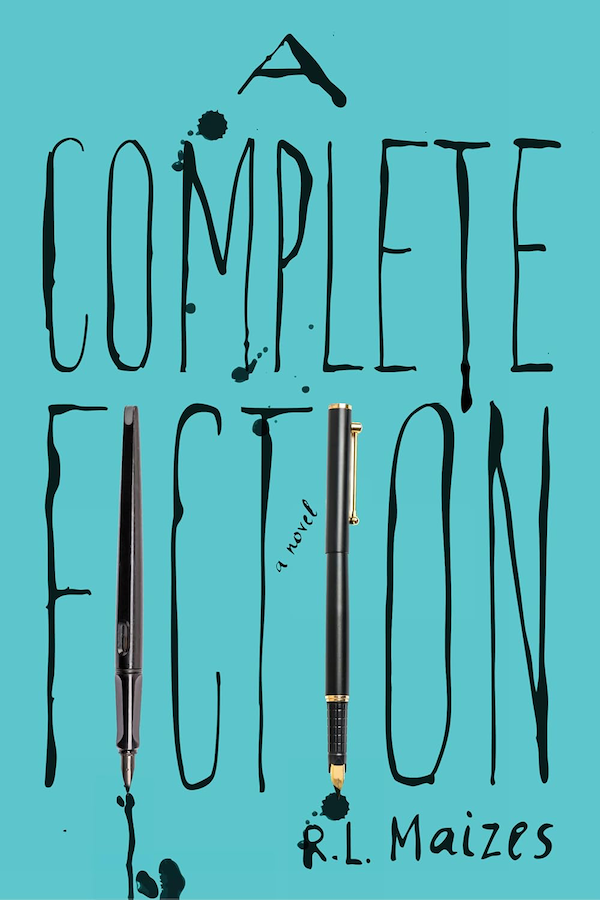
I spent six months rewriting the novel, sharpening language and tightening scenes while I was at it. Then I sent it to the independent presses at the top of my list. The novel, A Complete Fiction, sold in two weeks and releases today.
Did learning to knit help me revise my novel?
Several weak metaphors suggest themselves: The many stitches in a garment, knit one at a time, are like the many words of a novel, et cetera; ripping out stitches is like killing your darlings; closing the gaps in a garment is like fixing plot holes. I’ll stop there because it wasn’t the way knitting resembled writing but the way it differed that rescued me. The vacation knitting released my brain from the page and my fingers from the keyboard and returned me to my manuscript refreshed.
As novelists, we work years without seeing the fruits of our labor and sometimes never see it at all. When our books are published, much of the process—from design to publicity to sales—is wrested from our damp, anxious hands. Not so with knitting. In a week, I can make a pair of mittens, the choice of pattern, yarn, and needles all within my control. A friend or family member will likely receive them with gratitude, unlike certain editors, who’ve been known to greet submissions with the enthusiasm of a rancher served a tofu steak.
Knitting gave me something to fixate on other than writing and a community of knitters similarly consumed. The hobby even came with its own vocabulary to tickle my word-happy brain, including slang such as “tink” (to knit backwards) and “frog” (to rip out stitches, “rip it, rip it”). I’m not the only writer who’s discovered the benefits of engaging in other crafts. Among my author friends I count ceramicists, a collagist, and one who does needlepoint. Well-known writers who knit include Ann Hood, Elinor Lipman, and Caroline Leavitt.
In knitting’s rhythmic nature, fluffy yarns, and a pair of smooth nickel-plated needles, I found comfort, something all writers need at one time or another because the profession is hard and makes no promises, not even the reward of effort. Learning to knit renewed my confidence, allowing me to return to the page and take a risk I might not otherwise have taken. A risk that may have saved my book.

R.L. Maizes’s debut novel, Other People’s Pets, won the 2021 Colorado Book Award in Fiction and was a Library Journal Best Debut of Summer/Fall 2020. She is the author of the short story collection We Love Anderson Cooper. Her stories have aired on National Public Radio and can be found in Electric Literature’s Recommended Reading and in The Best Small Fictions 2020. Maizes’s essays have appeared in The New York Times, The Washington Post, O Magazine, McSweeney’s Internet Tendency, and have aired on NPR. She is a Virginia Center for the Creative Arts Fellow and the recipient of a Fellowship Grant from the Memorial Foundation for Jewish Culture for 2024-2025 for her novel-in-progress, Beanie.
Maizes was born in Queens, New York, and lives in Boulder County, Colorado, with her husband, Steve, and her muses: Arie, a cat who was dropped in the animal shelter’s night box like an overdue library book, and Rosie, a dog who spent her first year homeless in South Dakota and thinks Colorado is downright balmy.


I need to take up knitting! How else am I going to survive another six months of being on submission? Wishing you all the best with A Complete Fiction which should land on my doorstep tomorrow.
Thank you so much for buying it and I hope you enjoy it. Good luck being on submission! May your manuscript land in the lap of the exact editor who needs to read it.
Love this! Likewise, I’ve found that when I take the time to knit–or my new creative pursuit of simple watercolor paintings–it connects me to God, the Creator, and my own creativity is encouraged to bloom. I try to do at least one creative activity of any sort every week. It inspires my words and soothes my soul.
I’m so glad you enjoyed the essay, and keep on keepin’ on with those creative acts!
Knitting taught me how to let go of my perfectionism. I would spend so much time knitting a project, ripping it back, starting over (sometimes multiple times), that it was impossible to make a project free of errors. However, the finished item would still be beautiful and wearable, and often the only person who noticed the flaws was me. This attitude of being unafraid to start over, to rip out what wasn’t working and begin again, transferred to all areas of my life, including my writing. That fear of change, of deleting words or overhauling a manuscript, is gone. I may not like doing it, but I can do it now instead of being frozen with doubt. Knitting taught me the beauty of starting over, of trying until I succeed, and the beauty of flaws. Finished not perfect!
Amen to “finished not perfect”! It applies to so many things!
Just reached p. 47 of A Complete Fiction and love the humor!
I’m so glad! I hope you continue to enjoy it.
Such an important topic! Thank you for writing it!
Thanks for reading it!
Rarely have I read something both so wise and so funny. Thanks!
What a kind thing to say! Thank you so much and I’m so glad the essay resonated with you.
“To knit a sock, Rachel uses math…” Beautiful essay. ~ J
Thanks so much, Joe! It did come through.
Love this. I’m a knitting writer too. Knitting and meditation are my saving strategies against the sting of rejection and the seemingly impossible knottiness of writing problems.
I’m so glad you enjoyed the piece, fellow knitter of words and garments.
An inspiring read connecting creative hobbies to writing. It’s fascinating how a hands-on activity like knitting can help strengthen patience and focus in storytelling.
So glad you enjoyed it!