
Creation and Doubt Are Conjoined Twins
All writers have to find a way to deal with the internal negative voice that tells them their work is crap and not worth pursuing.

All writers have to find a way to deal with the internal negative voice that tells them their work is crap and not worth pursuing.

Series have become extremely popular, and secondary characters are now in the spotlight. Readers enjoy trying to spot the next potential hero or heroine.

Is MailChimp the best choice for your email newsletter? Here’s a breakdown of the pros & cons of the three biggest email service providers that authors use.

Sometimes guidelines for writers discourage perfectly private, internal envy, anger, indignation, etc., directed toward other writers, or toward agents (or publishers) rejecting work. But that hardly seems realistic, nor is it fair to ask humans to stop being human.

There’s no quicker way to intimacy with a lead character than first-person point of view (POV). But numerous challenges also come with this POV. One of these is the natural limitation of being stuck in one perspective throughout the story.

For a platform that powers a quarter of the websites in the world, Wordpress is surprisingly insecure. The default settings leave a site open to being hacked a half-dozen different ways.

Ideally, we’d have all the creativity and energy and desire we need to write amazing stories. However, the truth is, sometimes we hit roadblocks while following through. Here are some of the most common roadblocks and how you might solve them.

Whether you’re an emerging author or one that is well-established, it can be challenging to figure out what belongs on your website’s homepage and what to say about yourself on the front door to your online presence.

In a great story, character and plot are inextricable from one another. The seeds of the story conflict lie in the character.

Do you know what time it is in Mumbai, India? Knowing time differences in the countries where you sell books is key to social media engagement, and ultimately sales.
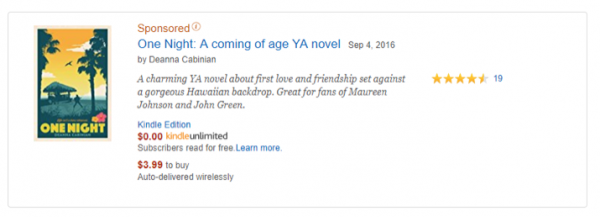
While Amazon sponsored ads haven’t been a marketing miracle, I also haven’t lost that much money—and copies of my YA novel have sold at a steady pace.
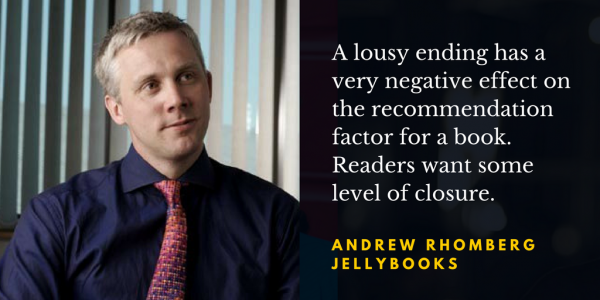
Reader analytics measures the strength of reader engagement with a book. This data helps publishers more effectively market and promote books to readers.

Plugins are one of the most wonderful and useful things about Wordpress. Here are some of my favorites for writers.
A self-published author breaks down her expenses and resulting sales after promoting on social media and email, paying for reviews, advertising, and more.
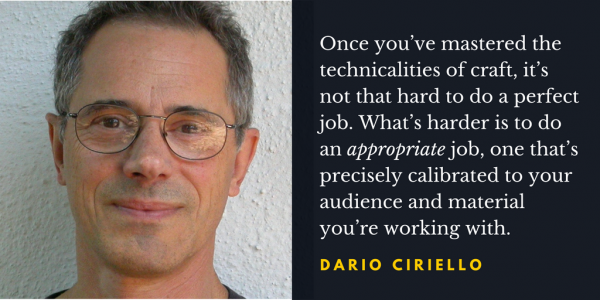
Author Dario Ciriello talks about breaking writing rules, what publishing other writers taught him about the business, and how little he as a writer cares about what other writers think.

When I work on a project—with clients, but particularly with my own writing—I start by acknowledging a blunt but important truth: Nobody cares about what I have made.

Social media is just one component of your author platform, and not necessarily the most important component. It works best as part of a holistic book marketing and promotion strategy.

Pitching agents at a writers conference can be a difficult task for the new writer. Here’s how to make it a little easier on yourself.
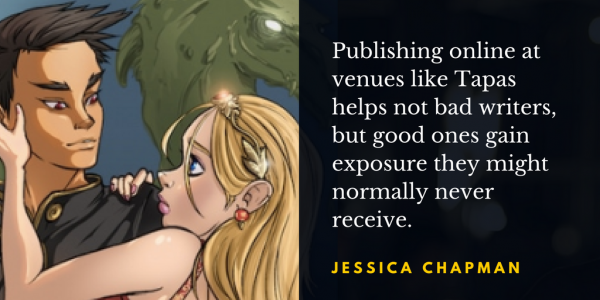
Tapas, a new digital publishing platform, has led to meaningful earnings and readership for independent artists and writers in less than two months.
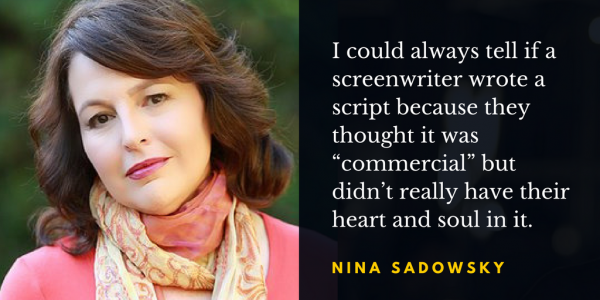
Screenwriter and novelist Nina R. Sadowsky shares screenwriting techniques that have influenced her novel writing, and writers can learn from the screen.

Are you getting the most from professional feedback, or are you inadvertently sabotaging your progress? Look for these patterns in your response.
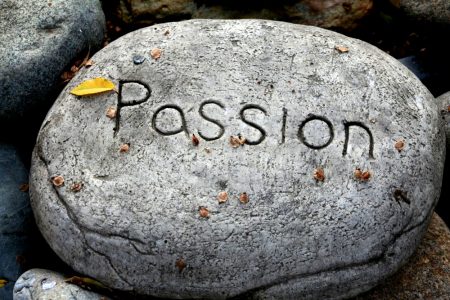
Here’s a word I have eliminated as fully as possible from my information and advice lexicon for writers: passion.

Today, our problem is not finding more great things to read. It’s finding time to read the great many wonderful things that are published.

The two biggest mistakes in book publicity pitches: they are too long in length, and not pointed or provocative enough.
A “clueless ask” is when a well-meaning stranger asks for an investment of a successful person’s time and energy. What are such people owed, if anything?

You should consider how secret you want to be about your true identity. Maintaining secrecy is difficult. The higher the level of secrecy, the more complicated the process
If you want to publish your book, here are the steps you should follow to assess your work’s potential, then research and pitch editors and agents.

In my many years of critiquing queries, I see the same weaknesses again and again. Here are the biggest issues that afflict novel queries and how you can fix them.

If there’s something at the heart of the story that still interests you, that keeps pulling you back, that still haunts you years later, then that’s probably a sign that there’s something worth struggling for there.

When submitting your short form literature to a magazine or journal, your cover letter is often the first impression an editor sees. It serves as an introduction to your thoughtfully crafted art. As such, it is significant, but it shouldn’t be intimidating or even take much of your time to write.

Everyone has a meaningful story to tell, but not everyone’s story (or writing) is going to deserve a commercial publishing deal. Here are the most common problems I encounter in memoir pitches and manuscripts.
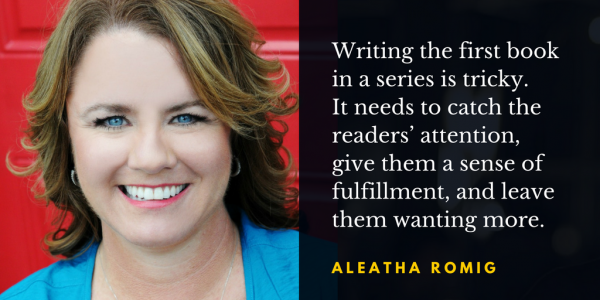
Primarily an indie published author, Aleatha Romig participates in Kindle Worlds, which allows other authors to write about the characters in her work.

Writing a nonfiction book proposal—a good one—requires not only sharp clarity about your idea, but also how that idea, in book form, is relevant and unique in today’s market. You’ll have a much easier time writing your proposal if you take time to conduct market research beforehand.

Marketing FOMO is more debilitating than distracting—and if you suffer from marketing FOMO, your marketing tasks will never be done.
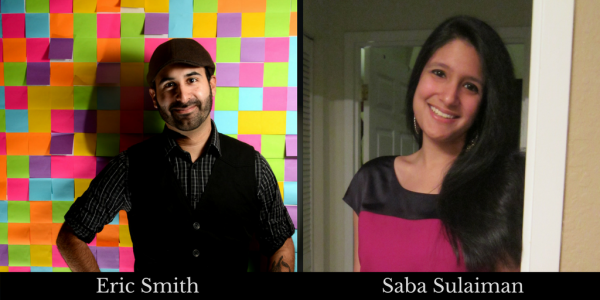
How do agents—generally considered the gatekeepers to publishing companies—approach the issue of diversity in the publishing industry?

Everything you need to know to start writing a book proposal for your nonfiction book.

Whenever you produce titles fast, you’re making trade-offs.
Here are the latest stories that are causing confusion (and sometimes moral panic) where it’s not deserved.

Some agents and editors say that personalizing a query letter can backfire. Others say the opposite—that it’s mandatory. What should you do?

Every writer’s pet fear stems from the mother of all fears: What other people think of what I write is more important than what I think of what I write.
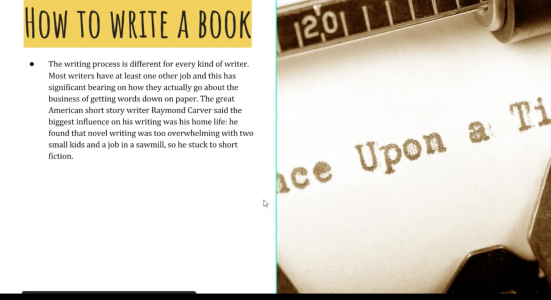
A detailed look at how NetGalley’s Stuart Evers and Myfanwy Collins went from manuscript to publication, with marketing and PR advice.

If you recognize the following characteristics in the critiques of your work, it may not just be inept—it may, in fact, be toxic.

Is a book’s success all luck, even if ‘luck’ includes hitting the right subject matter at the right time, or is it marketing—and can an indie author in any way compete with a publisher?

Turns out there is only one universal rule of plot, and it goes back to what Joseph Campbell uncovered: every single story worth telling is about transformation via trials.

Writer Katherine Vaz discusses an assignment that is given to every student at her university: to write about “the most important thing ever to happen to me.”

Authors need help with digital book marketing—the kind of help that traditional publishers rarely provide. Co-ops and collectives can help fill that gap.

When you’re wooing the media, what you’re really trying to do is to intrigue them. To whet their appetites. Sometimes the best way to do that flows from remembering that less is often more.

As writers, we don’t always know how much of ourselves to share with the public. But it behooves us to create and curate an author persona—the public face for our work.

Half of writers are plotters, and the other half are pantsers. One is not the right way or the wrong way; there is only the way that works best for you.
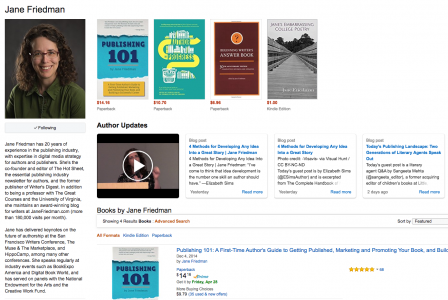
Every author, regardless of when or what they’ve published, has an Author Central page. But many authors have not claimed theirs—which is a big mistake.