Small and mid-size publishers shared insights and resources for building strong business models and better relationships with readers, authors, and libraries
by Guy LeCharles Gonzalez
Note from Jane: Guy LeCharles Gonzalez has attended, presented at, or organized many publishing and writing conferences over the years, and he was the founding director of programming for Digital Book World. This year he was a speaker and panelist at PubWest’s annual conference—an event for smaller and mid-size traditional publishers—and it was his first time attending. We asked him to share his insights. He is chief strategist at Free Verse Media and project lead for the Panorama Project.
Beyond the current Big Five, smaller publishers tend to get attention at large trade conferences only during breakout sessions focusing on genres, niche audiences, or diversity; they’re treated as exceptional outliers rather than viable examples of the breadth and depth of the trade publishing ecosystem.
I’d heard good things about PubWest’s annual conference over the years but had never been able to attend until last month’s 2020 edition, at which I spoke on the keynote panel (“Ensuring a Literate Future for All”), moderated a couple of sessions, and attended several others—in person and via Twitter. Focused specifically on serving small and mid-sized traditional publishers, the program went beyond the usual 101-level sessions and 30,000-foot talking points, instead digging into practical topics like specialty sales, library lending models, ebook sales reports, and managing sustainable businesses.
Sustainable publishing starts with a strong business model—and arguably works best for nonfiction. The vast majority of PubWest attendees publish a broad range of nonfiction, but there were an inspiring handful who were focused on fiction, including genre, literary, and poetry. One of the pre-conference intensive sessions, “From Start-Up to a Sustainable Business,” featured publishers Amy Barret-Daffin (C&T Publishing) and John Rimel (Mountain Press Publishing) along with industry veteran and consultant Douglas Pfeiffer candidly discussing the realities of running a sustainable publishing business.
“Discoverability has become the new barrier of entry to publishing,” said Barret-Daffin. The death of the superstore model, decline of physical bookstores, and ebooks turning books into commodities were all noted as significant challenges publishers have to contend with nowadays, but that doesn’t mean there aren’t plenty of opportunities for savvy publishers (and the authors they work with) to succeed.
“You need to know your readers,” said Pfeiffer. “Know your competition. Identify the hole in the market,” he said. “Niche is crucial if you want to be competitive,” said Rimel.
Cash (flow) rules everything. There was a general consensus that individual-title P&Ls are a must, but they should also roll up into a viable organizational P&L, all reviewed and tweaked every six to 12 months based on actual sales results and trajectories. Strict revenue-per-employee targets were recommended, with Barrett-Daffin suggesting 25 percent max—for example, a $1 million top-line publisher shouldn’t have a payroll larger than $250,000. Full-time staff should wear multiple hats, with the publisher outsourcing as much as possible until revenue growth is stable enough to support additional staff.
While Pfeiffer argued that “raising your price $1 is better than discounting by $1” as a go-to tactic, others suggested experimenting with backlist pricing and focusing on midlist titles over bestsellers to grow sales and manage cash flow.
Inventory management was another critical topic—a landmine many publishers set for themselves with overly optimistic forecasting and lax monitoring, which often leads to thousands of books being pulped to cut warehouse expenses. (“The remainder market is pretty much dead,” noted Pfeiffer.) Instead, being proactive with creative promotions and bundling of related backlist titles—for booksellers, libraries, and direct-to-consumer offers—including slow-selling titles as surprise freebies with direct-to-consumer orders, and selling heavily discounted copies to authors should all be considered well before pulping becomes the best option.
Expanding your platform means more than just collecting emails. I moderated “Expanding Your Publisher Platform” and set the stage with a question: “You’re all asking authors about their platforms, but what about yours? Why should an author sign with you over another publisher?”
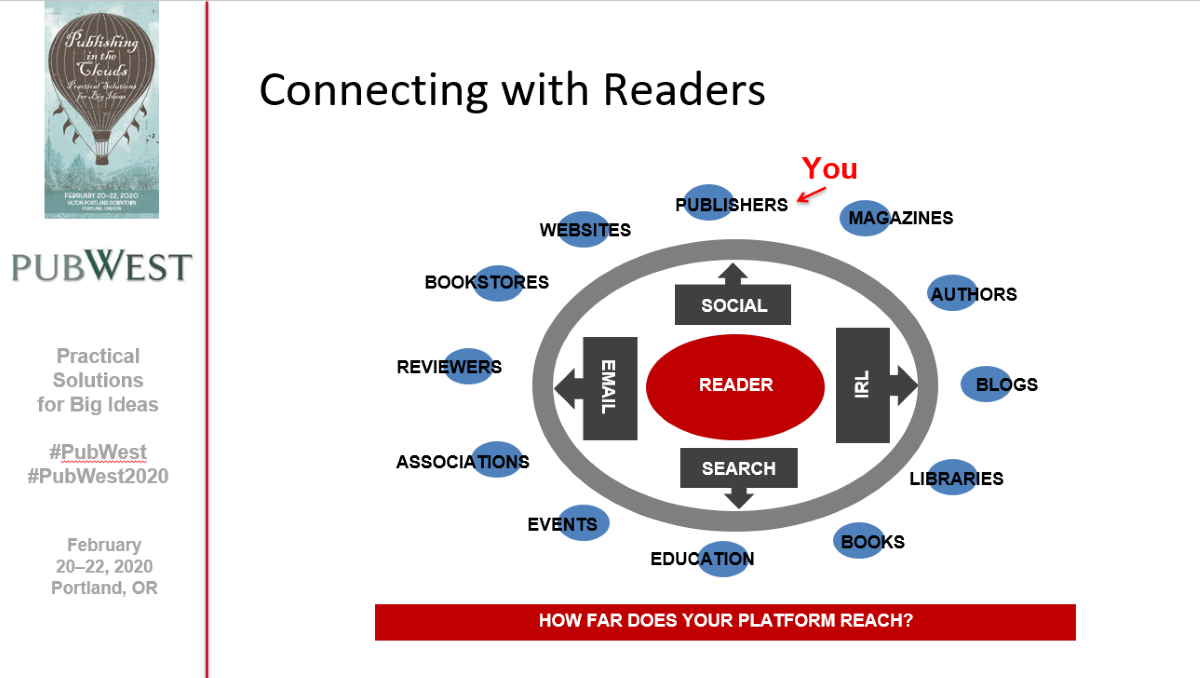
Deborah Arca of Chalice Press said their goal to become the “go-to publisher for social justice, inclusive community, and leadership development” required expanding beyond their core audience of mainline and progressive Christians. They combine targeted freemiums (to collect email addresses) with social media campaigns, landing pages, and email “drip” campaigns to nurture engagement that leads to an eventual sale. Chalice Press is expanding beyond its current core audience of mainline and progressive Christians, rather than evangelical Christians.
Chalice’s The Beloved Community freemium—aligned with the 50th anniversary of Martin Luther King Jr.’s assassination—combined seven excerpts from their backlist books into a PDF, which was promoted through organic and paid promotions via Facebook. Each author in the freemium also promoted it to their followers, with all efforts driving to Chalice’s landing page, introducing readers to Chalice Press and adding over 1,000 new customers to their email list. Rather than simply dumping these new readers into their main mailing list for sending regularly scheduled promotions, the drip campaign promoted the individual titles that had been excerpted in the freemium, along with other relevant titles from their backlist.
Barrett-Daffin from C&T Publishing says their authors must commit to six specific activities (from a list of 15 options), from Instagram takeovers and teaching an online course to writing magazine articles and attending industry trade shows—all specifically tied to their book. Because C&T is able to clearly demonstrate the strength and reach of their own platform, authors are less likely to view these obligations as “doing all of my own marketing,” and instead see themselves in a mutually beneficial partnership.
It was refreshing to see that PubWest’s smaller publishers have a less adversarial relationship with libraries than the Big Five. The “Finance & Management: We Need to Talk” session dug into the different ebook terms publishers offer libraries and the challenges libraries face in balancing patron demands with building sustainable collections. “We’re providing access to content rather than building a collection,” explained Kady Ferris (Multnomah County Library), referring to ebooks that are both expensive to acquire and have expiration dates. “Twenty-six percent of our ebook budget will go to re-buying expired ebooks.”
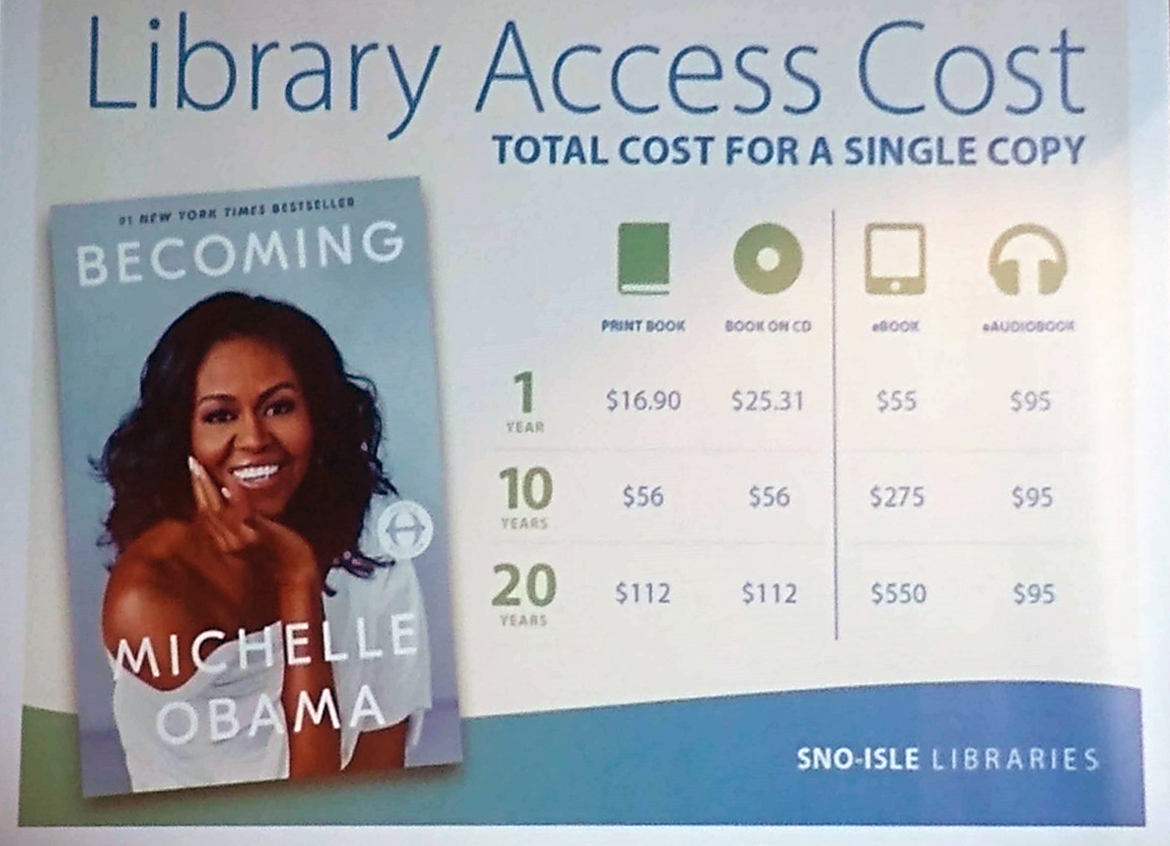
Jessica Russell (Sno-Isle Libraries) demonstrated the peculiar unsustainability of expensive library ebook prices combined with expiration terms—typically two years or either 26 or 52 checkouts per ebook for the Big Five and a few other large publishers—where maintaining access to a single copy of Michelle Obama’s Becoming would cost them $275 over 10 years. She also noted an opportunity in libraries for smaller publishers willing to experiment with cheaper pricing and/or better terms: “I’m willing to take a risk on a $1.99 romance novel. If it aligns with other readalikes, it goes right into my cart.”
Bottom line: There was a remarkable sense of camaraderie throughout the event that you don’t typically see at industry conferences; a gathering of colleagues earnestly sharing candid insights and resources rather than a group of competitors guardedly offering corporate-approved soundbites and generic takeaways. Although PubWest is meant for traditional small and mid-sized publishers, it’s probably the most accessible industry conference for serious authors interested in understanding the business of trade publishing beyond getting an agent and a Big Five book deal. The more authors understand the various levers publishers have to pull and what factors determine which books they’ll pull them for, the better equipped they’ll be to negotiate a better contract and avoid unpleasant surprises like a perceived lack of marketing, uncomfortable relationships with independent bookstores and libraries, advances that don’t earn out, and having to find a new agent and publisher for your next book.

Jane Friedman has spent her entire career working in the publishing industry, with a focus on business reporting and author education. Established in 2015, her newsletter The Bottom Line provides nuanced market intelligence to thousands of authors and industry professionals; in 2023, she was named Publishing Commentator of the Year by Digital Book World.
Jane’s expertise regularly features in major media outlets such as The New York Times, The Atlantic, NPR, The Today Show, Wired, The Guardian, Fox News, and BBC. Her book, The Business of Being a Writer, Second Edition (The University of Chicago Press), is used as a classroom text by many writing and publishing degree programs. She reaches thousands through speaking engagements and workshops at diverse venues worldwide, including NYU’s Advanced Publishing Institute, Frankfurt Book Fair, and numerous MFA programs.