
You could be forgiven for missing last year’s announcement that Audible was offering a new and optional royalty model for audiobooks. It was by invite only, and the language and terms surrounding it were opaque.
At the time, some believed the new model was a direct result of public criticism from bestselling author Brandon Sanderson. He had become an advocate for authors concerned about Audible’s business practices: confusing sales reports and royalty calculations, lower royalty rates than in other creative fields, penalties for being non-exclusive, and lack of control over pricing. For a while, Sanderson withheld some of his titles from Audible as leverage to secure better terms.
In March 2024, Sanderson announced that, as a result of his negotiations, Audible had proposed a new royalty structure with new minimum royalty rates and more predictable payments per credit. He admitted, however, that Audible hadn’t delivered everything he was asking for, such as a 70 percent royalty rate (that always seemed like a nonstarter) or better parity in royalty rates between exclusive and nonexclusive authors.
That was the environment in which the new Audible royalty model was announced in July 2024. The announcement described the model as prioritizing “equity, flexibility, and insight for creators,” and, in my opinion, the changes seemed to have had little to do with Sanderson. The two big takeaways: (1) Titles in Audible Plus (Audible’s all-you-can-consume library) would generate royalty payments, instead of Audible using a buyout model, and (2) Audible would offer monthly statements and payments, with better insights into listening behavior. The model has been rolled out gradually, with select participants.
Under this new model, which is optional for now, authors earn a 50 percent royalty if they’re exclusive (up from 40 percent) and 30 percent if they’re nonexclusive (up from 25 percent). However—and this is key—higher royalties do not equate to higher earnings. Royalties are affected by how much a member consumes in a month, with proceeds allocated via a complicated formula. If you want to glimpse some of the math, read this post.
Unlike print book and ebook royalties, which are fairly straightforward to calculate (even in a system like Kindle Unlimited), I’ve found it devilishly hard to explain to authors what they’ll earn from their audiobooks, not least because of Audible’s credit system and the fact that audiobooks carry retail prices that are sometimes only loosely associated with what consumers pay or what publishers earn in either credit systems like Audible or streaming services like Spotify.
Once authors opt-in to the new Audible royalty model, all new titles will be paid under that model. Self-published authors can choose which of their titles go into the Plus catalog, with Audible approval. (For authors who license audio rights to publishers, those decisions are typically handled by the publisher, who negotiate terms with Audible periodically.) If self-published authors want to remove their titles from the Plus catalog, they can do so after 90 days has passed if they use ACX. (It takes longer for non-ACX titles right now, but I’m told Audible is working on making it 90 days for everyone.)
That brings us to a petition, launched in August 2025, to convince Audible to revise its new royalty model. The petition was started by Robin Sullivan, the wife and business manager of bestselling indie author Michael J. Sullivan. Sullivan’s petition argues that Audible’s new royalty model redistributes revenue in an unfair way: Money that would ordinarily go only to titles bought with credits is also being allocated to all-you-can-consume titles included in the Plus library. The petition suggests keeping the revenue pools separate (one pool for Premium titles that require a credit, another pool for Plus titles) so that authors who aren’t in the all-you-can-consume catalog aren’t subsidizing authors who choose to be in the Plus catalog. If you’re someone like Michael J. Sullivan—a top earner—it certainly makes sense. Who would want to see revenue from their credit-based titles decline if you’ve chosen not to participate in the new model or make your audiobooks available in Plus?
But the petition’s solution isn’t how streaming accounting typically works. All-you-can-consume streaming services often use a pooling model, which is why some traditionally published authors were fearful when Spotify—the most popular audio streaming service today—entered the audiobook market in fall 2023. They believed Spotify’s model would end up paying them pennies. I wrote an analysis that pointed out there was no evidence publishers had given away the farm to Spotify (publishers care about earnings, too) and counseled patience. Since then, I’ve seen publishers celebrating double-digit audiobook sales growth and enjoying stronger competition in the US audiobook market.
However, independent authors and small publishers typically find themselves in a worse position when dealing with streaming services. They do not have the same leverage as a big publisher and cannot demand equivalent terms. As details emerged about Spotify’s royalty arrangement, it seemed clear that the Big Five were earning the equivalent of a sale on Spotify listens or even partial listens. But self-publishing authors and smaller publishers are paid on a pooling model in Spotify. Pooling models are not a new thing for this group: Kindle Unlimited uses a pooling model for ebooks, and some authors earn more from KU than they do from outright sales, even though page reads for a single title rarely equate to a sale royalty. Today, the biggest streaming service for audiobooks outside the US, Storytel, pays on a pooling model, and Storytel claims that authors have enjoyed increased earnings as a result. Why? Because a streaming model encourages people to experiment with unknown authors or genres, and it avoids the pressure of choosing a “credit-worthy” audiobook, often a new title by a known author. This is the argument that’s been made all along by people who advocate for streaming models. (Want a deep dive? See my 2020 article on streaming services, still relevant.)
Audible’s new royalty model has been available for nearly a year, and they’re starting to share early adopter case studies. Audible claims that the average increase in royalties is 45 percent compared to the old model. In testimonials, I’m seeing discussion and strategies about putting titles in the Plus all-you-can-consume catalog that echo what I hear about KU. One author, Jillian Dodd, is quoted: “Since adding the first books in my series … I’ve been impressed by how many listeners move on to the next paid installment. So far it’s an excellent way to boost exposure for my titles.”
Last week, I talked with Scott Dickey, CEO of Podium Entertainment—one of the leading audiobook publishers today, with thousands of titles—and he pushed back on the way authors and publishers alike sometimes see themselves in an adversarial relationship with platforms like Audible. “I don’t think we’re talking enough about how to build audience and build engagement. And Audible Plus is the perfect example. This is a discovery tool and a subscriber value tool,” he said. “Audible Plus is the most powerful tool in the industry today that supports the fulfillment of our mission as a publisher.”
That doesn’t mean that Podium puts all of its titles in Plus. He described the selection process as deliberative, one that grew out of what they learned from being in Plus from 2021 to 2023. (They opted out of Plus in 2024 and returned in 2025.) “What we have in Plus is a careful, curated, collaborative list of titles that we work on with Audible on a regular basis,” he said. “Despite a significant reduction in unit economics by placing a title in Plus, the incremental volume that a title ultimately receives in Plus drives more aggregate monetization. Not in every case, but in most. And that’s a beautiful thing, because you have to think about it through the lens of the subscriber. You’re trying to build more audience, more engagement, more fandom for an author, and in an à la carte or credit-only environment, it’s really hard to do.”
Still, authors working solo don’t have the same leverage as publishers, and they have reason to fear things are not as they seem. They’ve had to deal with lack of transparency around Audible returns and accounting, and there’s even an active class-action lawsuit against Audible. Authors allege it monopolized the market for audiobooks and kept the royalty rate low. It’s not a far-fetched argument; Audible’s audiobook royalty rates used to range from 50 to 90 percent for authors until they were revised lower in 2014.
When I talked to Dan Wood, COO at Draft2Digital, he said he hasn’t heard much discussion about the changes in the community since Sanderson’s announcement in 2024 (although this video by Daniel Greene has been making the rounds). “[Authors] bought the idea that the royalties are going up. I can see how Amazon can say, ‘Oh yeah, we’re raising it this amount for exclusive and this amount for non-exclusive. But then the gotchas are there, and the pool system, and how complex it is—I just don’t think authors are realizing yet what that will do.” He continued, “It’s a similar system to Kindle Unlimited doing the All Star Bonuses so that they keep the high-end titles and continue to pay less and less to the mid to lower tier.”
While Audible says they are curating Plus in a way that maintains the value of audiobooks and the credit system, authors fear that’s not the case. AI-narrated content (called Virtual Voice) has become increasingly available in Plus, with more to come as indie authors use AI narration tools offered by Amazon KDP. As I was preparing this issue for publication, concern erupted on social media about this exact issue. KDP documentation says, “Audiobooks created from ebooks in KDP Select are also included in Audible’s Plus catalog and eligible for a share of the KDP Select Global Fund.” That’s the KU pooling fund. And in the KDP dashboard, authors see the following notice: “Audible Plus pages listened is combined with Kindle Unlimited pages read in the KENP column on the eBook format view.” That seems to indicate that Audible Plus listening may be subsidized by the KU pool, but I am still seeking confirmation on this. Authors have anecdotally reported a drop in revenue from KDP despite steady page reads, and they worry this is the reason for it. (This also raises the question of why authors would invest in human narration if AI narration pays the same, but maybe listeners will prefer and consume human-narrated audiobooks at higher rates.)
As with everything in the publishing business, indie authors will have to be strategic and intentional about how and where they distribute their titles to maximize both discoverability and earnings, with the calculus changing over time. Authors learned how to do this through KU, and now they’ll have to learn how to do it through Audible Plus. I’m not sure how long Audible will keep the old royalty model available—and authors still have to proactively ask to switch over to the new one—but my guess is that it will be increasingly difficult for authors to maintain the status quo on the old model.
Bottom line: If Spotify hadn’t entered the US audiobook market, I doubt we’d be seeing these changes from Audible right now. Audible, frankly, had done a beautiful thing for Anglophone book publishers and authors alike: established and preserved the high value of audiobooks through a credit system that boosted profits, long after other territories and other industries moved to streaming models. But the à la carte or credit model is clearly under pressure.
Still, Dickey remains optimistic. He said, “A lot of people believe that this is akin to the music industry, and you’re going from a download [ownership] model to a streaming model, and downloads will never exist ever again. There’s some merit to that argument. I can make that argument as well. But I do think the beauty of the publishing industry, unlike many other content and traditional media industries, is that books have held their own. And there’s something to be said for the whole book, nothing but the whole book. … I don’t think the credit [ownership] model goes away. I think it evolves.”
More discussion about Audible’s new royalty plan
- I asked Orna Ross, director of the Alliance of Independent Authors, if the organization has a position on the new model. Here’s part of what she wrote me: “ALLi supports the author petitioners’ fix request: that if a listener buys a book with a credit, all of that value should follow that book, with Plus income paid from Plus revenue. As ever with Audible, the current model is too complex and too opaque: Authors can’t see how a member’s credits and Plus activity flow to each title. … ALLi asks: (1) One canonical contract page: a single, versioned URL with the full payment formula(s), definitions (e.g., ‘member value’, ‘engagement’), and exactly how credits interact with Plus listening—plus a plain-English summary and worked examples. (2) Separate the pools: If a member uses a credit, all of that credit’s royalty basis should follow the bought title; Plus listening should be paid only from Plus revenue pools (no cross-subsidy). This is the fix proposed by the author petitioners. (3) Line-item reporting: monthly statements that break down, per title, listens and royalties by source (credit, à la carte, Plus via Plus members, Plus via Premium Plus members), returns/adjustments, and effective per-unit payments, so authors can reconcile statements.”
- Authors have been discussing the new royalty model on Reddit. One commenter says Audible is simply moving from one flawed system to another. And another person says the new system is “ingenious” in part because authors can set their own pricing (a feature not available to those working under the old model) but admits it’s bad news for authors not willing to “play the game.”
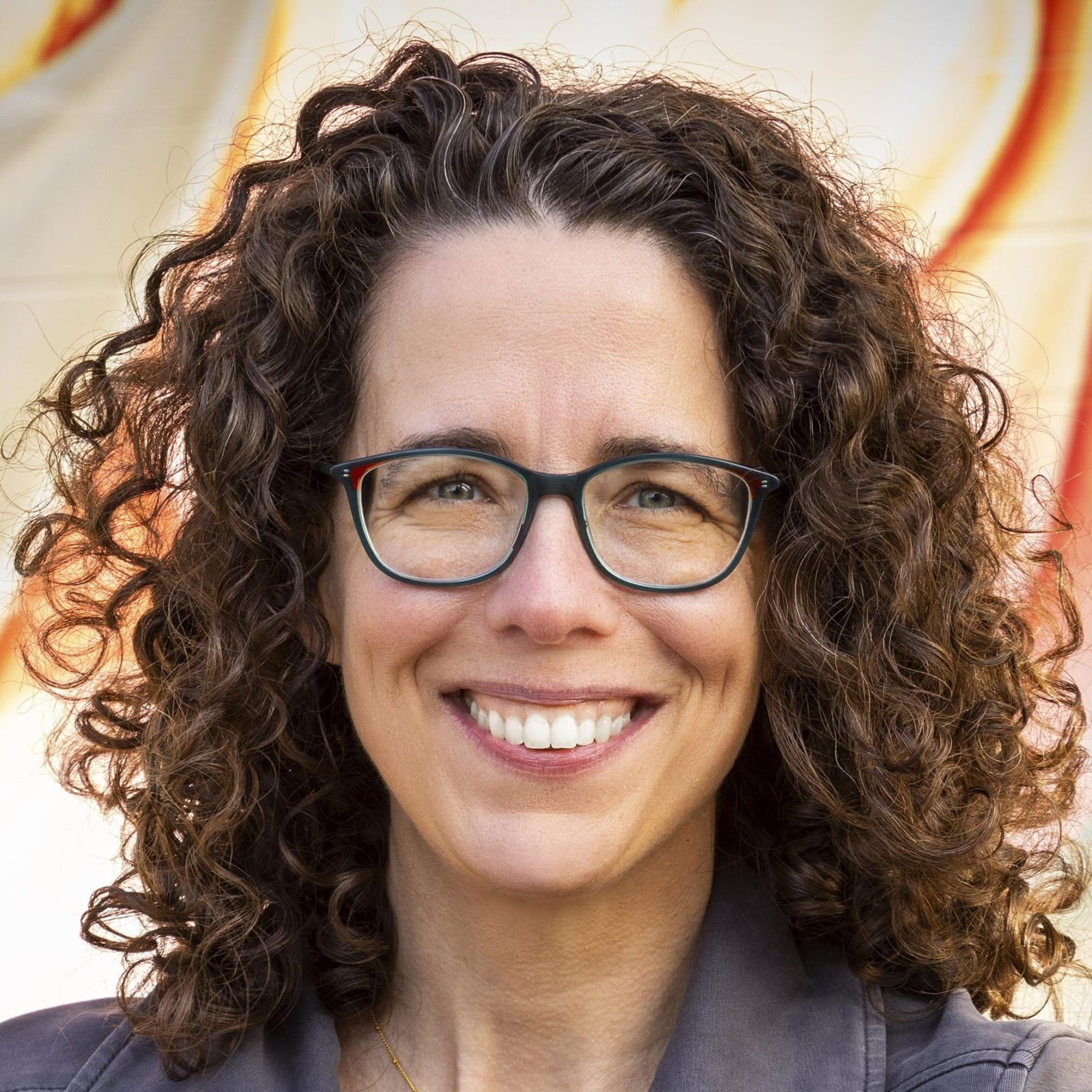
Jane Friedman has spent her entire career working in the publishing industry, with a focus on business reporting and author education. Established in 2015, her newsletter The Bottom Line provides nuanced market intelligence to thousands of authors and industry professionals; in 2023, she was named Publishing Commentator of the Year by Digital Book World.
Jane’s expertise regularly features in major media outlets such as The New York Times, The Atlantic, NPR, The Today Show, Wired, The Guardian, Fox News, and BBC. Her book, The Business of Being a Writer, Second Edition (The University of Chicago Press), is used as a classroom text by many writing and publishing degree programs. She reaches thousands through speaking engagements and workshops at diverse venues worldwide, including NYU’s Advanced Publishing Institute, Frankfurt Book Fair, and numerous MFA programs.

I really like what Orna Ross is saying regarding exposing the full payment formula(s) with examples. Without such data, it’s nearly impossible for authors to make any type of determination regarding expected income or price per title payouts.
Robin (my wife) has been digging into this deeper as of late, and while the “credit sharing” aspect was a huge problem (and very complicated). Dealing with “reserve credits” is even more difficult to decipher – and it would appear to be a big reason why early adopters (authors in the beta program) are seeing 45% – 55% gains in income – because the two models have much different pools.
Old model – payouts are only on credits spendNew model – payouts are on “member value” – which is a combination of credits spent now, and credits that will be spent at some future point.
So there is actually two types of “robbing Peter to pay Paul” going on in the new model.
Plus titles being subsidized by Premium Credit spends
Early adopters getting paid for credits spent AND the reserve credit pool – which is essentially paying now for things that (in the old model) would be accounted for at the time those credits are used.
Great article, Jane. I recently placed a first in series in the AYCL program (as Audible suggests) and am currently deciding whether to place other firsts in as well. I found what author Jillian Dodd said to be hopeful: that listeners find new authors in the Plus system and then move on to the next paid installment.
Keep me updated on how it goes!