AI publishing tools can’t replicate humans just yet, but they can take care of time-consuming groundwork and improve accessibility
In recent years, the Digital Book World program has been focused on the leading edge of audio storytelling and voice technology, and it’s also a publishing conference where you’re likely to find startups and bookish entrepreneurs trying new things. This year, what stood out to us most was the number of AI-powered startups that appeared both viable and appealing. While publishing is a notoriously subjective business—one that believes in its superior judgment and taste and that prizes personal relationships—this year’s DBW makes it plain that publishing, like every other industry, will inevitably progress through the use of AI.
In May, we reported on text spinning using AI (and the legal implications of that), and you’ve probably seen at least one media headline about GPT-3, a deep learning AI that can produce human-sounding text. However, such results appear mostly like a novelty or parlor trick (for now), and they’re also misleading. While viable longform narratives may eventually arrive from AI, in the near term publishing is far more likely to benefit from AI’s ability to analyze patterns in writing, similar to Authors A.I., the software we covered in our last issue. There are more efforts like that on the way.
One of them is Fixional, an editorial AI service that started three years ago; one might consider it a more powerful and advanced Grammarly. Speaking at Digital Book World, the cofounder and CEO, Pierce Gaynor, explained that Fixional can be taught what kind of writing your publication wants to acquire and publish. For example, the company currently works with a publisher that receives about 1,000 manuscripts per month and has 10,000 manuscripts awaiting review—but only five editors to go through it. (Anyone who works at a literary journal will know the feeling.) Fixional was fed all the work the publisher had already accepted and published, then allowed editors to filter and sort the slush pile based on various criteria from the published work, such as quality, completeness, and clarity. Editors can now scale their judgment and expertise over thousands of manuscripts at a time.
With tools such as this, Gaynor admitted that concerns about bias inevitably arise and that data is not objective—there is always bias in AI models. But, he asked, “What if bias wasn’t always a bad thing, or what if you could accommodate it?” While Fixional creates a profile based on what’s already been published, editors can always modify that preference profile or weight the selection criteria differently.
Fixional can also be taught to make customized copy edits and line edits to manuscripts. If an editor marks up a manuscript once and feeds that information to the AI, it can then look for more instances of that issue in the same manuscript, in a revised version, or in other manuscripts. This capability extends past grammatical issues to things like originality of expression and the intent of the writer. If a passage is deemed problematic or lacking in some way, the AI can mark it and have the writer revise it. Fixional can also create a style guide and unilaterally apply the same style to all manuscripts.
While early markups from Fixional won’t likely produce the best results, the more editorial teams use the tool, the better it gets. Gaynor said that automating this type of work gives publishing staff more time for editorial tasks that require human creativity. Furthermore, Gaynor believes the AI can identify patterns a human wouldn’t be able to detect on their own—which is important not just during the editing process but also when discovering and acquiring new manuscripts. Gaynor said authors have been some of their most fervent users even though Fixional hasn’t focused on them as a customer base. (The pricing is flexible and affordable for authors on a per-manuscript basis.)
Lately is an AI service that can generate original social media posts based on content you feed it. Lauren Turow, the head of growth at Lately, demonstrated during her talk at Digital Book World how the service can create bite-size social posts from longform content such as books, email newsletters, blogs, and even audio and video.
Lately does two things: first, it looks at your previous social media content and determines what’s been successful for you in the past. Second, it reviews longform content you feed it and generates dozens of possible social media posts that your followers will actually want to read based on their past behavior. All you have to do is paste in the URL where your content lives, as shown below. Alternatively, you can paste in content, like from a book.
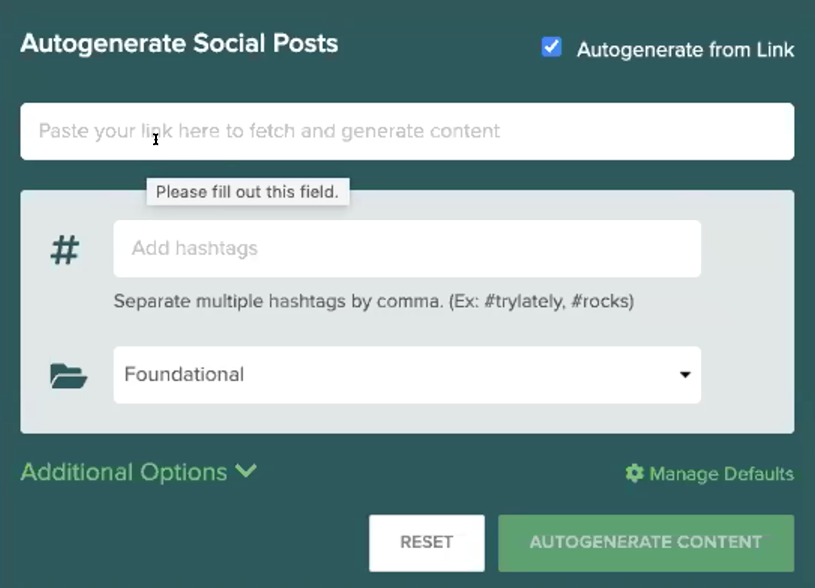
Once Lately has the source material, it generates multiple posts you can then edit. It’s possible to add images and hashtags, then schedule and publish to Facebook, LinkedIn, Twitter, Instagram, and/or YouTube. Turow said the idea is to sprinkle out many posts over time and consistently, so that your content is repurposed and repromoted in fresh ways. Lately starts you at third base, then “humans make the home run.”
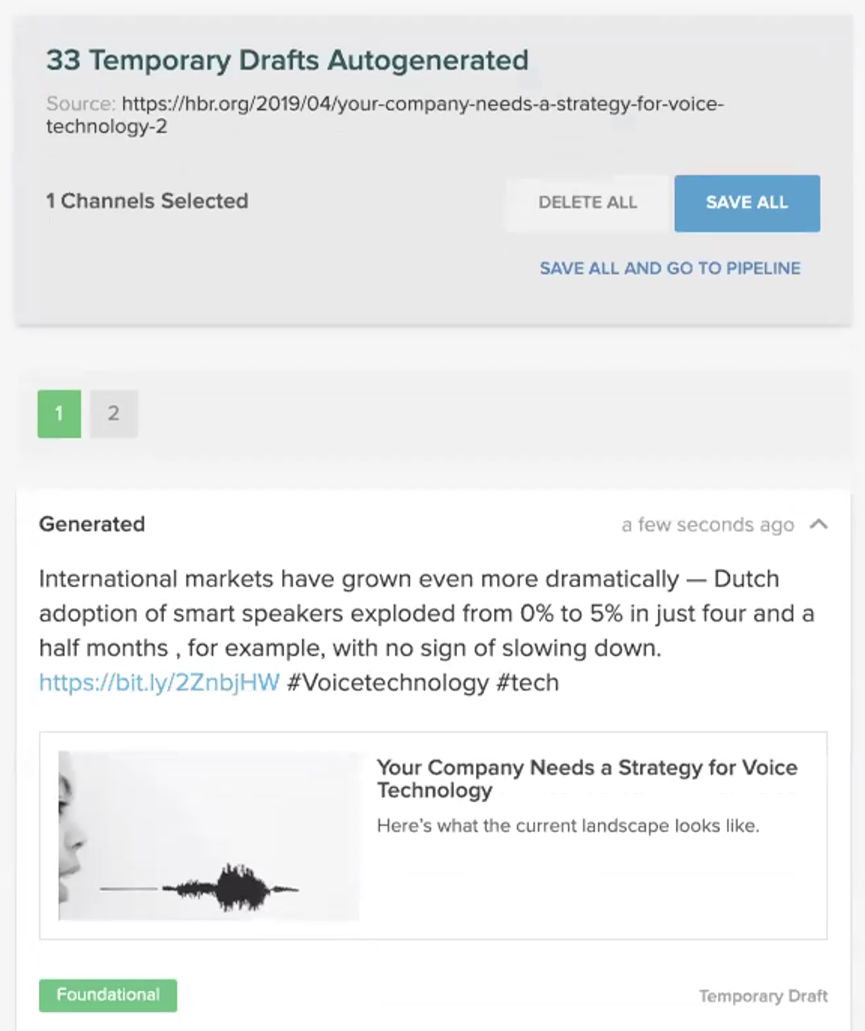
If you generate social media posts from video or audio content, then Lately allows you to attach the media clip to the posting. It will clip exactly the right content—creating mini clips—based on what’s being shared. This could be an excerpt from a talk on YouTube, an audiobook—anything you have rights for.
Social media star Gary Vaynerchuk started a Twitter account, @garyveetv, which is wholly powered by Lately. Whatever performs the very best on that Twitter account, his team reposts to Vaynerchuk’s other accounts. According to Turow, this strategy has resulted in a significant increase in engagement.
Lately is so far focused on selling its services to businesses; the pricing is on a sliding scale that starts at $350 per month. That’s a high price tag, or least unattractive for individual author use, but the market for this type of service is significant (people already pay lots of money to marketers to write their social media posts). We expect more competitors will soon be on the market, and prices will come down. (Turow emphasized Lately is flexible on pricing; they want it to work for most people who are interested, so it might be worth inquiring.)
Another AI service featured at Digital Book World was Trinity Audio, which helps authors and publishers use text-to-speech (TTS) technology to produce audiobooks at an affordable rate. At this point, it’s fairly easy to listen to an entire book using TTS, although the results don’t (yet) sound as good as a professionally produced audiobook with a human narrator. If you’re an indie author who would like to take a DIY approach to producing audio content using TTS technology, a few good starting points include Resemble, Descript, and this roundup of tools.
Bottom line: All of the presenters discussing AI tools were quick to point out the human-powered (or “human first”) component of their technology. With the possible exception of TTS, AI isn’t meant to entirely replace the work of humans, but to complement human creativity, increase productivity, and improve efficiency. While the tools remain in the early stages of development, they’re exciting to observe in action, and we expect to see adoption of at least some AI tools by big and small publishing-industry players within a few years.
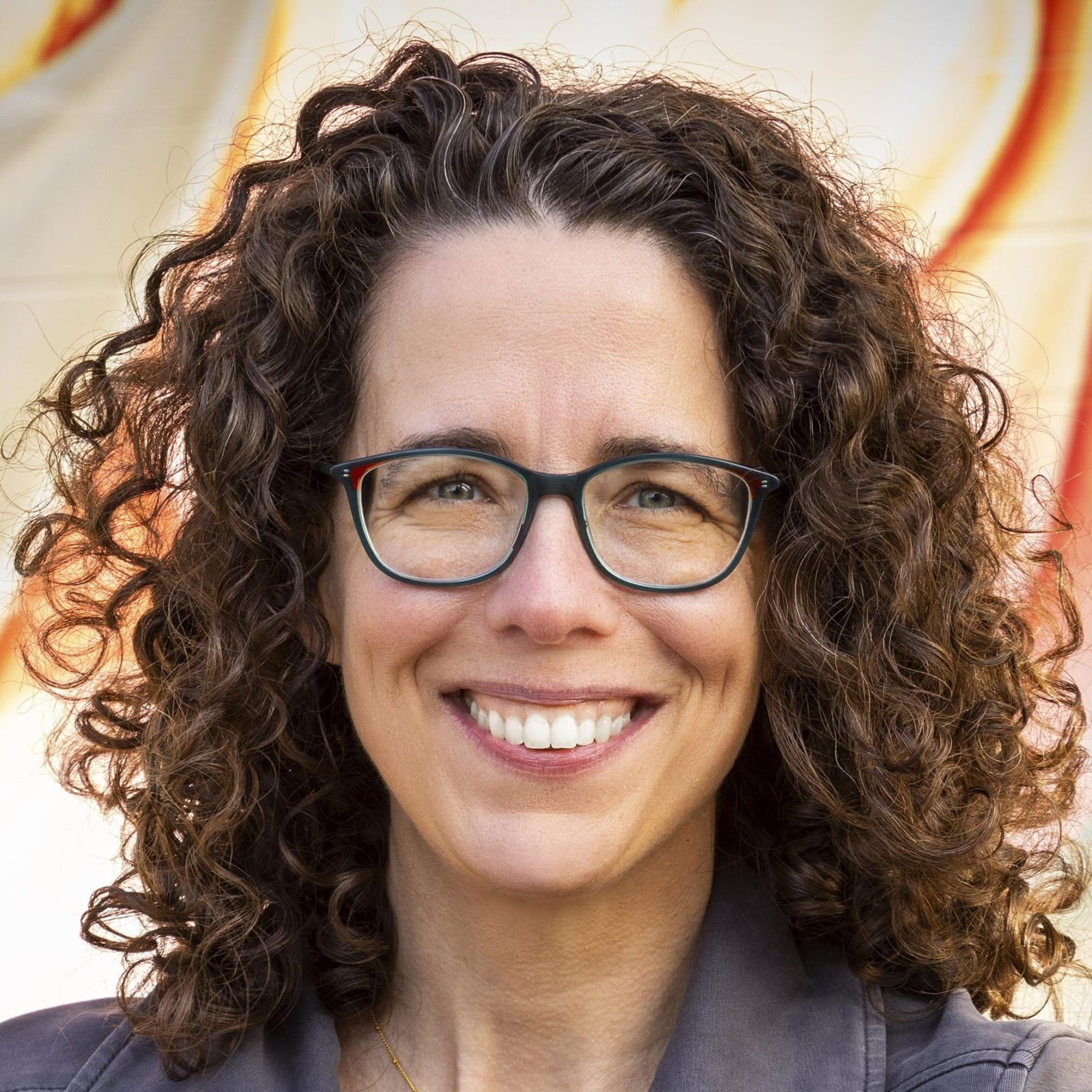
Jane Friedman has spent her entire career working in the publishing industry, with a focus on business reporting and author education. Established in 2015, her newsletter The Bottom Line provides nuanced market intelligence to thousands of authors and industry professionals; in 2023, she was named Publishing Commentator of the Year by Digital Book World.
Jane’s expertise regularly features in major media outlets such as The New York Times, The Atlantic, NPR, The Today Show, Wired, The Guardian, Fox News, and BBC. Her book, The Business of Being a Writer, Second Edition (The University of Chicago Press), is used as a classroom text by many writing and publishing degree programs. She reaches thousands through speaking engagements and workshops at diverse venues worldwide, including NYU’s Advanced Publishing Institute, Frankfurt Book Fair, and numerous MFA programs.