These are the news stories and topics I’ll be following closely this year.
AI lawsuits as well as licensing agreements
Dozens of lawsuits against AI companies remain in play, primarily for copyright infringement, but judges have expressed some exasperation lately with their direction and quality. One federal judge said this fall, “It’s very clear to me from the papers, from the docket, and from talking to the magistrate judge that you have brought this case and you have not done your job to advance it. … You and your team have barely been litigating the case.” Other judges have greatly limited the scope of the complaints that can move forward. 2025 will likely see more winnowing and focusing of these cases, but not any finale.
The three most important cases to watch: (1) the lawsuit brought by the Authors Guild (focused on fiction writers) against OpenAI and Microsoft, (2) the lawsuit brought by the New York Times against OpenAI and Microsoft, and (3) the lawsuit brought by Getty against Stability AI in the UK. OpenAI may owe the New York Times $7.5 billion if it loses; meanwhile, it is striking countless licensing deals with publishers that guarantee they won’t sue. In the end, I believe the Times case will be settled out of court. Nearly all other publications of a commercial nature—including Condé Nast, News Corp, The Atlantic, Dotdash Meredith, and countless others—have struck a deal. (To track all AI copyright cases, Wired has a nifty chart.)
2024 saw the emergence of collective licensing platforms for AI, which will likely make some progress this year. The Authors Guild has partnered with Created by Humans to provide authors with a collective licensing solution that pays 80 percent to the author; I expect CBH to announce AI partners in 2025.
US government legislation regarding AI, copyright, and digital replicas
The US Copyright Office has been issuing reports on AI and copyright, with an initial focus on unauthorized digital replicas. Just about every sector sees a need for federal legislation that would protect against such replicas as well as abuses related to right of publicity (an issue currently handled on a state level), not least because of the next item on the list.
Growth in AI narration for everyone everywhere
Getting a handle on AI’s transformative effects, in either the short term or long term, remains challenging. There is far more noise than signal, and I don’t expect that to change soon. However, there are two specific areas where I expect meaningful and quality growth right away. And those two areas are AI (synthetic) narration and AI translation. The translation side is further behind (it’s more nuanced and complicated), but quality AI narration today can be indistinguishable from human narration, good enough for many purposes, especially to make materials more accessible or to produce audio editions that would not otherwise be economically feasible. Indie authors can publish and distribute quality audiobooks with only a modest investment, and book publishers are pursuing deep backlist opportunities.
For now, AI narration is unlikely to replace human narration for important frontlist titles or books destined to become bestsellers. AI narration is also (so far) a poor choice for audiobooks that have multiple narrators. Regardless, audiobook narrators who are in high demand may stand to benefit. Already, narrators who work with clients through ACX (the key platform that self-publishing authors use to distribute and sell on Audible) can have their voices replicated by AI to audition for jobs or to narrate entire audiobooks: “Narrators continue to maintain control of the projects they want to audition for, using voice replica or live performance, and will remain central to the production process. Using production tools, narrators can edit pronunciation and pacing, ensuring their voice replica productions maintain high quality standards.” (Audible’s program remains in beta and by invite only.)
ElevenLabs is the industry leader in generating synthetic audio and cloning voices; they are attracting numerous investors (such as Storytel), and it’s one of the fastest-growing startups in applications for AI. ElevenLabs’ list of partners is long; media and publishing partners include Disney, Bertelsmann (parent company of Penguin Random House and BMG), Time Magazine, and HarperCollins. Even Deepak Chopra and the Jerry Garcia estate, among others, have created AI models with the company. It was also the tech used for the fake Biden robocalls during the election.
The Audio Publishers Association recently released guidance for AI-narrated audiobooks to help establish industry-standard terminology and best practices for metadata. For example, APA prefers the acronym AVR for authorized voice replica and reserves the word cloning for an unauthorized replica.
For a big-picture discussion of AI (outside the confines of publishing), I highly recommend this long overview, worth your time, accessibly written, by a British programmer. He notes toward the end, “The knowledge gap between the people who actively follow this stuff and the 99 percent of the population who do not is vast. …Given the ongoing (and potential) impact on society that this technology has, I don’t think the size of this gap is healthy. I’d like to see a lot more effort put into improving this. … I think telling people that this whole field is environmentally catastrophic plagiarism machines that constantly make things up is doing those people a disservice, no matter how much truth that represents. There is genuine value to be had here, but getting to that value is unintuitive and needs guidance.”
Trump administration tariffs
In 2019, the Trump administration placed a 15 percent tariff (halved less than a year later) on books manufactured in China. For Trump’s second term, he has threatened a 25 percent tariff on goods from Canada and Mexico and demanded that “imports from China be levied a 10 percent tariff ‘above any additional Tariffs.’” The Canadian tariff in particular is a concerning one for book publishing because of the amount of paper imported from Canada. The market for paper and printing has been contracting for years, and publishers have few or no places to go to obtain the same paper.
At a Dec. 17 webinar, The Future of Book Publishing, Production, and Distribution, experts discussed the possible ramifications of tariffs on book production. Matt Baehr of the Book Manufacturers’ Institute said that tariffs on Canadian paper and other goods, such as ink, will drive up costs for everyone and benefit no one—it’s a disruptive move that would not drive production of paper and ink to the US. However, he added that most industry people would agree that tariffs could work as intended to push book manufacturing back to the US from China because there is book manufacturing (but not paper manufacturing) capacity in the US.
As we’ve all observed over the years, Trump doesn’t do everything he says, and agreements or compromises can be worked out at the last minute. Let’s hope that’s the case with paper in particular, because if not, prices on books will have to go up in 2025.
Get ready for a very deluxe 2025
Last summer, I was delighted to run a piece reported by Cat Baab-Muguira on increasing sales of deluxe editions, a trend that’s prevalent in both traditional publishing and self-publishing. A few days ago, the New York Times reported on it as the “hottest trend in publishing” and noted that the publisher of Rebecca Yarros’s Onyx Storm is producing 2 million copies of the deluxe edition and 500,000 copies of the regular edition. (Also: 1 million pre-orders already for the deluxe edition of the book!) The Times also notes that Penguin Random House is doubling their deluxe edition output to 50 titles in 2025, William Morrow (HarperCollins) is tripling its deluxe edition output; Tor (Macmillan) is more than doubling.
Romantasy shows the glimmerings of a plateau
Sales of romantasy nearly doubled during the first half of 2024, but Circana BookScan thinks the category may reach a saturation point in 2025. I’m inclined to agree.
So what areas might be growing? Given the new imprint and deal announcements, I’d put my money on horror. Orbit (Hachette) has launched Run for It, an imprint that will publish current Orbit horror authors as well as new ones, starting in 2025. Independent publisher Soho Press has also launched a horror imprint. UK’s Canelo launched a horror imprint in 2023.
In 2022, there were 50 horror deals reported to Publishers Marketplace. In 2023: 86. In 2024: 91.
That said, readers still read and still want romantasy; horror is a smaller category by comparison. The number of romantasy-related deals in 2024 reported to Publishers Marketplace: 144.
TikTok will continue to operate in the US (somehow)
The Supreme Court will hear arguments on Jan. 10 on whether the TikTok ban will take effect as planned on Jan. 19. If the court doesn’t prevent the ban, TikTok will have to sell to a US buyer or close shop in the US—unless there is some other twist waiting to happen. No matter what, I don’t see TikTok evaporating from the scene, not with 170 million users in the US who would be very angry if the app is banned. Plus the money involved is simply too big. Learn more.
Substack woos “high-volume publishers”
Substack announced last month, “We are building a toolset that will allow high-volume publishers with sophisticated needs—including custom branding, website design, and support for large editorial teams—to take advantage of Substack’s best-in-class publishing system while also being plugged into a network that drives subscriptions.” Will this attract new, high-earning publishers to the platform? Will individuals using Substack somehow be disadvantaged as this plays out? Don’t forget what happened when Medium started wooing digital publications to its platform: They abandoned them not long after.
What Others Say
Most of the following articles discuss multiple topics or trends; I’m pulling out the details I think deserve your attention.
- Agent Anna Sproul-Latimer, How to Glow in the Dark: Readers will be looking for easy comfort reading and making nostalgic picks. I think that likely includes any fiction subgenre with the word cozy. Read (requires sub).
- Publicist Kathleen Schmidt, Publishing Confidential: The industry has become overly dependent on BookTok, which isn’t healthy. Read.
- Author Leigh Stein: “The literary novels that do break out will be more playful and less politically correct.” Read (part of roundup).
- Casey Newton, Platformer: AI will show continuous incremental improvement, but no exponential leaps. Instead, the AI industry will focus on how to produce great products (e.g., ElevenLabs). Read.
- Brian Morrissey, The Rebooting: Mainstream media will struggle to keep up with alternative media, especially creators on TikTok or Substack or well-known podcasts. Media’s biggest competitors will be journalists going solo, online personalities, and influencers. Read.
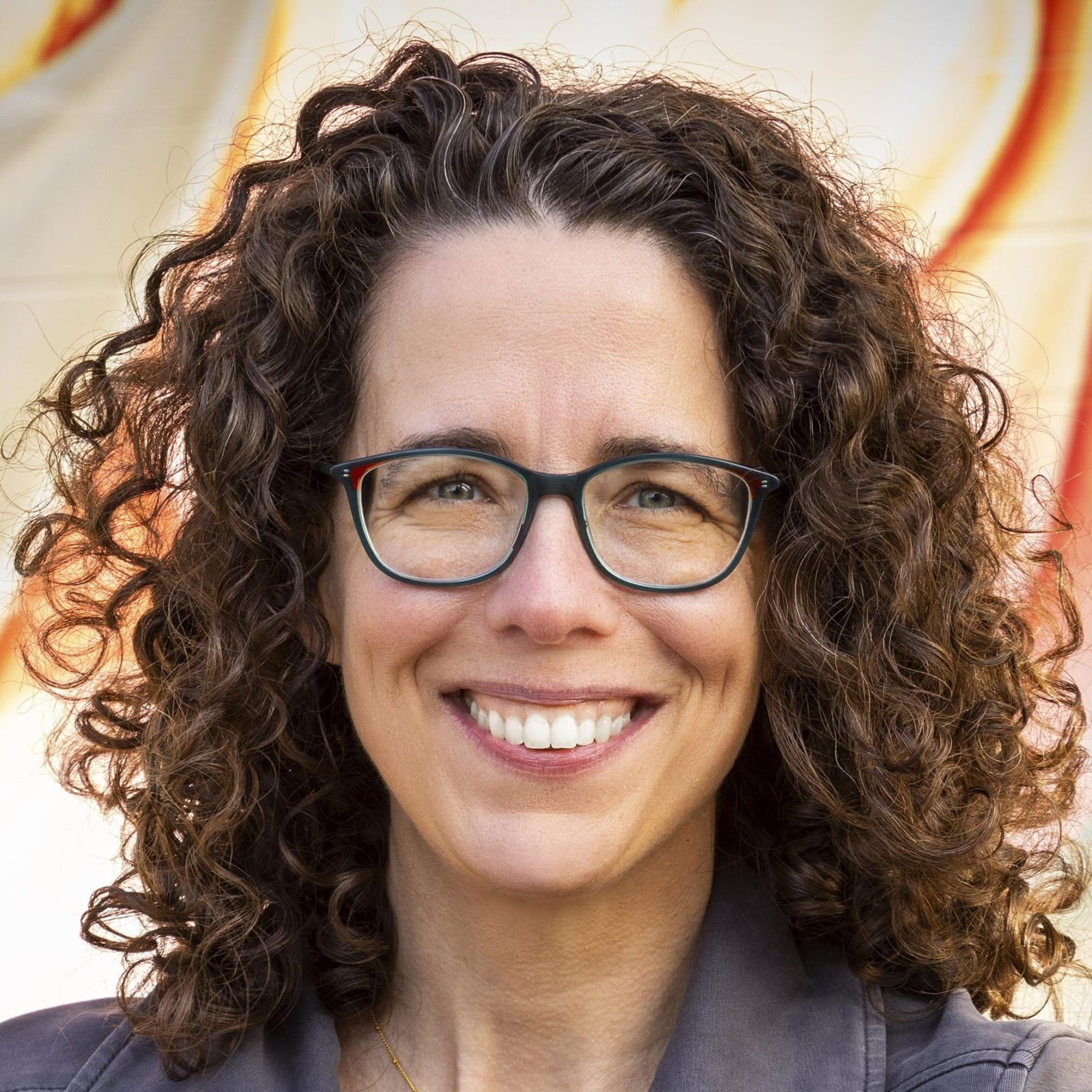
Jane Friedman has spent her entire career working in the publishing industry, with a focus on business reporting and author education. Established in 2015, her newsletter The Bottom Line provides nuanced market intelligence to thousands of authors and industry professionals; in 2023, she was named Publishing Commentator of the Year by Digital Book World.
Jane’s expertise regularly features in major media outlets such as The New York Times, The Atlantic, NPR, The Today Show, Wired, The Guardian, Fox News, and BBC. Her book, The Business of Being a Writer, Second Edition (The University of Chicago Press), is used as a classroom text by many writing and publishing degree programs. She reaches thousands through speaking engagements and workshops at diverse venues worldwide, including NYU’s Advanced Publishing Institute, Frankfurt Book Fair, and numerous MFA programs.