
I first encountered children’s and YA author Scott Reintgen on Threads (@reintgen), where I became fascinated with his discussions about the sales of his books and his focus on school visits. Not many authors with his level of success analyze, for a public audience, how they sell books on such a granular level, with actual figures. I feel like I have a front-row seat to the growth and evolution of a New York Times bestselling author.
His debut YA trilogy, The Nyxia Triad, sold to Crown Children’s (Random House) in 2015 in a major deal at auction, which was both a blessing and a curse. The same editor kept buying his work, a mix of middle-grade and YA fiction, until she didn’t, which we discuss below.
Starting in 2021, he moved to Simon & Schuster, for The Problem with Prophecies, followed by the first two books in the Waxways series and The Last Dragon on Mars (2024). That is when I became aware of him, about 10 years into his career. The Last Dragon on Mars was a New York Times bestseller, but not his first.
On Threads, he has discussed how he planned and wrote The Last Dragon on Mars to land with a specific market: boys who aren’t typically readers. It was then that I knew I wanted to interview him.
His latest book, Devious Prey, for YA readers, released yesterday from Simon & Schuster. He is represented by Kristin Nelson of Nelson Literary Agency, who says on her site, “I want every client of mine to make a living solely from writing and 90 percent of my authors do without help from any other source of income.” I find that remarkable.
This interview has been edited and condensed for publication.
Jane Friedman: I’ve been following you on Threads and I find it rare for authors to be as transparent as you are. And you’re not just transparent, you’re measured.
Scott Reintgen: That’s very kind to say. I take great pride in that, so yes.
On top of that, I find it’s even rarer among children’s authors. All that to say, I’m wondering what motivates you to talk about these issues? You’re very consistent. It’s not like a one-off thing you do once a year.
Yeah, I think a lot about the people who gave me little boosts along the way. In some cases, those are people who are really big names in the industry. The one that comes to mind for me early in my career was Victoria Schwab.
She had blurbed my book, which was incredibly kind and very unexpected. I think I had randomly reached out to her, had almost no connection, and she was kind enough to do it. I remember reaching out to her, because I found out she was gonna be at New York Comic-Con, and I was gonna be there, and I was a new author. I didn’t know anyone. She had blurbed my book, and so I was like, “Hey, would you like to get coffee?” I made that request having zero understanding for exactly how busy Victoria Schwab would be at an event like that.
But she took the time to get coffee with me and we sat down for, like, 30 minutes, and I got to pick her brain about: “I write young adult. I wanna write middle grade. What do you think about that?” She’s like, “Oh, yes, like, more eggs and more baskets. Like, in my career, when one basket has gone dry, the other one fills up. I think that’s a great strategy.”
There have been little moments along the way where someone, whether it’s online or in person, gave me a piece of advice that tremendously helped me. … Publishing and the corporate side of publishing benefits a lot when the authors don’t know a lot, really. They can kind of say, “Well, that’s just kinda how it goes,” when really, if you know how it goes, you can say, “Well … it doesn’t really line up with what I’ve seen elsewhere.”
That’s where I think authors can help authors so tremendously. We have a responsibility to offer what we know and be transparent about what we’ve been through. … It’s tough because a lot of it ends up being anecdotal. Like, I did this, and it worked this way, and I hit this list. Maybe someone else tries that exact same thing, and it doesn’t go that exact same way.
But some of it is knowledge that helps you navigate a very tricky industry, and if we can help each other navigate, great. I would love for all the authors to have an upper hand. That’d be great.
You mentioned some of this is anecdotal, and on Threads in particular, I noticed last year it seemed popular to say that authors can’t move the needle on book marketing and promotion. It’s all up to your publisher, so why even try, because you won’t have their muscle. To me, it seemed defeatist. In the things you post, it feels like you’re maybe an example of both. You’re an example of an author who does move the needle, but also an author who has benefited from the support of this publisher.
So, I almost separate my career into two parts, right? I have my first eight books with Random House, and then I have every other book since with Simon & Schuster, and I’m with two different imprints on that side of things. And my experience has really been rooted in: What are you bringing to the table? What’s the publisher bringing to the table?
My first book was a lead title. It was meant to [be] big, splashy out of the gate. Unbeknownst to me, I found this out years later that about 60 to 70 percent of my marketing got cut about a month before launch.
Oh my God.
They just decided to go a new direction. It just got cut for a whole handful of reasons that I won’t get into. That’s an example of the machine was supposed to work for me. I was set up in a perfect way, and then it got undercut.
I think it was probably three weeks after my launch, we look at BookScan—my agent was helping me, Kristen’s a great agent, Kristen Nelson. She was looking at, “Okay, here’s what it did, and here’s some comps of different books around you.” Because I’m a stat guy. I wanted to know. Some authors are like: “Don’t tell me. I’ll see the royalty check in five months.” I can’t. I love box scores, I love data, I love statistics, and it helps me contextualize how I’m doing and where I am. And what I saw in those first three BookScan weeks was a decent start. It hit the Indie Best Seller list, which, at the time, I had no idea was an accomplishment.
No one had ever been like, “Yeah, that’s a good thing.” Now we would celebrate it with anyone who hit that list. Then I watched it go from maybe 1,200 [per week] on BookScan to 400, and then down to 100, and I was like: “Oh, gosh! Like, what if it just stops? What if it doesn’t sell any more books?” And I realized my publisher, from the conversations we were having, they made it sound like it was just dead. Like: “Oh, not going the way we want it to. Oh, well, we tried.”
And I had no idea about the marketing stuff. I just thought, “Well, they’re done with it.” They had just bought middle-grade books with me before this launch happened. So it was all very nerve-wracking, and so that was when I said, “Well, what if I can move the needle?”
And that’s where the school visits came in?
One of the things I did notice is that the school visits that my publisher set me up with were very ineffective if your goal is to sell books. They just were. I was often meeting with a small group of kids. There was a preset 10 or 15 books available. It wasn’t designed for a high ceiling. It was designed for a very low floor, and I was like: “That’s kinda weird. Like, I feel like I can do this a little bit better.”
You have experience in education, right?
I’m a former teacher. That obviously goes a long way into figuring out how to speak in front of students. Although, I’ll be really honest, my voice shook the first five or six times I did. It’s different to be in a classroom of 20 kids and then to go to an auditorium full of 800 students and try to entertain them. I have had a learning curve. I learned when kids would fade from my presentations. I learned what made them laugh and what didn’t, and I calibrated. I almost treated it like a stand-up comedy routine, right? Now I can give a whole presentation with my eyes closed, but it took a lot of time to get to that point.
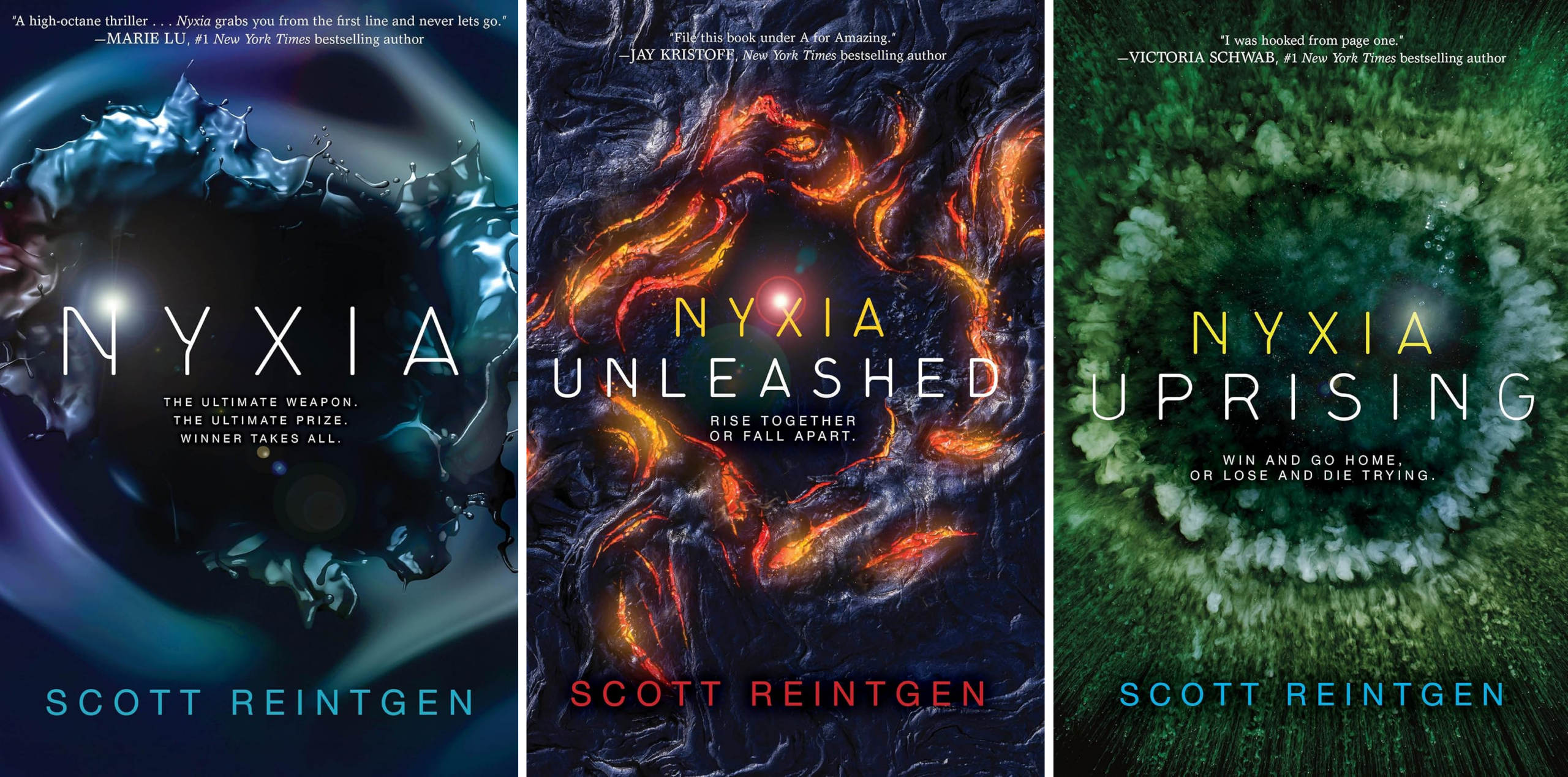
But the curious, funny thing that happened was that it was effective, and I was good at it, and my publisher reached back out to me. They were like: “Hey, we’re seeing a lot of book sales all of a sudden.” And I was like: “That’s interesting. Where do you see them?” They said, “Well, we’re seeing some in Chattanooga.” And I said, “That’s interesting. I just flew into Chattanooga and visited six schools there, so it makes sense that you’re seeing a lot of sales there all of a sudden.” And suddenly, Nyxia had legs, and the publisher said, “Okay, we kinda buy into this.”
And you kept doing books with them, but still no support?
I didn’t ever earn back a full-fledged marketing machine, but I earned my next book advance. So Ashlords and Bloodsworn were purchased because they were seeing what was happening with Nyxia, because they saw how I could move the needle. So I essentially sold two more young adult books just because of the good faith of what was happening on the ground, grassroots with Nyxia. What I established for it never fully faded. It still sells anywhere between 6,000 and 15,000 copies every single year. I haven’t talked about that book in front of students in five years, right? At least not intentionally because I have new books to focus on.
So it’s been interesting to watch that and have almost no publisher support for Ashlords, for Bloodsworn, for Saving Fable. I was already starting to do some of my pre-order campaigns that I’m pretty well known for, and Saving Fable, I think the BookScan number was in the 1,800 range. I produced 1,600 of those sales, right?
So the publisher side is very minimal. Ashlords, our BookScan number was 1,400. I produced 1,300 of those sales. I was doing all this hustle and work, and my publisher was just like, “Well, we’ll see what happens,” [or] “I think we have an ad on Goodreads right now.” [chuckles] And you’re like, “Thank you. I appreciate it.”
So what did Random House do?
The numbers weren’t there. So eventually I became—I always joke that I was a redline status for my publisher. Like, I lost them money. … I just got to a point where my editor says, “I can’t keep buying books from you.”
I said, “That’s cool. No problem.”
And then you moved to Simon & Schuster.
And it was the exact opposite, right? They bought in very low. The advances were not high. And I remember coming to the table for the first time with A Door in the Dark (Waxways series), which was my first YA book with them. And I said, “Hey, this is what I do, and I do it very well, and I think I’m gonna hand-sell about 2,000 to 2,500 books for the first week of sales.” And they were like: “Excuse me? What do you mean?” [chuckles] I said, “This is the minimum that I’m going to do. I’m doing book minimums. I know I’m gonna sell this amount. I think you could forecast that I might go beyond this by 200 or 300 books, but that’s the minimum that I’m gonna bring to the table for our launch. I want it to be successful.” And all of a sudden, in-house, they were like: “Let’s talk.”
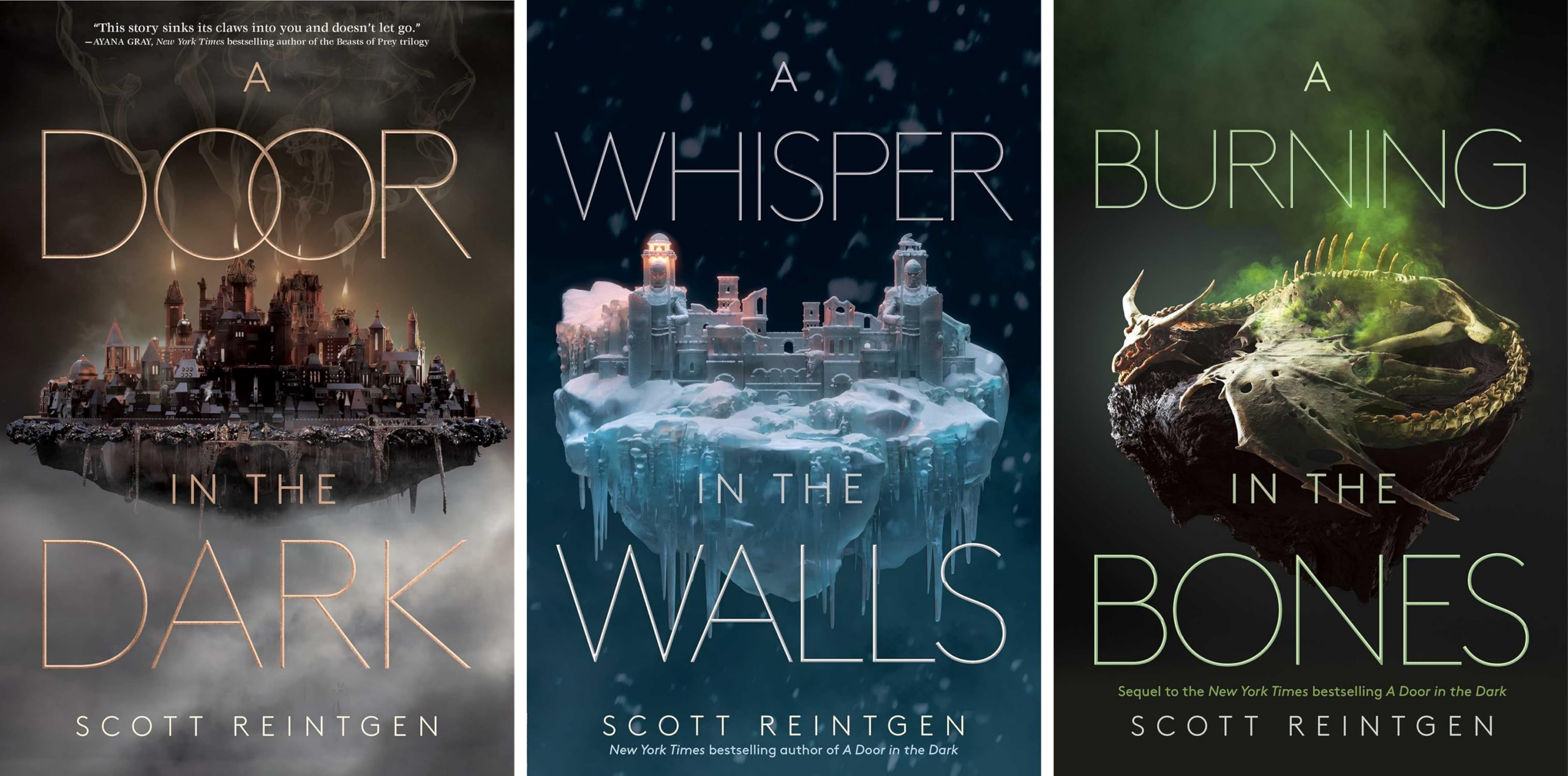
To watch how they reacted to what I was doing and how they matched it was incredible to me. Door in the Dark hit the New York Times bestseller list. It was my 10th book, my first one to hit that list. Later, it became a pick of the month for Barnes & Noble.
Then slowly, I watched the machine just kinda get bigger and more exciting.
This is about the time I became aware of you, with Last Dragon.
With Last Dragon, I said, “Hey, I’m gonna do that same thing that I did, but it will be better because it’s with younger students, and they buy more books.” And they were like: “Cool, we’re gonna put more behind it.” And so at each phase, they put more and more until I’ve arrived at Devious Prey, which I would say I’m doing the least I’ve done for a launch in the last six years.
I’m still doing things. I’m still being efficient with my time. I have one school that’s buying 200 copies. I’m gonna go visit them, stuff like that, but my publisher is putting the world behind that book. Not because I’ve earned it. Everyone deserves it. Every author deserves it, but because we’ve built this rapport, I am a good partner to them. And so I think there is some sense of, you can earn good favor in the house, and if you have enough of that, sometimes the machine starts to just turn towards you.
And if it turns towards you, some really cool things can happen because publishers can do things that I can’t.
Publishers want to chase what’s already working, and so you showed them that it could work. You mentioned on Threads that you taught a course where you had slides that broke down percentages of income you had at different stages of your career, which was apparently engaging for the students. I’m curious how the picture has changed for you. Are you seeing more of the pie coming from book sales at this point?
I am someone who, in my first few years, my advances carried the weight because I was a lead title. My first book series went to auction, so the deal was just massive. It was a huge part of my income. Most of my deals were so large that it was hard to earn them out. So royalties really didn’t factor into the early part of my career. I remember watching those start to shrink and being like, oooh, that’s bad long term. Like, I need to make money. What’s the best strategy? So you can see this shift that happens. In year one, book advances are 80 percent. By year five or by year six, they’re 40 percent.
Year one to year six, I had not made royalties for any book. And then you can also see, though, my speaking and teaching amounts go up substantially. So my speaking amount jumps to 25 percent. I teach an online course for Udemy. They signed me on to do that, so that’s another stream of income. So looked at my shrinking advances and the very unlikely case that I would get royalties on any of those previous books and said, “I need to figure out a path to keep going as an author,” and the first path was speak a lot more at schools. Early on, I would use school visits more to emphasize sales, honestly, and pump books. And then I just realized I could just switch to honorariums when I wanted to. So I started making more money for that.
Now, there’s this swing back to the royalties. So I come into Simon & Schuster with very low advances. I have earned out almost all of my advances with them, and now the royalty checks become a significant portion of what I’m doing year to year. I think in my year eight, book advance is 40 percent, royalties are 45 percent. Foreign rights were 10 percent, and speaking was just 5 percent.
I even had an inside job to possibly teach at UNC, for example, which is a really desirable thing, and I know so many of my friends who want to have that happen. And I taught there for two semesters and kind of realized it was the least efficient way for me to make money.
Long term, it could be this really cool thing, but I’ve got three kids under eight, so the idea of making $10,000 for a full semester of work, knowing I can get that in three or four school visits for three or four days …
Right, I hear you, it’s why I stopped adjuncting myself very early on.
I’m someone who leans very hard into: study the stats, figure out what you’re doing, be efficient, make the decisions that are right for you and your family. I remember talking to Alan Gratz about this, and Alan talked about the fact that he and his partner figured out the numbers. He said, “I’m gonna make more money staying home, writing books, than I would if I’m on tour all the time.” Even though Alan commands probably a very, very strong honorarium. It wasn’t worth it.
I love that approach. So many authors, well, I’m sure you’ve seen, they chase money that’s so little for the time invested. Sometimes I think it’s because of the prestige or status of the work, which is okay as long as you know you’re making the trade-off.
Yeah, and there’s also, to be fair, I’ll run into some authors that aren’t crunching these numbers or pushing this way, then I find out they’ve got a really cool computer tech gig. And I’m like: Well, okay, never mind. [chuckles] You’re not trying to do the same thing. You have this other thing that’s happening that really you’re happy with, and you don’t want it to go away yet.
You’ve said that you very specifically have focused on books that you felt would be commercially viable in the market. How did you figure that out, what would be viable?
That’s partially school visits and talking to a ton of librarians.
One of my favorite questions to ask a librarian—because every place is a little different, right?—I say, “Hey, what are the three most popular books of your last six months? What do kids love? What are they gravitating to?” And they’ll say, “You know, it’s weird, horror is back.”
And so my next thought is, I wanna throw a little bit more horror into my book so that when that one kid in the class asks, “Hey, is this a horror book?” I’m like, “No, but there’s this chapter 12 where I’m gonna scare you a little bit.” And they give it a chance because of that. Last Dragon was the one that was probably most geared to a specific market that I wanted to tackle.
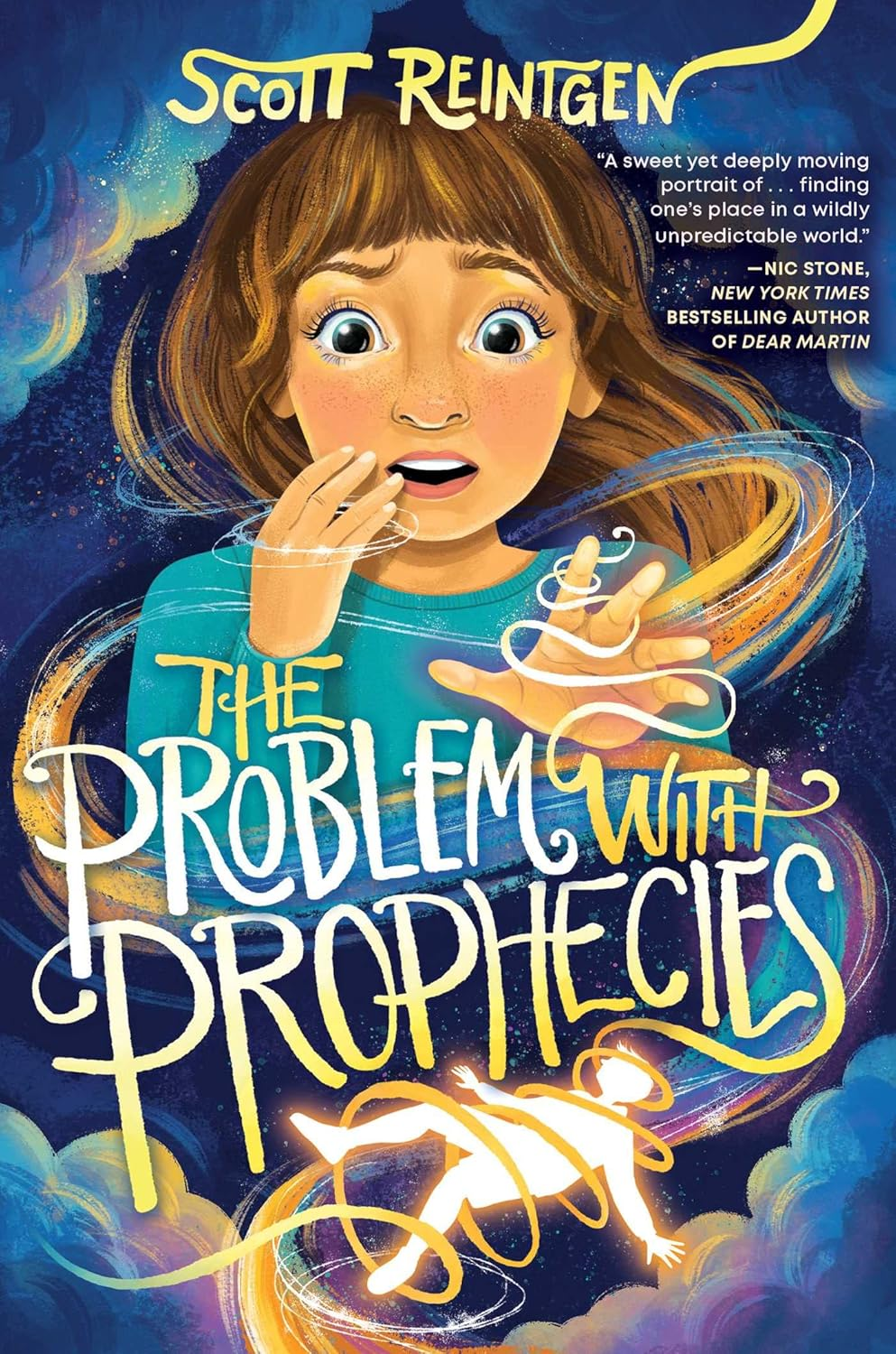
My big takeaway from The Problem with Prophecies, which was my first book with Aladdin, was that I was able to produce a lot of sales, but there was a cap to it. And a big part of that was how we marketed that book, which is ironic, because they’re redoing the cover, and they’re packaging it again. So they’ve finally figured out that we marketed it the wrong way. But what was happening was I would have these lines at schools, and it would be predominantly young girls who were in the line, and a lot of the boys were hesitating to jump into that story because of either how the cover looked or the description.
If you looked at my pitch to my editor, the pitch was not three chapters and here’s the writing style. It was, “Here’s the market, here’s who this is for, here’s how I want to write it, here are the comp titles that I think exist,” so that when I go in and do presentations, I’m gonna say, “Hey, this is like a little bit Wings of Fire, a little bit Percy Jackson, a little bit Into the Spider-Verse. Does that sound good to y’all?”
And they’re all like, “Yeah, that sounds awesome!” … And I also wrote it knowing that the younger [the group] you speak to, the more books you sell. Ninth graders are gonna buy less than sixth graders, who are gonna buy less than fourth graders. That’s mostly to do with parents and their wallets, and how that’s attached to the kid, but it’s just a truth that I’ve encountered everywhere I go. So I wanted Last Dragon to go down to fourth grade. I needed it to, so that I could visit both elementaries and middle schools when I went to places. … And so I expanded the amount of schools that I could visit, while also simultaneously making sure I could hit the market that I knew would sell the most books, while also writing a book that I felt all of the kids would want to read.
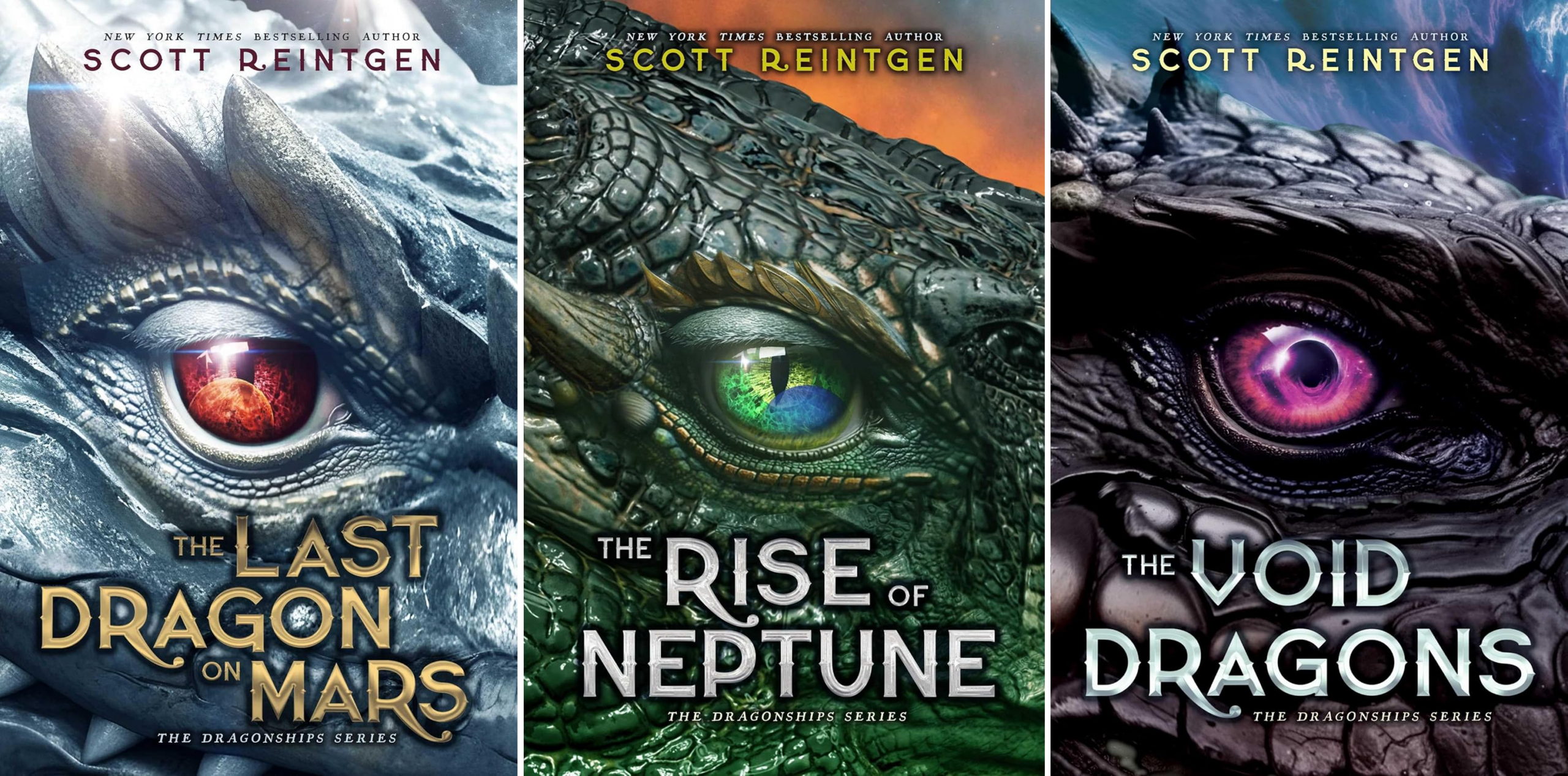
But it was very commercially driven. I still think I wrote a beautiful, artistic book. I hope so. And that’s my job, too. But at the end of the day, I was writing a book that I felt was needed, and that there was a market for. I think there’s, like, 10 books that people around the country are like, “I know I can hand this to my young, fifth-grade boy reader.” And if you’re one of those 10 books, you just get handed to them over and over again. And if you actually wrote it that way and had the cover design to meet them where they’re at, there can be some great success in what is otherwise considered a dry market.
So you have just walked into my next question because I’ve seen you talk about this market you’re hitting, giving the boys a book that they want. And there’s so much concern about the apparent decline in young people reading, and boys reading. Are you concerned?
Oh, yeah, all the time. If you’re not building that little web through reading, then other people come in and get to influence you in different ways.
And I can’t tell you how many kids come up, and they’re like, “You look like Andrew Tate.” And I’m like, “God, why do you know who Andrew Tate is?” They’re like, “He’s so cool.” I’m like, “He’s not.”
So certain influences are gonna come in, no matter what. Unfortunately, we see that drop in readership. And publishing, which is a business, their response is a business response, and they say, “There’s no market there. Let’s stop writing for that market. Let’s publish these things where we know they’re gonna sell.”
So the answer to this group that doesn’t have books they want is to give them less books to choose from, which is so sad to me. I know it’s a complicated conversation, too, because a lot of people will immediately push back and be like, “Well, the boys should be able to read girl books and girl-driven books.” And it’s like, of course, and they will, and they will do that very well once they’ve become readers. We know how big of a deal it is to see yourself in a book.
So give them a chance to do that and give them chances to fall head over heels for one book, knowing that it’s gonna link to 20, 30 other books, and eventually, that hopefully means they’ll read anything at any time.
But yeah, I care a lot about that market, because it also connects to me. I was not a reader. I am that kid who found other things to tap into. Thankfully, mine were video games. I just didn’t think books were fun, and I didn’t think they were for me. And no one really proved me wrong for a while there, so yeah.
Last question: I know you’re writing an adult novel, and I’m wondering if you’re planning to write both children’s and adult moving forward, or you’re just going to see what happens?
Again, eggs in a lot of baskets. Again, I see it as a business maneuver in some ways. I have reached a great success point in both middle grade and young adult, and if there was ever a time for me to sell into adult, now is a great time. My reputation couldn’t be better. So it feels pretty logical.
Most people don’t know that my first YA, Nyxia, that could have been adult. My final two auction houses for it, the two publishers, one was for YA, that was Crown Books for Young Readers, and the other was on the adult side. I think about that a lot sometimes, how my career would’ve been different if I had chosen the adult side. But I chose it because I was a teacher. I wrote for students. That was purposeful, that was the situation for me.
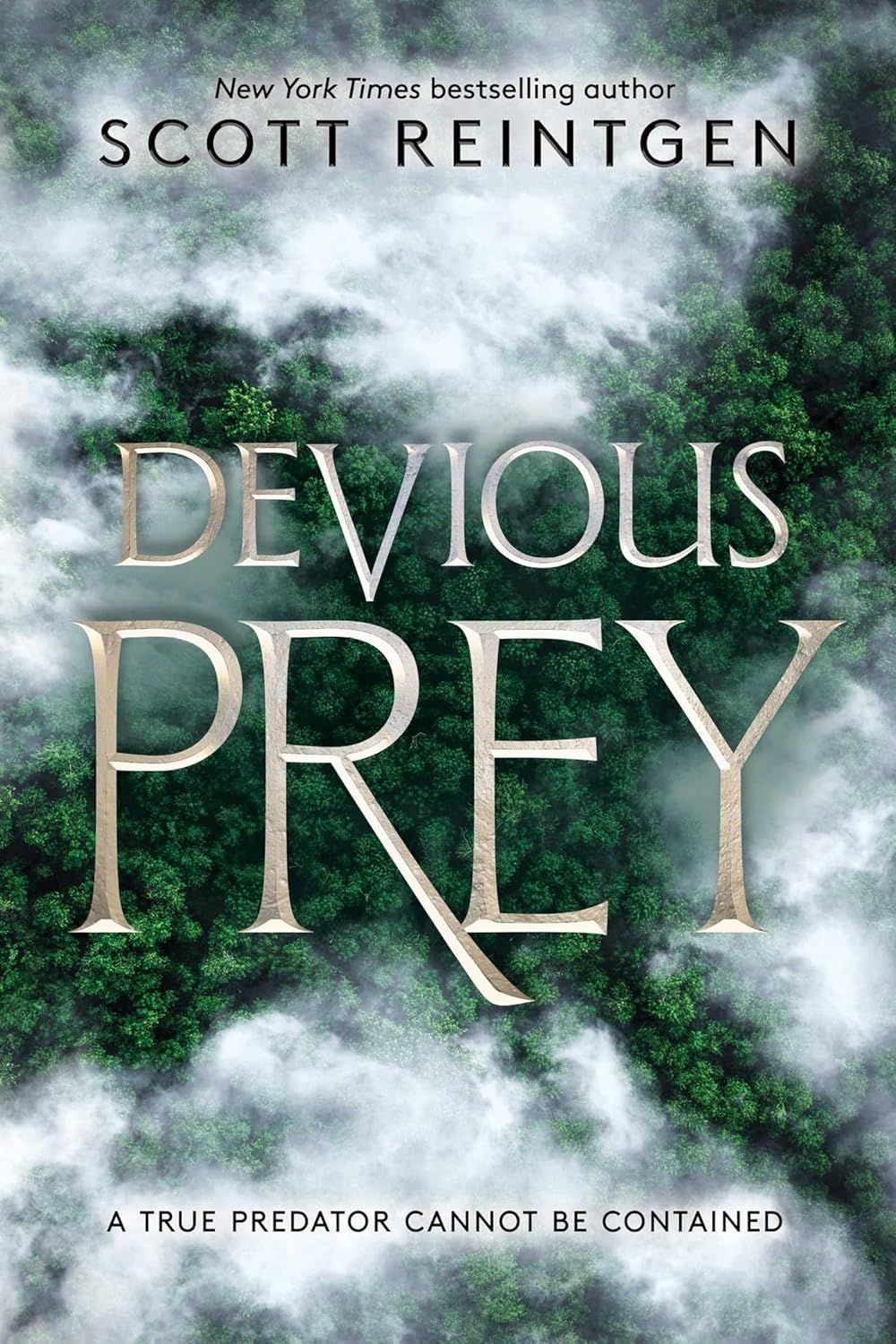
Not long after that, we went out on submission for an adult novel, and it never sold, and we didn’t find a home for it. And years later, I was like: Oh, yeah, I wrote a very complicated story that wasn’t very savvy, and if you had just done all these things different, it would be a great story. And that story is Devious Prey, which comes out March 31, and I think will probably be one of my bigger YA books. But it’s funny to, like, have failed in adult. So for a long time, I have almost viewed adult as, like, my unicorn. Like, I have to find the perfect book for it, and I gotta wait, and wait, and wait.
I think the truth is, I just need to write it and have fun with it. But yeah, I plan to write adult. I plan to write young adult. I plan to write middle grade.

Jane Friedman has spent her entire career working in the publishing industry, with a focus on business reporting and author education. Established in 2015, her newsletter The Bottom Line provides nuanced market intelligence to thousands of authors and industry professionals; in 2023, she was named Publishing Commentator of the Year by Digital Book World.
Jane’s expertise regularly features in major media outlets such as The New York Times, The Atlantic, NPR, The Today Show, Wired, The Guardian, Fox News, and BBC. Her book, The Business of Being a Writer, Second Edition (The University of Chicago Press), is used as a classroom text by many writing and publishing degree programs. She reaches thousands through speaking engagements and workshops at diverse venues worldwide, including NYU’s Advanced Publishing Institute, Frankfurt Book Fair, and numerous MFA programs.




Fascinating! I always find his comments on Threads interesting. I wish I was drawn to writing for younger readers because I think his point about more sales with those younger readers is a good one.