Last week, Writer Beware’s Victoria Strauss commented, “I wish I had a dollar for every publishing ‘disruptor’ that promised to change everything and no longer exists.”
That’s about all you need to say about the latest AI publishing startup, known as Spines. A lot of ink has already been spilled in trade publications, mainstream media, and social media about this company, and I hesitate to keep the conversation going. But I see it as an opportunity to point out—especially for those upset and worried by AI publishing initiatives—that you’re likely to see more such efforts, yet many are meaningless and will disappear quickly. So what follows is a brief guide to assessing what’s worth your attention and what’s not.
First: The type and amount of media coverage devoted to a startup doesn’t correlate to its likelihood of success. Trade magazines especially, like Publishers Weekly and The Bookseller, will cover any kind of startup because it’s part of their job to do so. And the mainstream media is increasingly reporting on any AI startup that promises to be “disruptive,” not least because it drives traffic. People react with high (negative) emotion, which means clicks and social media shares.
When you read media coverage about startups, look for context and insights from people without an interest in the company or its success. If the article is quoting only the founders/investors, it may be little more than an embellished press release. The good news about AI publishing startups? The media and publishing industry are currently primed to be skeptical, and that’s typically reflected in coverage, as you might have seen in The Guardian.
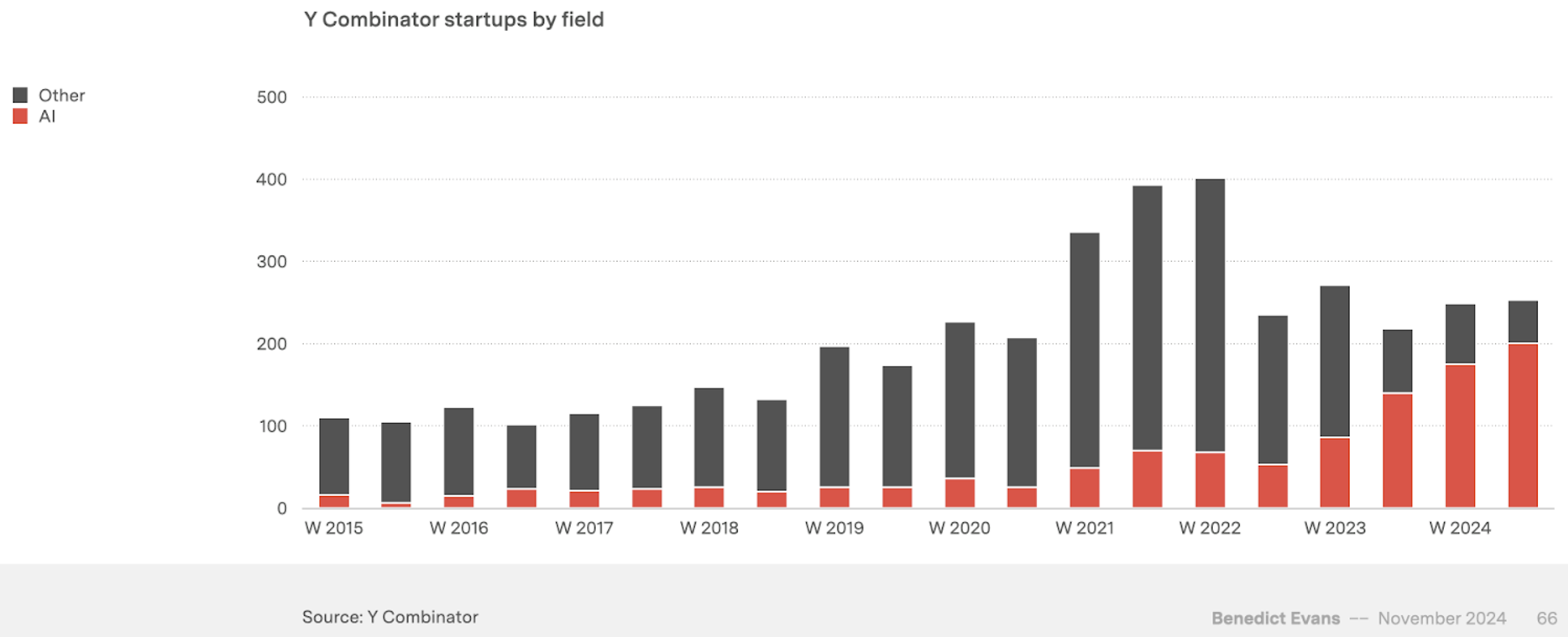
Look at the people behind the startup and who’s funding it. Spines was founded in 2021 by Yehuda Niv; prior to that, he ran Niv Books, a self-publishing services company established in 2013 in Israel. Niv told The Bookseller that when AI began taking off, “I realised I had two options: either to be made irrelevant by AI, or to lead this opportunity in the world,” he said. So, Spines is simply Niv Books with AI added to automate and presumably speed up the publishing process. But why? Well, it’s no secret that startup funding right now is mostly going to companies that are AI focused. Spines has secured $16 million in funding, mainly from Israeli investors.
What problem does the startup solve? Who is it targeting? Startups in the publishing space have long tried to “disrupt” an industry they do not understand. Startups that cater to writers sometimes don’t know what writers want and try to solve a problem that doesn’t exist. For example, Niv told The Bookseller (sub likely required) that authors are willing to pay “tens of thousands” to self-publish, thus Spines will succeed because it’s charging much less, $1,200 to $5,000. But hundreds of paid publishing services charge exactly in that price range and don’t use AI, a technology that the majority of writers remain skeptical of (if not wholly against). Niv also says, “We are a publishing platform. That’s a new concept.” In fact, the industry is an absolute graveyard of publishing platforms that have failed, including those launched by Amazon, such as Kindle Scout, Write On, Kindle Worlds, and—most recently—Kindle Vella. Or, anyone recall the publishing platforms Type & Tell (Bonnier), Pronoun, Fast Pencil, BookTrope, to name but a few?
Spines’ goal is “to help a million authors publish their books,” said Niv, which isn’t a laudable goal by itself, especially if it results in low-quality noise entering the market. Moreover, authors already have affordable tools and platforms that help them publish. And at this stage of LLM development, AI can easily make books worse, not better, unless humans are involved every step of the way. So who is Spines targeting? Certainly not anyone who’s serious about writing and publishing as a profession. They will likely attract the least-informed and least-educated consumer.
What does a strong AI publishing startup look like, then? There are quite a few, and all of them have been able to succeed without implying that publishing is an “old” or “inefficient” industry that needs to be “disrupted.”
- ElevenLabs (founded 2022): Arguably the leading company for text-to-speech and AI voice generation, currently used by Storytel, the Washington Post, The Atlantic, HarperCollins, and many more companies. I’m currently using it to test an audio edition of this newsletter using a clone of my voice. It’s an outstanding tool. (Storytel is an investor.)
- Nuanxed (founded 2021): European firm that offers project management for translations for traditional publishing houses. Read my July 2024 item that discusses this company and the intersection of AI and translation.
- Sudowrite (founded 2020): Leading AI-powered software to help fiction writers. Read the January 2024 Hot Sheet interview with the founder.
Bottom line: Spines is distinctly unimpressive as a startup; it is simply the latest in a long line of companies that promise to “disrupt” the industry by charging writers to publish. Using AI doesn’t make it higher quality, more disruptive, or more trustworthy. In fact, using AI will only undercut its reputation by producing low-quality, disappointing books that authors regret putting their name on. The hard part today is not publishing a book. The hard part is getting anyone to notice, purchase, or read.
Helpful resource: Thad McIlroy has kept tabs on publishing startups for many years through a unique database. Browse.

Jane Friedman has spent her entire career working in the publishing industry, with a focus on business reporting and author education. Established in 2015, her newsletter The Bottom Line provides nuanced market intelligence to thousands of authors and industry professionals; in 2023, she was named Publishing Commentator of the Year by Digital Book World.
Jane’s expertise regularly features in major media outlets such as The New York Times, The Atlantic, NPR, The Today Show, Wired, The Guardian, Fox News, and BBC. Her book, The Business of Being a Writer, Second Edition (The University of Chicago Press), is used as a classroom text by many writing and publishing degree programs. She reaches thousands through speaking engagements and workshops at diverse venues worldwide, including NYU’s Advanced Publishing Institute, Frankfurt Book Fair, and numerous MFA programs.