
Children’s Publishing
- What’s being acquired in middle-grade? Graphic novels remain strong; other projects receiving the most attention include “shorter attention-grabbing middle grade that is going to hit that high-interest, low-reading level.” Some editors are asking for manuscripts no longer than 50,000 words. Read Shannon Maughan at Publishers Weekly.
Anthropic Settlement
- Author Courtney Milan considers the Anthropic settlement through the lens of the failed Google Books settlement. In a nutshell, she says the Google Books case went so badly for the Authors Guild, they are taking a very different approach with the Anthropic case. While it’s helpful historical context and the Authors Guild likely navigates class actions differently now, the Authors Guild is not a plaintiff in the Anthropic case. (Rather, they are suing OpenAI.) However, the Authors Guild CEO is part of the Author-Publisher Working Group (APWG) advising on the Anthropic settlement and claims process. Read Milan’s thread on Bluesky.
- Did your publisher fail to register for copyright for any of your books? One of the directors at the Authors Guild, Umair Kazi, noted in an Authors Guild discussion board that “the publisher would be liable for any settlement monies you would have received but for their breach of contract in not registering the work. Since this issue likely impacts a large number of authors, we’ll be working on it as the settlement process moves on.” Be sure to read the Authors Guild primer on what authors need to know about copyright registration, plus what to do if you discover your publisher failed to register for copyright.
- Again, people are trying to figure out: What titles make up the class in Anthropic? Someone has analyzed the data from LibGen as a proxy and offers some interesting data points. Read Dave Hansen at Authors Alliance.
- Related: The Authors Guild has updated their information page about the Anthropic settlement, noting that authors with publishing contracts will be sharing in the settlement with their publishers, assuming rights have not reverted. As far as how the money will be split, they write, “The allocation should be based on actual contracts or at least on contract norms, because many contracts are silent on the allocation of infringement awards, especially in the class action context. We will provide more information on the allocation as it becomes available, so stay tuned.” They offer a helpful FAQ about the case that every affected author should read.
Media
- The narrative podcast industry has collapsed. It seems counterintuitive, given that everyone is talking about how influential podcasts are. But narrative series are expensive to produce, and the money went away. Read Eric Benson at Rolling Stone.
- A New York Times Books reporter discusses what kinds of books she’s looking to cover. “I’m looking for either a book that tells us something about what’s happening in the publishing industry or about what is resonating with readers widely. When I’m writing about a single author, I love somebody who will open up about their process and talk about the inspiration behind a book and the struggle to create it, because these are projects that people have invested sometimes 20 years of their lives pursuing. I really want to get inside the process and give readers something that they’re not going to get just from reading the book.” Read Sarah Bahr’s interview of Alexandra Alter in the New York Times (gift link).
Culture & Politics
- The US Copyright Office director can keep her job while her case goes through appeal. Shira Perlmutter, who was fired by the Trump administration in May, fights to keep her job. Read Blake Brittain at Reuters.
- Charlie Kirk’s forthcoming book is on top of bestseller lists. His book, Stop, in the Name of God, will release on Dec. 9 from Winning Team Publishing, the publishing company founded by Donald Trump Jr. Read Tim Chan in Rolling Stone.
AI
- There’s now a Wikipedia entry for “signs of AI writing.” As the article says, do not take this list as a ban on certain words, phrases, punctuation, etc. But for those wanting to hone their detection skills, this is a good starting point. Read.
- The New York Times Ethicist comments on AI use in an essay contest. I love his response, which is reasonable and humane for the context. Read Kwame Anthony Appiah (gift link).
- Warner Brothers is suing Midjourney. The AI image generator lets users create images of characters like Batman and Bugs Bunny. Disney and Universal also filed suit against Midjourney earlier this year. Read Ashley Belanger at Ars Technica.
- What if you don’t like what AI says about you? Author and podcaster Jess Zafarris discusses how she was able to affect what AI chatbots say about her in response to prompts. Read at LinkedIn.
- How often do AI chatbots hallucinate links? A fascinating look at a real problem, with guidance on how website owners can turn hallucinated link traffic into an opportunity. Read Ryan Law and Xibeijia Guan at Ahrefs.
- How to reduce the error rate of AI chatbots: Often hallucinations are merely conversations that haven’t continued long enough. Read Mike Caulfield at the End(s) of Argument.
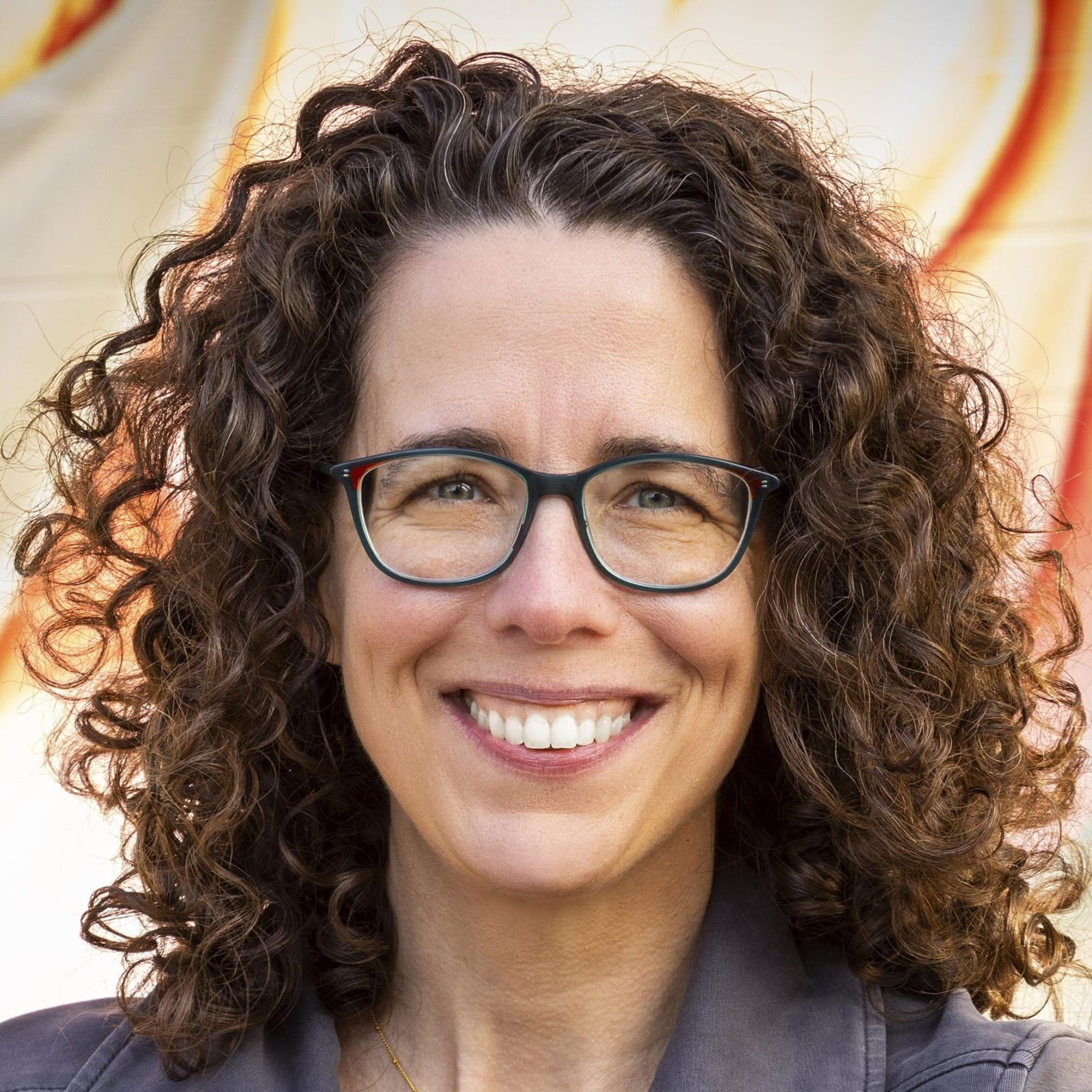
Jane Friedman has spent her entire career working in the publishing industry, with a focus on business reporting and author education. Established in 2015, her newsletter The Bottom Line provides nuanced market intelligence to thousands of authors and industry professionals; in 2023, she was named Publishing Commentator of the Year by Digital Book World.
Jane’s expertise regularly features in major media outlets such as The New York Times, The Atlantic, NPR, The Today Show, Wired, The Guardian, Fox News, and BBC. Her book, The Business of Being a Writer, Second Edition (The University of Chicago Press), is used as a classroom text by many writing and publishing degree programs. She reaches thousands through speaking engagements and workshops at diverse venues worldwide, including NYU’s Advanced Publishing Institute, Frankfurt Book Fair, and numerous MFA programs.