
That Esquire Piece
- Esquire examines the challenge of launching debut novels. Too much of this article leans on assumption, publishing cliché, and the perspective of Kyle Chayka, a staff writer at the New Yorker—someone who doesn’t work in book publishing, doesn’t report on book publishing, and doesn’t write fiction. (Also, any article threading in discussion of Kerouac as a debut touchstone is immediately suspect.) However, the article reaches a justifiable conclusion that a writer’s community is probably the most important tool for a debut author. Read Esquire’s Kate Dwyer. Then, as a chaser, and for practical solutions, read Cassie Mannes Murray and the articles below.
- Debut novelists are rarely influencers and don’t need to become influencers. Publicist Kathleen Schmidt discusses some of the myths in the Esquire article as well as how publicity works today.
- How a novelist has used TikTok to launch her debut. This was posted partly in response to that Esquire article; Leigh Stein interviews a novelist who employed her guidance to market and promote on TikTok, to good effect. Read at Attention Economy.
- Should you hire a book publicist? It’s often expensive, and too many authors hire out of fear, without knowing what they specifically want to accomplish. Read agent Anna Sproul-Latimer at How to Glow in the Dark (sub required for full article).
AI
- Online publishers worry about their fate in an era of generative AI summaries. Google and other generative AI models can read the web and summarize it in near real time. If the search engine gives you the answer, why visit any site? Read Nilay Patel’s interview with Google’s CEO.
- Atlantic and Vox strike deals with OpenAI. Jessica Lessin comments, “News organizations rushing to absolve AI companies of theft are acting against their own interests. … The publishers willing to roll over this way aren’t just failing to defend their own intellectual property—they are also trading their own hard-earned credibility for a little cash from the companies that are simultaneously undervaluing them and building products quite clearly intended to replace them.” Read Todd Spangler in Variety.
- TikTok rolls out AI tools for ads. It offers an AI video generator that can generate TikTok videos with just a few inputs. Read Meera Navlakha at Mashable.
Traditional Publishing
- Polis Books closes; the founder proactively found other homes for its titles. Publishers Weekly comments that the press “offered a masterclass in how to shut down a small business the right way.” Read John Maher.
- Why do publishers have seasons? It goes all the way back to the time when books were moved across the country via boats and rivers. Read Mike Shatzkin at the Idea Logical Company.
- Reese Witherspoon has relaunched her YA book club. Her nieces are helping. Read at Book Riot.
Legal
- An interesting case at the Copyright Claims Board was just decided. It involves a book continuing to be sold by Disney after the contract ended. Read Jonathan Bailey at Writer Beware.
Media
- It turns out that Apple News is working well for some publishers. Apple News is a subscription-based service for magazines and other online media that’s funneling meaningful money to outlets with weak standalone subscriptions. However, while the money might be good, is this really a smart long-term strategy for publishers? Read Max Tani at Semafor.
- Where do young people get their news? From the “new alternative news universe” and across a variety of formats—podcasts and interviews, live video streams, and news documentaries—or material that TV and newspaper consumers rarely see. Read Wolfgang Münchau at Euro Intelligence.
- One of the top business podcasts essentially repackages the knowledge found in books. “[The two men behind the Acquired podcast] don’t consider themselves podcasters. They prefer to think they’re producing ‘longform, conversational audiobooks.’ … In a sober moment, Ben admitted: ‘Acquired has an opportunity in the world because people don’t read books. And we just go read books and tell people about them.’” Read Ken Whyte at SHuSH.
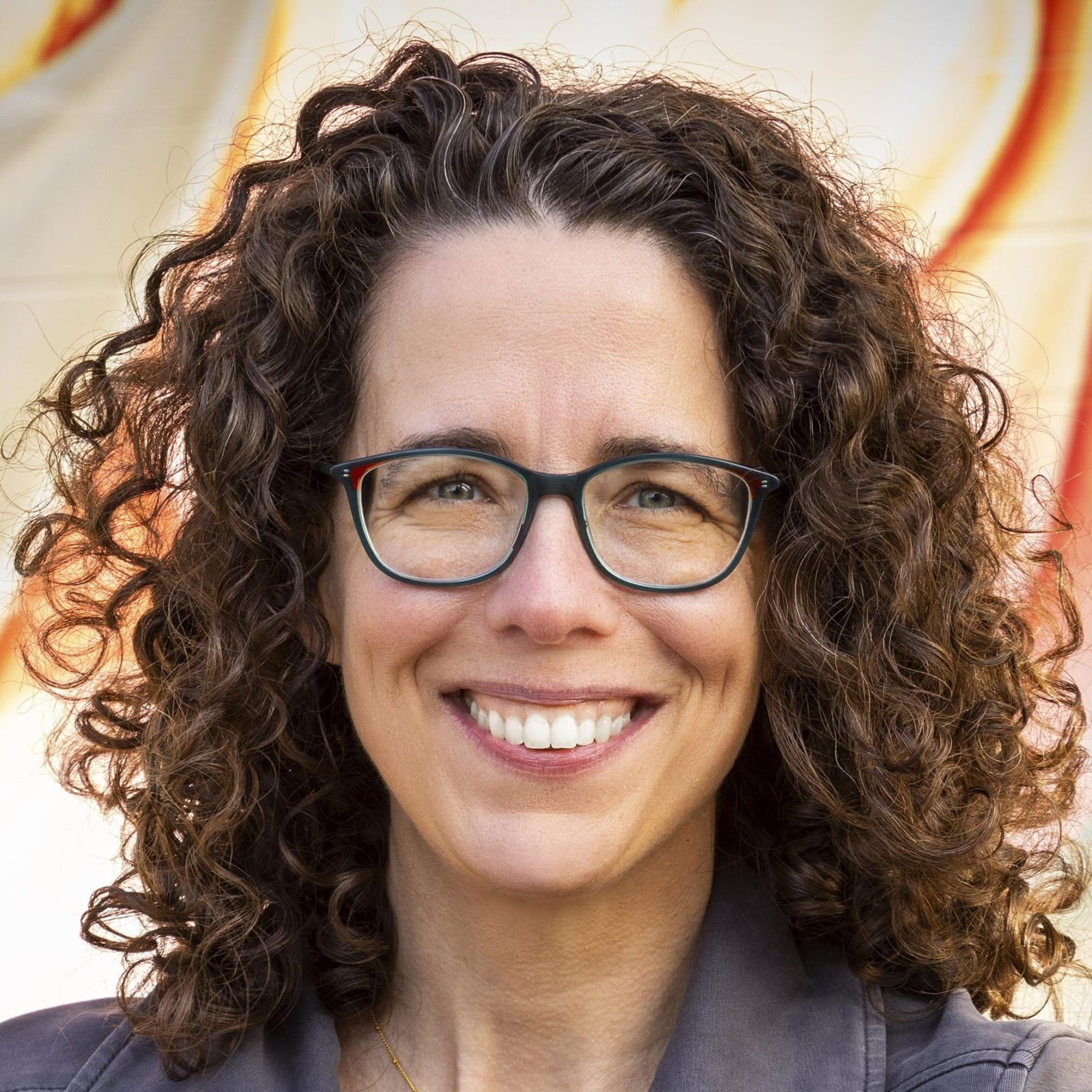
Jane Friedman has spent her entire career working in the publishing industry, with a focus on business reporting and author education. Established in 2015, her newsletter The Bottom Line provides nuanced market intelligence to thousands of authors and industry professionals; in 2023, she was named Publishing Commentator of the Year by Digital Book World.
Jane’s expertise regularly features in major media outlets such as The New York Times, The Atlantic, NPR, The Today Show, Wired, The Guardian, Fox News, and BBC. Her book, The Business of Being a Writer, Second Edition (The University of Chicago Press), is used as a classroom text by many writing and publishing degree programs. She reaches thousands through speaking engagements and workshops at diverse venues worldwide, including NYU’s Advanced Publishing Institute, Frankfurt Book Fair, and numerous MFA programs.