
If you’re like me and can’t turn away from the news, then you’ve heard about countless community efforts across the country to ban books from US public libraries and schools—and now even Barnes & Noble. There’s nothing new about book banning, of course—it goes back centuries—but the issue has been exacerbated by the political climate (it’s US midterms this year) combined with the effects of the pandemic. And it’s not just librarians who are feeling the heat. Library vendors and distributors are becoming part of the controversy.
NBC News reported that schools and libraries are being pressured to cut access to digital subscription programs and apps that make it easy for kids to consume all types of media—including ebooks—on their own devices. These apps have been popular during the pandemic, especially when schools closed, but have now become a target of conservative parents and school boards that object to literature included in the collections. The CEO of OverDrive—the largest distributor of ebooks to public libraries—told NBC that not until this year has there been any kind of challenge to their apps, Libby and Sora.
Because book banning is nearly as old as books themselves and because efforts to ban books ebb and flow with the times, I haven’t paid close attention to what’s happening. But I’m starting to worry this time it’s different. There are already rigorous standards in place for school library holdings in particular—and established procedures to challenge those holdings—yet you’d think there weren’t any standards at all, given the initiatives now underway. PEN America recently found that 41 percent of book bans are related to directives from state officials or lawmakers to investigate or remove books in schools. They write, “This is an unprecedented shift in PEN America’s long history of responding to book bans from the more typical pattern in which demands for book removals are initiated by local community members.” And mostly fiction titles are being targeted.
Digital library subscription services have given parents and lawmakers an additional “crack in the wall”—and they’re leveraging it, says Guy LeCharles Gonzalez. Gonzalez has many years of industry experience in the library community, with positions at Library Journal, The Panorama Project, and now LibraryPass (a digital distributor of comics to libraries and schools). He says that sometimes objections are justified—that there may indeed be content in these digital subscription services that kids shouldn’t have unregulated access to. Why does that happen?
First, sometimes it’s possible for a library patron to see the entirety of what a digital platform offers, even if the library hasn’t purchased or otherwise made a particular title available in its own collection. But it can be challenging for the average person to distinguish between what the library has curated and what it hasn’t in a digital collection. Second, it is not feasible for librarians to vet everything personally when a digital service (e.g., Hoopla or Epic) offers tens of thousands of titles as part of an unlimited subscription model. Yet that’s exactly what librarians would be required to do, given the kinds of laws being considered in some communities. As a result, some librarians are choosing to cut off access entirely—which is what happened in Llano, Texas, with OverDrive, and in Brevard County, Florida, with Epic. (The Texas Tribune has reported on Texas librarians getting harassed over the issue.)
Gonzalez thinks book banning efforts have legs, but he adds, “I don’t know how long the legs are.” Laws are being proposed in a very organized manner, and even if such laws don’t pass, the measures have a chilling effect. “It’s preemptively making people scared,” Gonzalez says. Librarians are worried about losing their jobs, and some just aren’t up for the fight. “Self-censorship has always been part of some collection development policies, but it’s definitely gaining traction in the current climate,” he says.
Heather McCormack agrees. Bibliotheca cloudLibrary’s global VP of digital content acquisition and marketing, McCormack has been working in publishing and with libraries since 1998. While libraries have been dealing with book banning for decades, she says the challenges they’re seeing now are unprecedented. Librarians have been caught off guard by how well-planned and tactically intelligent the efforts have become. However, two years into the pandemic—a time when some libraries never entirely closed—librarians are burned out. “They haven’t had a chance to catch their breath from the worst of COVID. And then this starts to hit them last year. So you can understand the burnout factor, which is a very real thing in libraries right now. There is a certainly a degree of succumbing to the chilling effect, as in, ‘Get these people off my back.’”
McCormack has observed pushback from communities against book banning, and it works. She says it is possible for communities to stand up to pro-censorship school and library boards and have the boards back down. “I’m encouraging family and friends to get involved in this. I know we’re tired because of the pandemic, and many of us are sick of divisive politics,” she says, but “if a library made your life better in even the smallest way during the worst of COVID, come out and support them. They need you, if only so you can inspire them to keep going.” Gonzalez agreed that this issue needs to be approached from a community level, not only a national level. He encourages authors to show up at their school board meeting or run for local office. “This isn’t about James Patterson making a statement and donating $1 million to the American Library Association. It’s about making your presence felt in Waukesha, Wisconsin, or Virginia Beach, or wherever you actually live,” he says.
Should things keep heating up, McCormack believes there will be more action on the court side, but that it will vary by degree depending on the community and the tenor of the Supreme Court. Note that in 1982 (the same year that Banned Book Week was established by the American Library Association), the Supreme Court ruled that students’ First Amendment rights were violated when Slaughterhouse-Five, among other titles, was removed from the school library. One of course immediately wonders how today’s Supreme Court might rule differently.
Bottom line: While there is a lot of attention right now on libraries “vetting” materials, McCormack says this is not about vetting: “In the darkest examples, this is about control.” McCormack thinks, in large part, the people calling for bans and more restrictive laws haven’t read the books in question. She wishes someone would present a public challenge to such people: ask them to read the books and have a forthright discussion about what offends them or could hurt a child. While she doesn’t think that children should be used as cudgels in this debate, she also hopes for more testimonies from children about how their lives have been changed by banned books. “Children don’t have a voice in this, and that strikes me as unfair,” she says. Kids naturally wonder and question who they are, and book bans ultimately deny them access to information to help them figure that out. “I think it’s inexcusable for a democracy to do this to its youngest generations.” For a legal framework on how to fight book bans, School Library Journal summarizes an attorney’s guidance.
Bid on “The Unburnable Book”: Penguin Random House has released a special, one-copy edition of The Handmaid’s Tale that can’t be burned. It is now up for auction, with all proceeds benefiting PEN America. Worth a look just to see Margaret Atwood holding up a flame thrower to her own work.
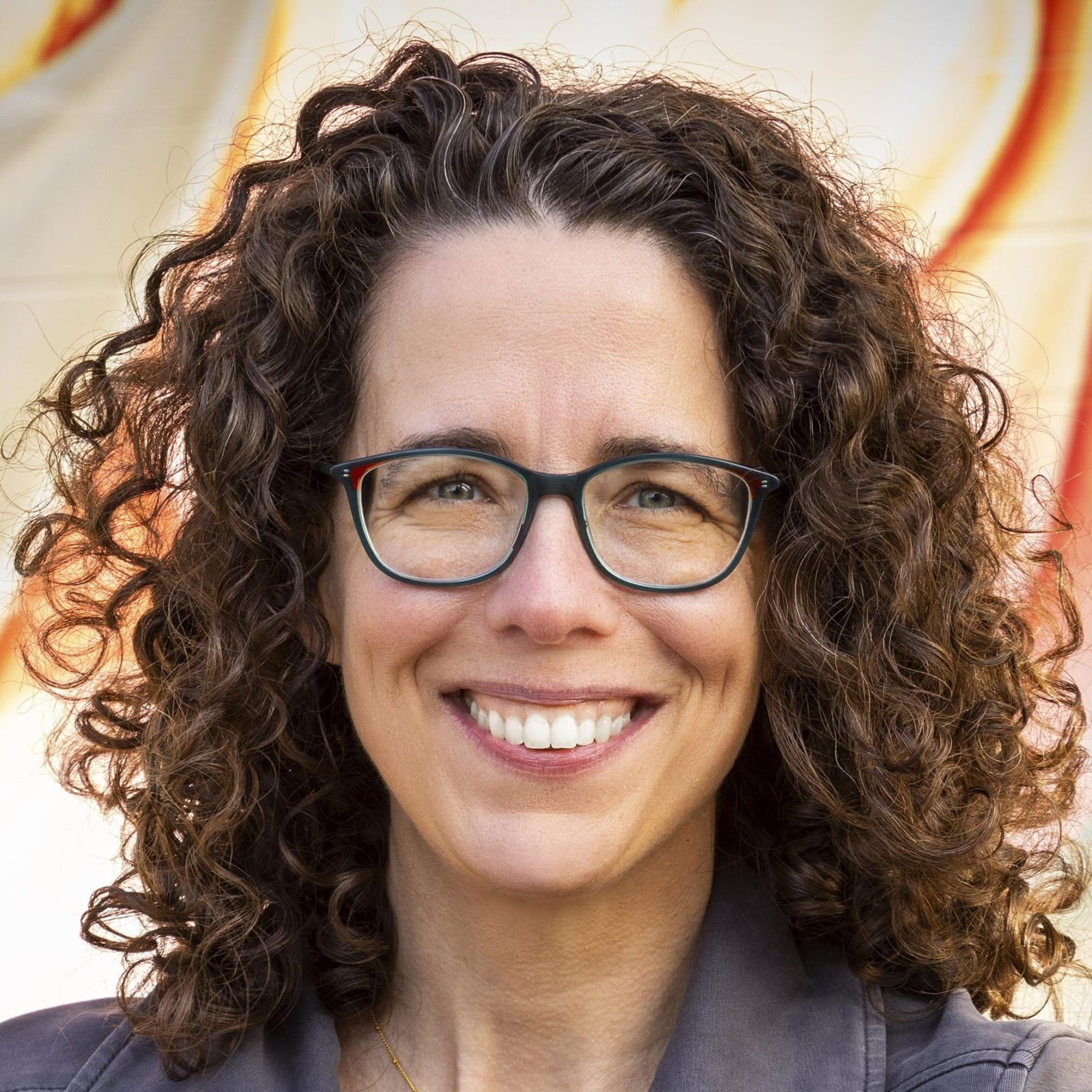
Jane Friedman has spent her entire career working in the publishing industry, with a focus on business reporting and author education. Established in 2015, her newsletter The Bottom Line provides nuanced market intelligence to thousands of authors and industry professionals; in 2023, she was named Publishing Commentator of the Year by Digital Book World.
Jane’s expertise regularly features in major media outlets such as The New York Times, The Atlantic, NPR, The Today Show, Wired, The Guardian, Fox News, and BBC. Her book, The Business of Being a Writer, Second Edition (The University of Chicago Press), is used as a classroom text by many writing and publishing degree programs. She reaches thousands through speaking engagements and workshops at diverse venues worldwide, including NYU’s Advanced Publishing Institute, Frankfurt Book Fair, and numerous MFA programs.

