Original and exclusive content is in high demand among all streaming services, creating increased opportunity for screen adaptations—especially for authors with a sizable backlist
Just as there have been more book deals happening in 2020 and 2021, there have been more TV and movie deals being made than ever before. In a virtual discussion at the US Book Show last month, a panel of Hollywood agents and scouts discussed trends in literary IP and what the deal landscape looks like—and deals are being driven primarily (no surprise) by streaming services. The panel was moderated by Zander Bauman, senior vice president of literary affairs at 20th Century Fox.
The pandemic gave agents and dealmakers the perfect opportunity to get the attention of their clients—busy people who have been otherwise occupied for a very long time—to have them focus on material they might want to develop. “We did have an excellent year in 2020 as far as sales went. We had an increase of deals,” said Mary Pender, a media rights agent at United Talent Agency. “My department felt like we were burning the candle on both ends. It was great. Exhausting but great.” She added, “I do think that IP [e.g., books or podcasts] is certainly something that has over the course of the last several years been of more and more importance to buyers. And I think that this trend is only going to continue.”
Mac Hawkins, a film/TV literary consultant and founder of Pragmatic, agreed: “I’ve never been busier.” Before the pandemic, he said, you were lucky if there was one thing a month that buyers were interested in. Now it’s five things a week or 10 things a week.
The rise of streaming services (e.g., Netflix) means there’s more room to make productions that appeal to a narrow audience. Some types of films—those that are major franchises or series (think: Star Wars)—will continue to draw people out of the home and bring people together into a theater experience. But now, Pender said, “There’s more opportunity for source material and IP to see the light of day and to get eyeballs in a very niche kind of way. That’s the benefit and the great thing about streamers.” Hawkins said, before the pandemic, you’d see mid-budget drama releasing in the theaters, but such films have now moved to streaming platforms. “Post-pandemic, we’re just speeding up what was already happening,” which means a lot more feature-length two-hour movies on a streaming platform without the stigma of being sent there. “The theatrical experience will occupy a different place,” Hawkins said.
Angela Cheng Caplan, president and CEO of Cheng Caplan Company, said that the industry has also discovered, by seeing how well foreign shows perform, that there are a lot of people willing to read subtitles. “You realize this is phenomenal,” she said, “what the streamers have made available to everybody all over the world. We’re seeing certain viewing patterns and viewing behavior that really wasn’t apparent to us previously. So it feels like it’s fueling a different kind of growth that is really exciting and different.”
Streaming services now acquire IP or content at larger bandwidths than has been seen previously, according to Caplan. As far as authors and books, streamers are interested in whether an author has a backlist that can be mined. “It doesn’t have to be recurring characters,” she said, or even a recurring world. But services like to see “libraries” of content, hopefully connected thematically, that a showrunner or director could explore.
Because of the rise of streamers, deals are changing. In fact, Caplan said, the pace of change is unprecedented. “I feel that we’re all having to adjust at lightning speed to what’s going on in our business—not only the needs of various streamers, but quite frankly we’re having to define, in real time, how the backend is going to be paid out or not paid out, as the case may be.” (Backend refers to how profits get shared after a TV or movie project is finished; a contributor may receive a percentage of profits made by the work.)
Caplan continued, “Certain deal structures that used to be supported by traditional feature film studios are no longer supported by the streamers.” Namely, she’s referring to how streamers tend to emphasize up-front payments or incentives, since such deals may require creators to relinquish reselling the show, thus giving up backend revenue. Bonuses may be paid out by streamers if a show hits a certain season, like its fourth or beyond. “So all this to say, it’s very, very interesting to see the buying patterns of various studios, according to the streaming platforms they have to support. And also, inversely, with some of the independent studios, who don’t have streaming platforms available to them as sort of a vertical silo, how they have to also adjust to how they buy and how they sell and the kind of deals they make.”
Today’s streaming environment means everyone is competing against each other. Film/TV director Erin Hennicke of Franklin & Siegal Associates said, “Years ago, it was networks competed with networks, cable competed with cable, and feature competed with feature. Now everyone is competing with everybody, and there’s obviously niche things that do well, like Bridgerton did so well,” she said. “That may not attract a feature [film], but everybody’s looking for material. With streamers there’s no end, there’s no schedule they have to stick to. … We have to be on our toes, and it makes a very competitive world.”
Hawkins thinks consolidation is inevitable and that streaming remains in its infancy. Eventually there will be stronger differentiation between the streaming services in terms of the audience they’re trying to reach—whether they’re international or just domestic or how they organize the content they’re presenting audiences.
Current trends still favor stories that are uplifting—but that doesn’t mean simple or easy. Hawkins said, “The stories we see on CNN and New York Times and FOX News, it’s all sort of dark and exhausting, and I think people are looking for things that are uplifting in some way. I don’t, however, think that people are looking for things that are necessarily just easy. I think [people want] smart material, material that actually says something and plants a flag in a world.” Hennicke agreed but also added, “It’s not all lightness. You look at something like HBO’s Mare of Easttown. That’s pretty gritty, but I’m riveted. There will always be something to kind of balance it.” Pender noted that true crime popularity on streaming services has been bolstered by podcasts in that genre.
Hawkins predicted that, in the future, “We’ll find that audiences will want to be entertained in a not-cynical way. We’re tired of cynicism. Interesting, fun, smart pieces of material will do very well.”
Whether to make a TV show or a movie based on IP: it’s no longer a binary or straightforward choice. Pender said it used to be you’d label something as either movie or TV and submit it in that direction. Now, however, “You submit it and then the market really tells you based on the offers that come in, or based on the interest level, which lane it ends up in. So we’ve had to become a little more flexible in how we do material,” especially since now things can go out as a limited series or mini-series, like The Queen’s Gambit. Hawkins said, “It’s left to creators and producers to figure out what their vision for the project is. That’s one of the more exciting aspects of the job, to have that creative freedom to figure it out.” Caplan said, “I stopped several years ago from saying things like, ‘I think it could be more of a movie or this could be more of a TV show.’ Just because, honestly, depending on the producer … Basically they’re all able to sort of hit with their right and their left hands. They’re able to do everything.” And she thinks that’s the only way to survive in the business.
Book adaptations don’t always see a book sales bump. Pender said it depends on the property. The screen adaptations of Little Fires Everywhere by Celeste Ng and Nomadland by Jessica Bruder led to a massive uptick in book sales. In fact, Nomadland never hit the bestseller list until the film released. When people have the opportunity to binge-watch something and be with that character for hours, Pender said, that depresses book sales. “You’ve kind of had your fill of those characters.” But if it’s dropping week by week and you’re waiting for the next episode, you might end up picking up that book—seeing what happens and seeing how the show is developing it. Or, if you’re watching the book as a two-hour film, you’re not getting all the nuance of the story, so maybe you’ll pick up the book.
While increased book sales is one of the reasons why agents and authors get into film and TV deals, Pender suggested that authors see it as part of the overall career pie—that it builds name recognition and becomes a calling card. Caplan added, “Part of our desire to support an author on the film and TV side is that an excellent adaptation is always going to be millions of dollars in publicity and marketing. That goes toward brand name recognition. It’s always about building out a runway for a particular client and making sure you’ve partnered them up with the right people. And there’s never a guarantee that anything ever gets made in our business. But you increase those odds when you partner authors with the right collaborators.”
Bottom line: How can authors increase their chances of having their IP picked up by Hollywood? Caplan said, “Honestly, it’s all about the narrative. It’s really about the author’s narrative. We really, really pay attention to that. What is the author’s back story? What is the author trying to say? I’m always big on context. And I always have the authors that I work with put together an author statement that really sort of addresses why they’re the only person in the world to tell this story—what exactly it is that they’re going through that makes this relevant for this moment in their lives and how it can relate to everybody else.” She also offered a warning: “Within the past year we’ve actually started looking at potential clients and their social media. I’m very, very aware of when someone is a troll, quite frankly—if they’re trolling for the good or trolling for the bad at some point in time. Whatever energy is put out there sort of comes back in some way, shape, or form. So I would say for authors who are out there trying to create publicity for themselves … be very aware of the kindness or lack of kindness you’re putting out into the world.”
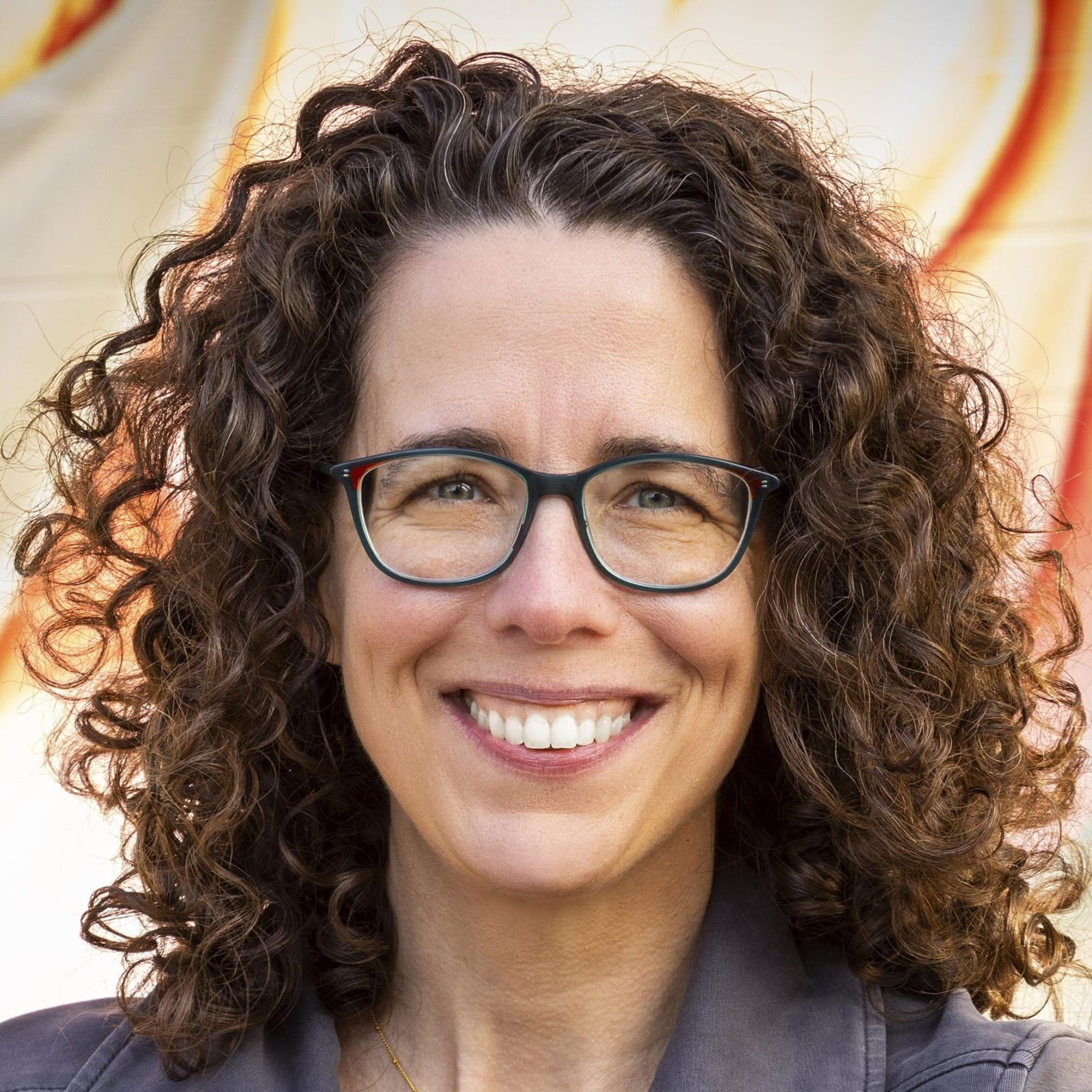
Jane Friedman has spent her entire career working in the publishing industry, with a focus on business reporting and author education. Established in 2015, her newsletter The Bottom Line provides nuanced market intelligence to thousands of authors and industry professionals; in 2023, she was named Publishing Commentator of the Year by Digital Book World.
Jane’s expertise regularly features in major media outlets such as The New York Times, The Atlantic, NPR, The Today Show, Wired, The Guardian, Fox News, and BBC. Her book, The Business of Being a Writer, Second Edition (The University of Chicago Press), is used as a classroom text by many writing and publishing degree programs. She reaches thousands through speaking engagements and workshops at diverse venues worldwide, including NYU’s Advanced Publishing Institute, Frankfurt Book Fair, and numerous MFA programs.