Hachette has canceled a forthcoming horror book, Shy Girl by Mia Ballard, due to suspected AI use. At first, it appeared as if Hachette pulled it only after the New York Times queried them about it and presented evidence of AI use. However, Publishers Lunch noted that Hachette said they’d already made their decision prior. Is that true? Hard to say. Publishers do move slowly; they can also move quickly when the New York Times is about to publish an embarrassing piece.
This novel has been on the market in the UK since November 2025, and prior to that it was self-published, so there’s been ample time for the publisher to observe market reaction. I have been aware of the AI accusations against Shy Girl for weeks now, not least because of online discussion among readers: One YouTube video posted in January has more than 1 million views. My working assumption is that no Big Five publisher today will knowingly publish a novel that raises strong suspicion of AI use unless it is clearly marked as such (which has occurred multiple times).
So why did it take Hachette so long to act? I don’t think Hachette recognized the level of AI use in the book, and I’d be truly surprised if its editors/leaders knew and assumed no one else would notice. I should add that no one seriously disputes the presence of AI writing in this work, and the author herself admitted it to the Times. That said, this case proves that the quality of AI-assisted writing can equal (or even surpass) wholly human writing. And by AI-assisted I mean that a human author is guiding, assembling, and editing outputs into a coherent whole. As publisher Anne Trubek points out, the book enjoyed a strong track record as a self-published work, and thousands of readers didn’t think it was bad. People keep saying AI writing may become as good as human writing. For some readers, it has.
Still, some did notice the hand of AI in this. Why didn’t Hachette?
First, editors in traditional publishing, at least the ones I meet, are not enthusiastic about AI. Like authors, they have fears that AI will affect their livelihood. But if they’re not engaging with this technology and seeing what it’s capable of, then they’re going to have a far harder time spotting its use in authors’ manuscripts, especially when working with an author for the first time. Without a strong relationship in place and a sense of how the author’s work has evolved over time, it might be easy to say, “Well, that’s just this author’s style,” and not question writing that’s relatively less polished. Which brings me to the next point.
Shy Girl was picked up because it was a successful self-published title, which is the thing to do right now, as I’ve reported on this year. Based on my own conversations with imprints and editors who specialize in working with self-published authors, there’s not typically a standard editorial process for work that’s already on the market and succeeding. It’s possible the publisher just put the book through copyedit and/or proofread, and such work might’ve been done by freelancers.
Whatever the case, this is going to be a dilemma moving forward for traditional publishers. AI is well on its way to mainstream adoption in the self-publishing community. That’s not to say every self-published author is using AI, but I find it increasingly likely for trendy, trope-driven genre fiction populating Kindle Unlimited, and it is fueling the significant increase in titles that Bowker just recently announced. If traditional publishers continue growing their acquisitions of indie work, will they now conduct closer editorial reviews? And what will the market expectation be among readers? Do they expect traditional publishers to abide by different standards in relation to AI than self-publishing authors?
Readers played a leading role in this entire case. Readers drive today’s publishing market. They made this book enough of a success that it came to the attention of publishers, and readers also spotted AI’s use. As I said earlier, I fear that industry professionals who refuse to engage with AI will continually be on the back foot because they will not recognize AI use when it’s plain to the readership. Even if against AI, no one working as a publishing professional can afford to remain ignorant of its capabilities—not if they intend to uphold a policy of publishing purely human work without the influence of AI. Whether such a policy is tenable and enforceable is the right question to ask.
If publishers suspect AI use in a manuscript and confront the author, and the author denies it, what grounds do they have to terminate the contract? Since AI detection software is unlikely to be considered adequate proof, publishers would have to be careful in discussing the grounds for termination and focus on reasons why the manuscript isn’t acceptable. That said, finding hard evidence of AI use in the manuscript (like a prompt left in by accident) would be more straightforward. Also, AI chat records can be considered discoverable in litigation, so if a lawsuit ever develops over accusations of AI use (inevitable?), a publisher could potentially prove authors used AI through discovery. Remember: If you use a tool like Claude or OpenAI, likely you have agreed to a privacy policy that gives the company the right to disclose your data to a third party in connection with litigation.
All this has the potential to get very dark, with everyone pointing fingers at each other. It’s always been true that you should know and trust your business partners. People ask me, “How do I know my editor/publisher won’t introduce AI into my work during the editorial process?” But of course that concern goes both ways: How does the publisher know the author isn’t using AI? Regardless of whether publishers employ AI detection tools, it’s critical for them to have editorial processes in place that don’t rely on author disclosure or honesty. Likewise, authors should understand and demand transparent editing processes.
Ballard has blamed an acquaintance for introducing AI into the book through editing. This has caused many frustrated editors and professional authors, who find this claim highly suspect, to offer explanations of how editors typically work: (a) editors aren’t supposed to rewrite authors’ manuscripts, (b) editors should always make their work transparent (e.g., using Track Changes in Word), and (c) regardless of the editing work performed, the author should review and approve edits. I find it hard to say what editors do or don’t do, as practices and relationships vary tremendously. Some editors act more like book doctors—by request of the author—and revise more heavily. Many writers fear that editors will do something without their knowledge, somehow damage their work, or—these days in particular—use AI on the manuscript without consent. While I assume a small number of freelance editors are using AI on manuscripts without consent, as an author I wouldn’t lie awake at night worried about it, especially since no author should be accepting edits without review and all changes should be tracked. If your editor doesn’t bring up AI use, make sure you do, and make your boundaries known.
Finally, the issue of race has come up. The author is a Black woman. In the New York Times, an author who blurbed Ballard’s book said, “Mia Ballard occupies a highly vulnerable position in the publishing industry as a Black female author, so I don’t want to leap to any conclusions.” Others believe that Hachette may have not acted more quickly precisely because Ballard is Black. I see no evidence of race playing a determining role here, only people applying a racial lens.
As conversations developed around this case over the past week, I found more sympathy expressed for the author and more anger at Hachette for allowing this situation to develop. In the self-publishing community in particular, I found harsh comments about traditional publishers. This is unsurprising, as indie authors are more inclined to have poor opinions of traditional publishers; plus this author is one of them, after all. But traditionally published authors also did not like Hachette’s decision and wondered what the evidence was. Many fear the same fate as Ballard and believe her career has been ruined.
Complicating the issue: This author doesn’t have a stellar reputation. Those familiar with Ballard knew, long before the New York Times article, that she did not properly secure permission for her original cover art for the self-published edition. So depending on what discussion groups you participate in, you may not find her receiving the benefit of the doubt. There’s still plenty of derision for Hachette, though, for picking up an indie title and pushing it into the bookstore market to make a quick buck.
Bottom line: Some authors worry that in the future they will need to provide proof of their work’s originality: all their saved drafts with timestamps or other authoritative documentation of authorship. But that is not going to happen on a wide scale among traditional publishers. First, no one has the time (or desire) to analyze such documentation. And currently there are no publishing-industry standards to prove human authorship. Who will create those standards? Who is going to agree to them? When I hear about such efforts, I’ll write about them; meanwhile, plenty of third parties hope to develop and profit from tools for this purpose. (I bet the Authors Guild and Association of American Publishers hear from third parties every day.)
The issue may become moot because generative AI is becoming sophisticated enough, especially when used by experienced authors, to be undetectable by publisher or reader. Whatever constitutes “bad writing” will simply be bad writing, and bad writing may become synonymous with “You didn’t really edit what came out of your chatbot today, did you?” In the long run, if neither humans nor detection tools can tell whether writers use AI, who do we say is harmed? Reading the comment thread on this NY Times article (gift link), populated by takes from the educated public, will give you a sense of all sides. (Best to filter down to comments where the New York Times’s Alexandra Alter has replied.)
While the anti-AI community remains focused on ethical and moral discussions, the business has no choice but to grapple with the legal and existential questions about authorship that the technology presents. I can’t help but share this comment made by a musician and writer who I think draws a fair comparison between publishing and music, even though there are important differences between the industries:
I’ve already lived through a form of this in the music business beginning 40+ years ago with the advent of sampling, digital recording, and autotune. All the tools invented in 1980 or before, so maligned and challenged back then, are used in newer updated forms in all pop music now without a peep (except from people who dislike commercial pop anyway). And certainly Universal music would not turn down the opportunity to continue distributing Taylor Swift’s music if she confessed to using AI as part of the production process. It would be hypocritical anyway, since many of the plugins used in digital audio workstations have an AI component. Though the music biz has its own AI debates going on, music has had 45 years of experience dealing with the general issue that publishers are now facing. Are artists free to choose their tools or not? Is the final work the final say or not? Is it good?
I find myself wondering what might have happened if Mia Ballard had decided to own and be proud of the fact she used AI as a tool to produce Shy Girl, a book that thousands enjoyed. That would’ve put her in breach of contract if she disclosed it only after confronted, and in terms of public opinion, I imagine she’d get the same treatment as Coral Hart. The current environment is hostile to author transparency or honesty.
Further reading:
- Can AI-assisted work secure copyright protection in the US? Yes and no.
- AI detection and authors’ fear of witch hunts
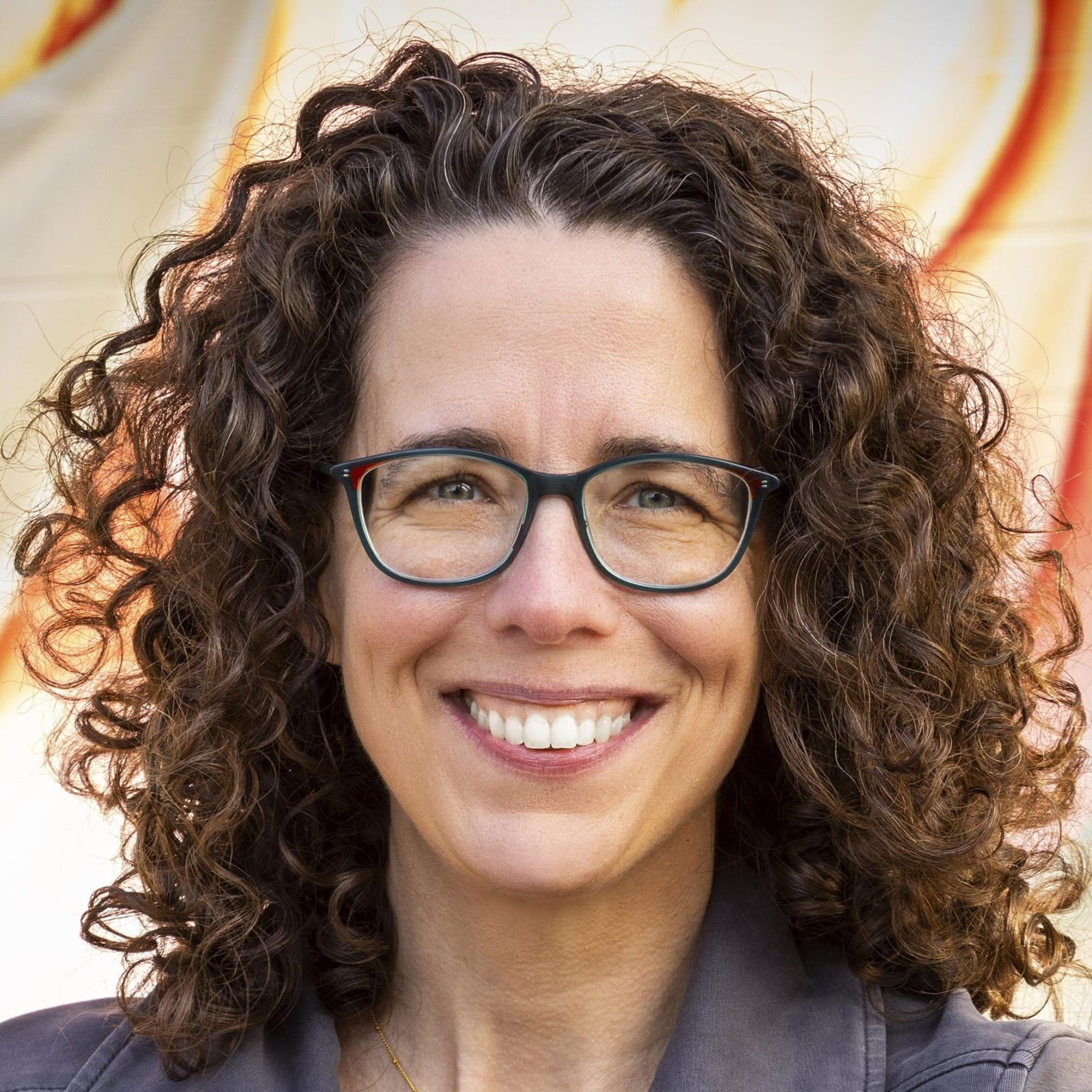
Jane Friedman has spent her entire career working in the publishing industry, with a focus on business reporting and author education. Established in 2015, her newsletter The Bottom Line provides nuanced market intelligence to thousands of authors and industry professionals; in 2023, she was named Publishing Commentator of the Year by Digital Book World.
Jane’s expertise regularly features in major media outlets such as The New York Times, The Atlantic, NPR, The Today Show, Wired, The Guardian, Fox News, and BBC. Her book, The Business of Being a Writer, Second Edition (The University of Chicago Press), is used as a classroom text by many writing and publishing degree programs. She reaches thousands through speaking engagements and workshops at diverse venues worldwide, including NYU’s Advanced Publishing Institute, Frankfurt Book Fair, and numerous MFA programs.