TikTok has led to a rise in self-published sensations in recent years, helping authors go viral, hit bestseller lists, secure rights and adaptation deals, and more. This success is concentrated in genres with particularly voracious readerships, like romance and romantasy, as seen in the recently released BookTok Bestsellers List, which features 20 titles but a mere three books outside those two genres.
But plenty of authors in other genres are finding less splashy but still significant success. Three such authors in the fantasy genre share what that success looks like and how they do it:
- Brady Hunsaker (@bradyhunsaker) started publishing novels in 2023 and now has eight books out across three series. He ran a Kickstarter in early 2026 for a deluxe edition, which surpassed its $8,000 goal by 1,000 percent, raising over $100,000 from 800 backers, with significant TikTok promotion. He also secured an audiobook deal with Simon Maverick, an imprint focused on audiobook editions for independent authors. He estimates average monthly sales at about 1,000 books and $1,300.
- Miranda L (@mirandawritesfantasy) released her first novel in October 2025 and the second book in series in April 2026. She is a nurse by trade but already had three years of professional social media experience before she began writing. She now runs her own social media agency in addition to her author platform, and she estimates monthly sales at about 100,000 KENP and 500 combined print and ebook sales. She recently started selling signed copies through her website; three weeks in, she reported 100 copies sold. She credited her audiobook deal with Podium Entertainment to her discoverability through social channels.
- Atlas Creed (@atlas_creed) released his first fantasy novel in 2024 and is currently drafting the second in series. He has also contributed to two short story anthologies and released a short story on his own. He estimated his sales for book one at almost 4,000 to date, no small feat with only one book out in a yet-to-be-completed series.
Authentic connection is the priority. “When you start social media, you’re looking at yourself from the outside, and you’re trying to be what you think you should be. You’re trying to emulate other people that you see are successful,” Creed said. “I’m just a naturally goofy guy, and I didn’t want to bring that into TikTok. I wanted to be professional. … As time went on, I started running out of content and ideas, so I essentially just started letting who I am project more into my videos. And I think that that has helped, because people respond to authenticity more than anything.”
Creed asks readers about their favorite characters or favorite moments, and what they think will happen next. While he’s found the answers generally in line with his plans for the next book in series, this practice has lent helpful insight to deliver what readers find most compelling.
Likewise, Miranda L prioritized fostering a loyal readership from the start. She shows her face, speaks to the camera, and makes a point to share the why behind her books (her struggle with post-partum depression) in posts at least weekly. “A thing that most authors don’t do is they don’t get in their comments and respond to comments thoughtfully. They don’t respond to DMs. I respond to every single DM,” she said. “I try to be really intentional with interacting with the people who are in my community.”
Never underestimate good literary citizenship. Creed’s first noticeable bump in online attention came when he released a list of indie authors impacted by the A Million Lives Book Festival flop. People came to his site to support those authors and also learned more about his book and Indie Author Connect, a list of resources for self-published authors that Creed started after falling victim to a vanity press and that he continues to personally vet. He also puts his career in DevOps engineering to use by posting about AI issues for writers, and he gets significant engagement from it. He is currently developing an app specifically designed to make indie authors’ audiobooks and ebooks more accessible to readers. When he speaks about topics unrelated to writing and publishing, he often has his book covers in his background.
All three authors focus on posting consistently but not on exacting schedules. All authors make a serious commitment to post at least once a day (per account, more on that later), but they don’t worry about optimizing the timing. Instead, they try different things to see what works, and they roll with the ups and downs of the algorithm. “I could post the exact same video that went viral a year ago … and it might only get a thousand people instead of a million,” said Hunsaker. “It hits a different pool every time you post.”
Miranda L uses a content calendar to plan a consistent rotation of different post types, including talking to the camera, carousels, and sharing her underlying motivation for writing the book. She does well with short, five-second elevator pitches that she described as “little jaw-dropping moments that happen in my book.” Her best-performing carousels share reviews or testimonials plus “aesthetics of what they’re going to get out of reading,” she said.
Investing in ads can expand reach and sales. While all three authors prioritized organic engagement, TikTok ads have paid off for Hunsaker. “I didn’t pay for anything for about the first two and a half years. … I spent that first year—I published three books. The second year, I only published one, because I was focusing on, how do I figure out sales,” Hunsaker said. “It was a lot of experimentation.” He started ads at $100–$200 a month and experimented to make those ads profitable. He increased the investment to $7,000 in February to support the Kickstarter campaign and saw a gain of $15,000+. Based on that success, he dialed the investment up to $8,000 a month.
Managing multiple accounts can boost reach. Both Hunsaker and Miranda L run multiple TikTok accounts. Miranda L runs over 20 accounts, though this includes client accounts, affiliate accounts, burner accounts for fun, and four accounts for her social media agency. One of these accounts specifically focuses on social media tips for authors, and she occasionally cross-promotes her books there as context for her advice. Hunsaker maintains three accounts, all focused specifically on reaching different kinds of readers: a primary account where he shares videos and hooks, a faceless account focused on carousels, and one focused specifically on showcasing special editions. He advocates this approach frequently as a way to broaden reach and engage readers who respond to different kinds of promotion.
TikTok Shop takes a back seat. While Hunsaker maintains a TikTok Shop for one of his accounts, all three authors preferred the flexibility of a personal account (TikTok Shop requires a business account), the increased profits of selling directly, and avoiding TikTok Shop’s rigid standards for turnaround. (For more, see Jane’s reporting from June 2025.)
TikTok remains one element of a larger platform. For all of these authors, TikTok may be a key pillar, but it’s one element of a robust platform. Hunsaker found that while TikTok performs best for discoverability, Instagram and Facebook are better for turning that discoverability into reader relationships. Facebook was the biggest driver of engagement at time of interview, but he has seen this fluctuate over time, depending on readers and shifts to each platform. Miranda L similarly also grows her readership with Instagram, YouTube, and a weekly newsletter, and she also maintains a Discord for her street team. Creed similarly manages accounts on other networks and participates in several in-person events during the year. Readers come to his booth ready to buy because they know him already from TikTok.
Bottom line: Authors don’t have to hope to go viral on TikTok to be successful. With consistent posting and a willingness to engage with the community, TikTok can be a powerful tool to grow a readership and gain sales. It works best when it’s one component of a larger author platform.
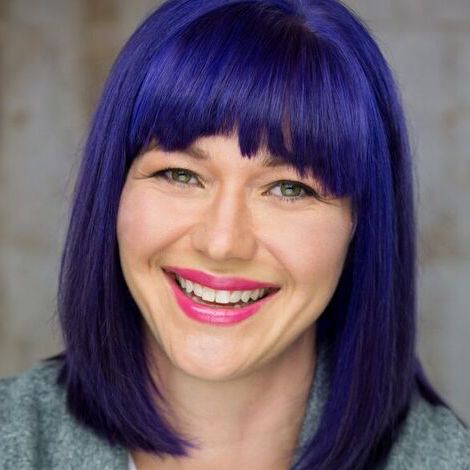
E. J. Wenstrom believes in complicated heroes, horrifying monsters, purple hair dye and standing to the right on escalators so the left side can walk. She writes dark speculative fiction for adults and teens, including her new release, a young adult dystopian novel titled Departures (August 10, 2021). When she isn’t writing fiction, E. J. Wenstrom is a regular contributor to DIY MFA and BookRiot, and co-hosts the Fantasy+Girl Podcast. Learn more at her website.