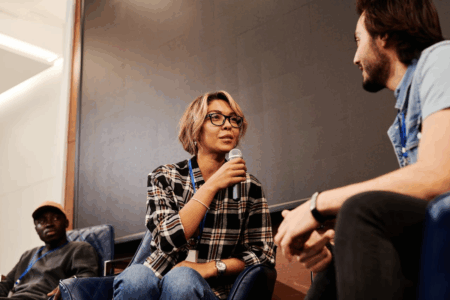
What might be hot in filmmaking seasons to come? We looked over the shoulders of some seasoned publishing pitch-meisters at the French film festival.
Inasmuch as film production is a very expensive crapshoot, it’s interesting to see what’s being presented by publishers and agents to producers in settings like the Cannes Festival—not least because the majority of US film/TV revenue (about 60 percent) now comes from abroad. (It used to be the reverse.) Because of worldwide demand, stories are best if they appeal to all.
This season we have insight into what’s being shoved at producers in cafés and hotel lobbies through a program called Shoot the Book! and its associated event, Shoot the Book! Rendez-vous. The latter event is a lot like a pitch slam: that one-on-one chance to quickly pitch your book to an agent at an authors’ conference. But in Cannes, you have more than 90 seconds, and lines of rivals aren’t breathing down your neck.
Shoot the Book! is run by the Institut français and other French cultural agencies. It’s reported that some 80 percent of the French publishing industry is at Cannes to offer stories to filmmakers. Here’s a quick look at some of the key titles that seasoned industry pros see as their best bets to turn a producer’s head.
- Based on true stories: The Invention of Bodies by Pierre Ducrozet (Actes Sud) is a thriller based on the tragic kidnapping and disappearance of 43 male students from the Ayotzinapa Rural Teachers’ College in Iguala, Mexico, in September 2014. A Forgotten Hero by Shelley Emling (ECW Press) is about the World War II Swedish diplomat who negotiated the release from concentration camps of some 31,000 prisoners, only to be assassinated in 1948 in Jerusalem while acting as a UN mediator.
- Children’s literature: The Desert Foxes (Book on a Tree) is about a secret code hidden in The Little Prince and a treasure hunt on the island of Corsica. It’s by Pierdomenico Baccalario.
- Contemporary fiction: Play, Nora Blume by Claudia Quadri (Edizioni Casagrande) is about a piano teacher with a nice house but a bad temper. In teaching piano, “Nora sees a number of different people, like unstable teenagers, neurotic women, and a curious neighbor.” Acqua Sacra (DC Books) may be the antidote to Under the Tuscan Sun. In this novel by Keith Henderson, Suzanna Ricci gets busy restoring a farmhouse in Italy’s Abruzzo district only to run into “the mafia, tainted lawyers, and the Mediterranean migrant crisis.” Of the Race of Masters by Alain-Fabien Delon (Editions Stock) is about the son of a cult actor who must, with the help of a therapist, try to find himself as an independent personality—in one night.
- Graphic novel: No War by Anthony Pastor (Casterman) is about the fictitious Vukland archipelago in the Nordic region, where a struggle between progressives and traditionalists plays out among the Kivics, an indigenous people.
- Historical fiction: When the Land Darkens by Tore Kvæven (Samlaget) is set in Greenland in 1300 and is a saga of a young family’s efforts to establish itself in the political realities of the tribe.
Whenever considering the film potential for one’s own work, remember that while books are a great source of content, adapting them for the screen requires intermediaries and industry knowledge. Changes must be made for book-based stories to appeal to producers, and each streaming service has its own eccentricities. For example, according to agents we heard speak on a panel at New York Rights Fair, Netflix is known as hands-off during development and doesn’t want to help shape the content; they want production companies to arrive at their door with a fully fleshed-out concept, with an existing platform and star power attached, so that Netflix can simply write the check and receive the product. Apple doesn’t want content with an anti-technology message—and they don’t want anything off-brand or too provocative. Amazon doesn’t want content that simply makes existing subscribers happy; if it doesn’t earn new subscribers, it’ll get cancelled. HBO is considered “glacial” compared to others.
Bottom line: We saw about five or six times the content from Shoot the Book! than we can highlight here, but there was a heavy emphasis on history, historical fiction, and what might be termed (ready for a new category?) “contemporary predicament fiction.” What we didn’t see is laugh-riot comedy, and we saw less crime drama than we might have expected. Perhaps audiences are feeling some crime fatigue—or maybe in these politically charged times they’re looking for something deeper than the next police procedural.
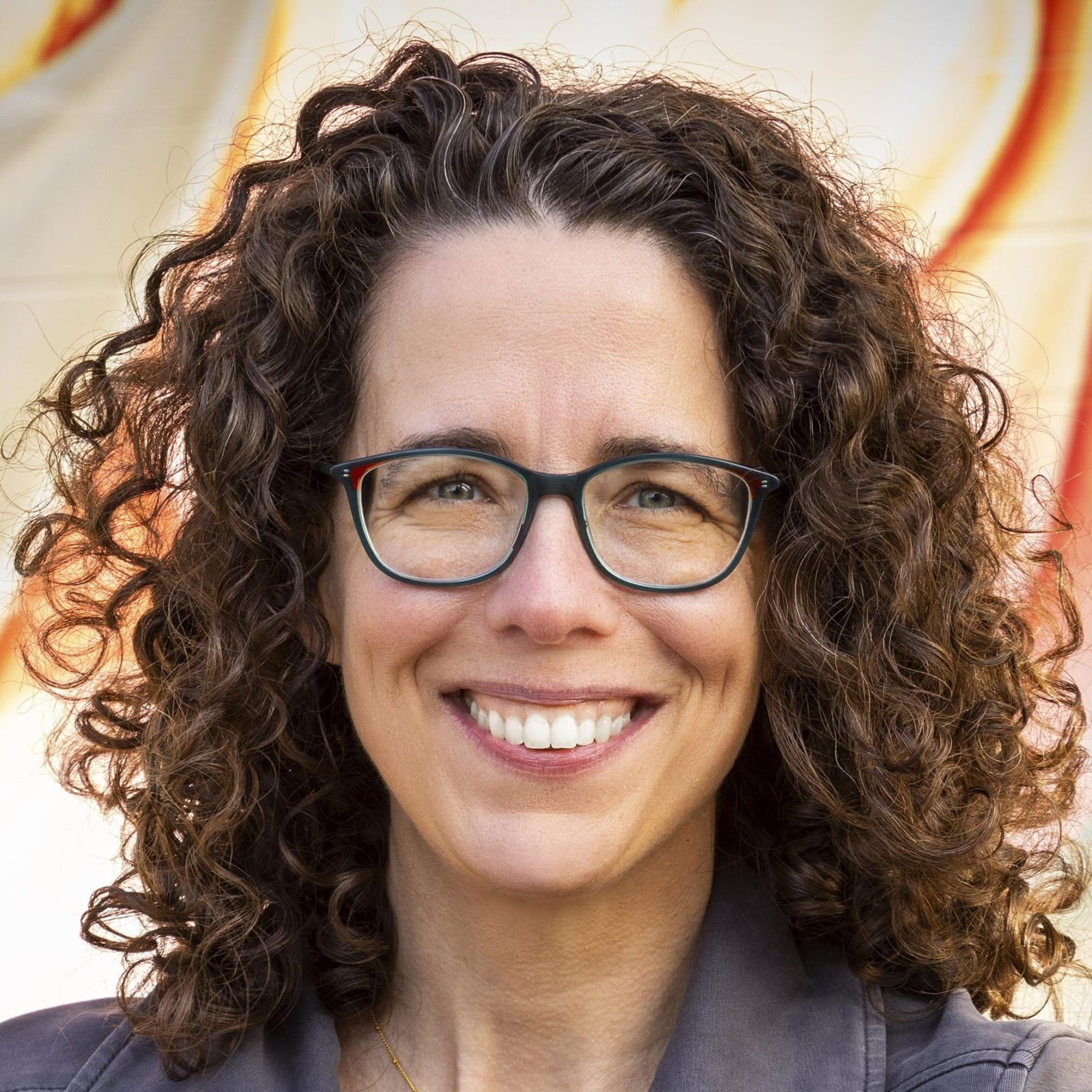
Jane Friedman has spent her entire career working in the publishing industry, with a focus on business reporting and author education. Established in 2015, her newsletter The Bottom Line provides nuanced market intelligence to thousands of authors and industry professionals; in 2023, she was named Publishing Commentator of the Year by Digital Book World.
Jane’s expertise regularly features in major media outlets such as The New York Times, The Atlantic, NPR, The Today Show, Wired, The Guardian, Fox News, and BBC. Her book, The Business of Being a Writer, Second Edition (The University of Chicago Press), is used as a classroom text by many writing and publishing degree programs. She reaches thousands through speaking engagements and workshops at diverse venues worldwide, including NYU’s Advanced Publishing Institute, Frankfurt Book Fair, and numerous MFA programs.