Last week, the Authors Guild filed a class-action lawsuit against OpenAI for copyright infringement. But their lawsuit is not the first to be filed on behalf of authors, and it may not be the last. Which raises a couple of questions: What differentiates these lawsuits? And do they stand a chance?
First, here’s a summary of the class-action lawsuits currently in progress.
Tremblay v OpenAI
Filed on June 28 in Northern District of California
Representative plaintiffs: Paul Tremblay and Mona Awad
(Awad later dismissed her claims without giving a reason)
Complaints include: Direct copyright infringement, vicarious copyright infringement, DMCA violations, unfair competition, negligence, unjust enrichment
Silverman v Meta
Filed on July 7 in Northern District of California
Representative plaintiffs: Sarah Silverman, Richard Kadrey, and Christopher Golden
Complaints include: Direct copyright infringement, vicarious copyright infringement, unfair competition, negligence, unjust enrichment
Silverman v OpenAI
Filed on July 7 in Northern District of California
Representative plaintiffs: Sarah Silverman, Richard Kadrey, and Christopher Golden
Complaints include: Direct copyright infringement, vicarious copyright infringement, DMCA violations, unfair competition, negligence, unjust enrichment
Chabon v OpenAI
Filed on Sept. 8 in Northern District of California
Representative plaintiffs: Michael Chabon, David Henry Hwang, Matthew Klam, Rachel Louise Snyder, and Ayelet Waldman
Complaints include: Direct copyright infringement, vicarious copyright infringement, DMCA violations, unfair competition, negligence, unjust enrichment
Authors Guild v OpenAI
Filed on Sept. 19 in Southern District of New York
Representative plaintiffs: David Baldacci, Mary Bly, Michael Connelly, Sylvia Day, Jonathan Franzen, John Grisham, Elin Hilderbrand, Christina Baker Kline, Maya Shanbhag Lang, Victor Lavalle, George R.R. Martin, Jodi Picoult, Douglas Preston, Roxana Robinson, George Saunders, Scott Turow, and Rachel Vail
Complaints include: Direct copyright infringement, vicarious copyright infringement, contributory copyright infringement
OpenAI has made a motion to dismiss most of the Tremblay and Silverman complaints. The first three suits on this list were brought by the same firm, Joseph Saveri Law Firm LLP, and the allegations are nearly identical: various forms of copyright infringement and DMCA violations, among others. OpenAI has made a motion to dismiss all counts but one—the direct copyright infringement claim—in Tremblay and Silverman. You can read the company’s response here. Some IP experts believe the direct copyright infringement claims in these cases are the most viable, while the other claims are less likely to hold up in court. For example, the Tremblay and Silverman complaints, as well as the Chabon complaint, argue that every output of ChatGPT is an infringing derivative work—that OpenAI has created a copyright infringement machine, whereby anyone can freely create and use infringing derivative works. To oversimplify: Imagine that OpenAI might be considered as guilty or liable for harm as Napster or Grokster, the music file-sharing networks that allowed for mass-scale copyright infringement.
OpenAI’s defense against copyright infringement relies on fair use; they argue their use of copyrighted materials are innovative and transformative and thus protected under the law. This defense is not far-fetched; it’s how the Google Books scanning project was ultimately determined to be legal.
The Authors Guild is working with a different law firm—two law firms, in fact—to bring their case, and it focuses its claims on copyright infringement of fiction writers only. In a call this week, Authors Guild CEO Mary Rasenberger said fiction offers a “cleaner case” because the defense can’t argue that the model is merely ingesting and outputting facts, which are not protected under copyright. With fiction, the models are ingesting entirely made-up worlds, not facts. The Guild expects that a positive outcome of this narrower case will benefit all authors, of course, not just fiction writers.
The Guild’s complaint notes that, until recently, ChatGPT could be prompted to return quotations of text from copyrighted books with some accuracy. That’s changed: ChatGPT generally responds to such prompts saying it cannot provide verbatim excerpts from copyrights texts. The complaint reads, “While ChatGPT previously provided such excerpts and in principle retains the capacity to do so, it has been restrained from doing so, if only temporarily, by its programmers. In light of its timing, this apparent revision of ChatGPT’s output rules is likely a response to the type of activism on behalf of authors …”
Rasenberger told us the Authors Guild case differs from the others in that the only claims are for copyright infringement in the course of training. “We are not suing over outputs,” she says, because the Guild has been advised that would be a challenging case to prove on a class-action basis. The other cases are suing based on outputs, but the facts of an outputs-infringement case are likely to be very different from author to author, and a successful class-action suit requires numerous and typical plaintiffs. Of course, nothing stops individual authors from suing against a large language model that produces infringing outputs of their own work. (This might actually increase the likelihood of monetary relief—everyone knows that class-action plaintiffs rarely get big paydays; the bulk of the money ends up with the lawyers.) The Guild is also limiting their case to authors who have sold more than 5,000 copies, as an approximation for professional authors whose books were more likely ingested by AI.
That said, the Authors Guild complaint does discuss derivative works and outputs because, to prove these models aren’t engaging in fair use, it’s necessary to show potential harm. That may not be too difficult, given how highly commercial these authors and their imagined worlds are. The complaint reads, “Businesses are sprouting up to sell prompts that allow users to enter the world of an author’s books and create derivative stories within that world. For example, a business called Socialdraft offers long prompts that lead ChatGPT to engage in ‘conversations’ with popular fiction authors like Plaintiff Grisham, Plaintiff Martin, Margaret Atwood, Dan Brown, and others about their works, as well as prompts that promise to help customers ‘Craft Bestselling Books with AI.’” The complaint describes a recent attempt to generate, via generative AI, the remaining volumes of George R.R. Martin’s Game of Thrones series—a clear example of potential for harm.

Why these class-action lawsuits are not a slam dunk: It’s already been well established that generative AI has been trained on copyrighted materials. That’s not in dispute, and OpenAI plans to argue it’s allowed under fair use because of the transformative nature of generative AI. As Benedict Evans observed recently, “[A] thousand stories themselves are just a fraction of a fraction of a percent of all the training data. The purpose is not for the [model] to know the content of any given story or any given novel—the purpose is for it to see the patterns in the output of collective human intelligence.” In other words, the model doesn’t care about or need your particular writing; your work is but a grain of sand on a vast beach, and outputs are generated out of that collective resource in a way that’s not infringing. Obviously, there are worlds of disagreement about that.
Beyond arguments about fair use, here are just a few of the tricky questions raised.
- How much of a problem is it legally if these copyrighted materials were obtained by OpenAI or others from illegal or shadowy sources, rather than on the open web or in some legitimate manner?
- A living author can mimic the style of another writer without being accused of infringement (you cannot copyright a style of writing), but what if a person does it using AI? OpenAI has already put up some guardrails with art and illustration, disallowing generation of images with Dall-E that mimic the style of a living person.
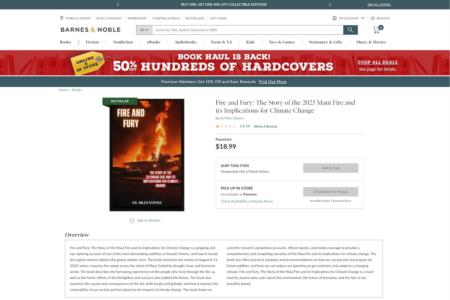
- If it’s not legal for ChatGPT to give you a summary of today’s news headlines without permission or licensing from news outlets (and it seems like it might not be legal, but there’s no clear verdict yet), is it okay to use ChatGPT to give you a summary of a copyrighted book without compensating the author/publisher? What about using ChatGPT to summarize a copyrighted book, then publishing that summary for profit? (The latter is already happening on Amazon. Here’s an example of a summary of a recent release.) This has generally been considered acceptable under current copyright law, but current copyright law wasn’t written to address the potential harms of generative AI.
Bottom line: There is limited precedent to rely on when considering whether use of copyrighted materials for training large language models can be considered fair use. Different courts may issue conflicting opinions, and some legal experts believe this issue will end up in the hands of the Supreme Court. The case to keep an eye on, no question, is the Authors Guild case, given its narrower focus on fiction and ingestion of copyrighted materials. In a conversation with IP expert Bill Rosenblatt, he speculated that a successful Authors Guild lawsuit could lead to a settlement on behalf of its members who have opted into the case, while authors not aligned with Authors Guild (or who decide not to opt in) might bring their own cases. Such legal action might continue until the government passes legislation that determines how to handle the IP issues of generative AI.

Jane Friedman has spent her entire career working in the publishing industry, with a focus on business reporting and author education. Established in 2015, her newsletter The Bottom Line provides nuanced market intelligence to thousands of authors and industry professionals; in 2023, she was named Publishing Commentator of the Year by Digital Book World.
Jane’s expertise regularly features in major media outlets such as The New York Times, The Atlantic, NPR, The Today Show, Wired, The Guardian, Fox News, and BBC. Her book, The Business of Being a Writer, Second Edition (The University of Chicago Press), is used as a classroom text by many writing and publishing degree programs. She reaches thousands through speaking engagements and workshops at diverse venues worldwide, including NYU’s Advanced Publishing Institute, Frankfurt Book Fair, and numerous MFA programs.