
IN-PERSON WORKSHOP + ONLINE CLASS
Book Proposal Intensive 2024
Work hands-on with Jane in Cincinnati to build a market-informed proposal for your nonfiction book
INSTRUCTOR
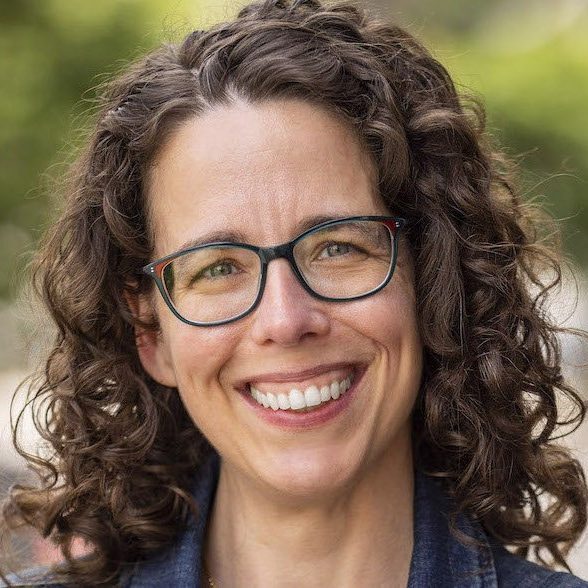
Jane Friedman
DATE
In-person: Oct. 17, 2024, 9 a.m. to 5 p.m.
IDEAL FOR
First-time nonfiction authors
LOCATION
CoHatch Cincinnati OTR + online
This is an online and in-person book proposal intensive (limited to 12 students) with publishing industry expert Jane Friedman that lays the foundation for you to write a compelling nonfiction book proposal, particularly in the digital era of authorship.
High-level overview:
- 2-hour online class: Jane will present 10 Steps to an Effective Book Proposal (recorded if you can’t make it live), on Saturday, Sept. 14, 10 a.m. to 12 p.m. Eastern.
- One-day workshop in Cincinnati: Thursday, Oct. 17 (9 a.m. to 5 p.m.): in-person event with Jane at CoHatch Cincinnati in Over the Rhine.
- 2-hour Zoom critique as part of a group discussion: Hear Jane’s feedback on students’ proposal openings, in a group setting, on Saturday, Nov. 2, or Saturday, Nov. 16, from 10 a.m. to 12 p.m. Eastern. (Days and times may shift depending on needs of registered students.)
This intensive is all about nonfiction book proposals.
A nonfiction book proposal is a required document if you want to secure a traditional book publishing deal. It serves as a business plan for your book that proves to an agent or publisher why your book will be successful in the market. It is more challenging than ever to successfully pitch a nonfiction book because many publishers (but not all) expect authors to come to the table with a platform—an existing readership—as well as a marketing plan for the book. Many times, writers lack the experience and industry know-how that would help them show off their expertise, experience, or market value in a way that’s convincing.
While some writers might need to do some work on their platform before pitching their book, this intensive provides insight into how to make the most of the platform you currently have and what you can do efficiently and realistically right now to improve your chances. Since platform building is a career-long effort, and not something you’ll develop overnight or in a few weeks, this workshop will not focus on how to build a platform to land a book deal, because that’s not realistic or very wise. But we will look under every rock for opportunities you might not have considered as leverage to land a book deal.
What It Means to Write a Book Proposal
A strong book proposal will not only help you sell your idea, but it will also help you sell the book when it finally makes its way to market. A thorough book proposal evaluates the readership for the work, how it relates to comparable or competing books, and why the book will succeed in the marketplace. A solid plan requires research and a thorough understanding of your readership. By developing a full proposal, you’ll gain a clear and compelling view of what has a good chance of selling—an important step whether you want to find an agent, pitch a publisher, or self-publish.
If you plan to write the book first, and figure out the proposal later, reconsider your process. Most nonfiction books are signed on the basis of a proposal and a sample chapter or two. The publisher is often very involved in the development of the content. Writing the entire book before selling it might not only be a time-consuming test run, but you won’t have the insight and knowledge of how to produce a better book until you write the proposal. Many authors, after finishing the proposal, end up changing their angle, perspective, or narrative focus after better understanding what will sell in book form.
Does your nonfiction concept have what it takes to get the attention of an editor or agent? This workshop will teach you how to study the marketplace and evaluate other titles in your category, giving you an editor’s eye for what sells. You’ll learn to identify and persuasively present the most marketable qualities of your project, and build a book proposal that meets the requirements of the publishing industry. While there is no “right way” or formula for preparing a book proposal—just as there is no right way to write a book—this course will lead you through the most important principles for success.
In this three-part intensive, you will:
- Gain insight into how publishing professionals research and evaluate book ideas. Jane spent more than a decade at a publishing house that produced exclusively nonfiction titles. She evaluated thousands of proposals, and pitched her own ideas to the sales and marketing staff. She knows how publishing professionals think about these documents and what information is meaningful to them.
- Evaluate competitive or comparable titles and learn how to conduct market research online. You’ll learn to assess comparable and competitive titles (both books and authors), which will inform your competitive title analysis as well as your target readership proposal sections. Jane will share the process and tools she uses to find evidence of need in the market for any book. We’ll also discuss how to identify your ideal reader, study your target audience online, and write an effective description of who your book is for.
- Understand what goes into a meaningful marketing plan for your proposal. Some authors’ marketing plans amount to vague action points that are unlikely to sell books, such as “get reviews” or “do book signings” or “promote the book on my website.” That doesn’t cut it. You’ll learn how to quantify and express the power of your reach and visibility to your target market in a way that matters to publishers.
- Learn a clear, step-by-step process to make writing a proposal more manageable. It can feel daunting to begin writing a book proposal. This workshop breaks it down into small, doable steps.
By the end of this intensive, you will understand:
- The purpose of a book proposal and what it must accomplish (and the three questions it must answer: So what? Who cares? Who are you?)
- How to position yourself as the best person to write your book—and ideally one with a platform that will help sell it
- How to identify comparable or competitive titles that help you sell your book to publishers and then market your book once it’s published
- How to write a marketing and promotion plan for a book that doesn’t yet exist, including offline and online efforts
- Whether you should include a table of contents, chapter overview, and/or synopsis (based on the qualities of the book)
- What sample chapters must demonstrate and which ones to include
The key benefits of this intensive
- The September online class on book proposals gives you the education you need on what book proposals must accomplish, straight from Jane, in an interactive format. The max number of students attending: 12. Toward the end of class, Jane will discuss the book proposal template, the research worksheets, and other tools you can use to begin working on your proposal prior to the in-person workshop. You’ll have time to get answers to questions about your particular project.
- The October class offers in-the-moment feedback on your project and proposal progress, with group discussion of troublesome aspects of writing and researching the book proposal. We’ll work together to overcome any challenges you’re experiencing and discuss how to navigate roadblocks.
- The November group critique (of your proposal’s opening—which ought to serve as the foundation of your query letter) acts as a final check-in to determine how well you’re positioned and what adjustments might need to be made before you pitch or submit your work.
- You’ll be part of a small cohort of other nonfiction authors learning together and learning from each other. Many writers will stay connected long after the intensive is over, as colleagues, friends, and critique partners.
Who should take this intensive
- Prescriptive nonfiction authors: anyone writing a benefit-oriented book, like how-to books, business books, self-help books and more
- Narrative nonfiction authors: anyone writing a true-to-life story about people, places, and things, including histories
- Professors or scholars: anyone writing and pitching a book primarily meant for a general or commercial readership
- Some memoirists (see below), especially those writing researched memoir that tackles issues that you can prove, through market research, will resonate in today’s market
- Essayists who are putting together a collection on a theme/topic that you believe will resonate in today’s market
This intensive is not suited for
- Fiction writers or novelists, including those writing autofiction
- People writing or ghostwriting someone else’s memoir (these pose very unique challenges and this intensive does not address them)
- People writing family histories or biographies of family members (these are challenging to sell unless your family or family member has a claim to fame—if this describes you, check with Jane before registering)
- Children’s authors of any kind
- Poets or people writing primarily in verse
- Anyone writing multi-genre or work that’s not strictly defined as nonfiction
- Anyone putting together an anthology (these are notoriously challenging to sell and will likely end up with a small/literary press)
I’m a memoirist. Is this intensive for me?
The answer is complicated. Submission guidelines vary tremendously when it comes to memoir. Some agents or publishers don’t require a book proposal, while others want only the book proposal and the first few chapters. Some agents may even ask for both the proposal and the complete manuscript if you’re an unpublished author. Professional, published writers can typically sell a memoir based on the proposal alone. New, emerging writers who have no publishing track record may be asked to submit a complete manuscript to prove they can write, sometimes in addition to the book proposal itself.
Here’s the dilemma for many memoirists: If an agent wants a book proposal for a memoir, they are likely judging you based on the strength of your platform or as much on the platform as the writing. They want to see if your story premise might gain traction with the media or influencers, or gauge your ability to land major interviews that will lead to sales. If you have little or no platform, and your story is lyrical, quiet, or literary, then you should try to target agents and publishers who don’t require a proposal. A proposal will only highlight what your project lacks.
How this intensive will play out
- September (online): You’ll attend or watch the recording of 10 Steps to an Effective Book Proposal (you’ll be automatically enrolled upon registration). You’ll have book proposal research worksheets that you can and should complete prior to arriving on Oct. 17. You’re also encouraged to begin drafting your proposal using Jane’s template.
- October (in person): You’ll bring a laptop or mobile device with you on Oct. 17, and be ready to conduct online research (there will be free wifi) and to do writing and editing work on your proposal document with Jane and other students. Jane will help you on the spot.
- November (online): In November, you’ll submit the opening of your book proposal (up to 1,500 words) for Jane’s feedback in a group discussion setting using Zoom.
What if I can’t make the online sessions?
- The 2-hour session on how to write a book proposal will be recorded if you can’t make it live. You’ll need to be sure to review it prior to attending the October full-day workshop. Consider it a prerequisite or required homework.
- November critiques, where Jane offers feedback on your proposal’s opening in a group setting, will be recorded if you can’t make it live.
What if I can’t make the in-person component in Cincinnati?
I’m sorry, but this is a requirement to register. (Virtual attendance is not possible. This workshop will not be broadcast, recorded by Jane, or available in any digital form. However, in-person participants are welcome to audio record the session for personal use only.)
When and where the in-person workshop will be held
- Thursday, Oct. 17, 2024
- Time: 9:00 a.m. to 5:00 p.m.
- Place: CoHatch Over the Rhine, 132 W. Elder St., Cincinnati, Ohio
What’s not included in the price?
You will have to arrange your own travel/transportation and lodging in Cincinnati if you require it, as well as parking if you are driving to the venue. You will be on your own for lunch during the in-person workshop, although we’re meeting right by Findlay Market, near dozens of food vendors and restaurants. You will be spoiled for choice and rather happy that lunch is not provided, so that you get a chance to explore and sample the wonderful offerings of Findlay.
What else is happening in Cincinnati around October 17?
- The Writer’s Digest Conference takes place Oct. 18–20 in downtown Cincinnati. Jane will be teaching there, too!
- BLINK is an arts event that takes place Oct. 17–20 in downtown Cincinnati. It is a free, outdoor event with large-scale projection mapping on buildings, murals, and interactive light sculptures from around the globe. It is an amazing experience that takes place primarily at night. The city will be full of locals and visitors, so be prepared!
Where should I stay?
If you want to be within walking distance of the workshop venue (CoHatch Over the Rhine), then you’ll want to stay at a downtown Cincinnati hotel. Alternatively, you could look for an Airbnb that’s downtown, in Over the Rhine, or in close proximity to Findlay Market. Because BLINK is taking place at the same time as the workshop, book accommodation right away if you want to stay nearby.
Refund policy
Registration fees are non-refundable. However, with approval from Jane, you can sell or transfer your registration to someone else if you wish. Alternatively, if the intensive sells out, your registration will be refunded if your spot can be filled by someone on the waiting list, less a $25 processing fee. (This directly covers our cost of payment processing fees, which are not refunded to us by Stripe or PayPal.)
I wish I could afford this or make time for this, but it’s not in the cards! Are there any alternatives?
- Check out my free upcoming business clinic on why book proposals fail.
- I have a free post on how to write a book proposal, accompanied by a book proposal template and worksheets to conduct market research.
- You can also browse my archives with lots of free guidance on book proposals.
About the instructor
Jane has worked in book publishing for 25 years, and for half that time, she evaluated and acquired hundreds of books at a mid-size publishing house that had a backlist of 1,000 titles in every nonfiction category. Most of those books were acquired on the basis of a proposal, not a manuscript. Jane also served as the editor of How to Write a Book Proposal, Third Edition by literary agent Michael Larsen; she is a quoted expert in the most recent edition.
Jane attends and speaks at numerous publishing and writing conferences each year, and regularly hears agents and editors discuss what they want to acquire and what they expect from your submissions materials. This knowledge and expertise gets put to work for you during her classes. While she can’t guarantee you’ll get representation or a publishing deal if you take this intensive, she can help you put your best foot forward, and offer insight into challenges you’ll face.
I took your proposal writing course, which was awesome. You told me that an author who had never before published could be a red flag for agents, and you recommended I publish for my target audience. So, three years ago my first article was published in Bark Magazine, and I went on to publish many more. I got a wonderful agent and last month we landed a book deal and were in Publishers Weekly!
Karen Fine
Within the first hour of contacting potential agents with a query, I received several positive responses and requests for the proposal. I then followed your guidelines for creating that proposal and sent it out, which in turn generated a greater response from agents from Oregon to New York to the UK. Furthermore a major publisher got wind of the project and contacted me directly. Pretty exciting stuff after years of frustration.
Jerry Jamison
I have ghostwritten two book proposals, with a third almost finished, using your course. The first book proposal resulted in four agents offering a call and three offering to represent her. The second resulted in two agents interested in representing her, but asking for changes to the book’s concept, and she’s working on that now. The agents commented these were some of the best-written proposals they’d seen.
Cindy Childress
All students receive the following
- Prerequisite online class: 10 Steps to an Effective Book Proposal (recorded if you can’t make it live), on Saturday, Sept. 14, 10 a.m. to 12 p.m. Eastern. All participants receive a copy of Jane’s presentation materials, and 1-year access to the class recording.
- Access to the full day, in-person workshop. This event will take place in Cincinnati. There will be a break for lunch (on your own).
- Feedback opportunity (verbal, recorded critique as part of a small group Zoom discussion). All students will have a chance to submit their proposal opening for Jane’s feedback during a group discussion. Feedback will be presented during one of two online sessions: Saturday, Nov. 2, or Saturday, Nov. 16, from 10 a.m. to 12 p.m. Eastern. Days/times subject to change based on the needs of registered students.
Event Attendance & Anti-Harassment Policy
We strive to provide an environment where all present—whether attendee or presenter—can feel supported. In order to ensure a welcoming event, here is what we expect from all who participate.
- That the presenter and the presenter’s work be treated with respect by attendees and that all attendees treat each other with respect and a generosity of spirit.
- That attendees will refrain from harassment of any sort including (but not limited to) comments or questions of a racist, homophobic, sexist/sexual, or threatening nature. This includes actions that disrupt or interfere with anyone’s ability to participate. Offenders will be asked to leave the live event and will not be refunded.