
Today’s guest post is from April Line, a freelance writer and writing teacher. Read her previous guest post for this site, Can Children Develop Adequately Without Books?, and visit her online at April Line Writing.
When I was in the home stretch of my liberal arts studies, something kind of shitty happened. I got pregnant. Being 25, a feminist, single, and centimeters from an MFA program in fiction writing at my choice between University of Pittsburgh, University of Cincinnati, or Purdue; abortion was the obvious answer, right?
Wrong.
There’s no point now in wondering whether it was the right choice, but I’ve got a pile of toil, an excellent six-year-old, and perspective to show for it.
What I don’t have is a terminal degree in the art of my choice, and give-or-take five years of reading and writing.
In April 2011, during my kid’s first year of public school, I was so relieved to reclaim a bit of breathing space that I quit my stupid retail sales job and I went freelance.
Copyblogger told me that I should tweet as a freelancer, so I did (they give great advice); and in May somebody tweeted asking, “Is literary fiction is the new poetry?”
The quotation is commonly attributed to Jonathan Franzen, but it’s a sentiment that’s been around for some time. I recall my mentor and undergraduate thesis advisor telling me that literary writers write for other literary writers.
Seeing it on Twitter gave it startling gravitas, plus my own burgeoning adulthood makes me more willing to see a doughnut’s hole, and it’s been niggling at my literature-loving soul.
And it seems that the fatalistic, academic impulse is going to be to let it just happen: to watch literary fiction’s audience become increasingly smaller, watch the people who write it become increasingly disenfranchised, watch their numbers diminish, even as the growing number MFA programs churn out writers and literature lovers, and deprive us—who would rather read Amy Hempel or John McNally or Joan Didion than Stephanie Meyer or Norah Roberts or John Grisham—of this delicious, delicious, reading.
That makes me sad.
One of the last bits of literary fiction I read before taking my too-long hiatus was Ron Currie Jr.’s God is Dead. That, friends, is a brilliant book. It’s loosely connected short stories set in post-apocalypse America. One of the first bits of literary fiction I read when I came back to reading for love, pleasure, and the experience was Ron Currie Jr.’s Everything Matters! which is also a brilliant book, and my new favorite. It replaced The Arsonist’s Guide to Writers’ Homes in New England by Brock Clarke.
My point is that these books are lovely and entertaining. In Everything Matters!, there is cocaine and alcohol addiction, violence, celebrity, conspiracy, and science fiction. In The Arsonist’s Guide there’s multi generational marital unrest, alcoholism, violence, the mafia, fire. In both of these, there are very funny jokes.
And it seems to me that we’re reading more than ever as a culture. We read on the Internet, so many folks are blogging, e-readers and smart phones make books and language so accessible and ever present. I have a copy of The Pickwick Papers on my Android phone.
It seems sad and irresponsible to me that we should just let literary fiction fizzle into the academic ether.
This article at McSweeney’s references NEA studies that indicate that 1982–2003 accounted for the greatest decrease of young people reading literature. But young people are reading more as of 2009 than they did in the 30 years prior. So this new increase in young readers, combined with the decreased cost of publishing e-books, and marketing with social media, seems like an opportunity for literary fiction.
Genre authors are more likely to score five-figure advances (or more) and are almost certain to see royalties. Literary authors clamor after $5,000 advances if they don’t just give up and self pub—and if they see royalties, they’re spare.
Literary authors do book tours, signings, appear at academic conferences, speak on concerns of craft and the academic writing world. They have agents, but their agents don’t interface with their publishers to make sure the books are on end caps in Target or the equivalent.
Why the hell not?
Literary fiction gets marketed differently because there’s a different audience, right? And I can see that argument, sort of. Like if people who appreciate literature didn’t also like to buy inexpensive toilet paper. Or if enjoying 30 Rock and Planet Earth were mutually exclusive. Or if nobody who listens to Howard Stern ever listens to Fresh Air with Terry Gross.
The morale among literary authors is low. Because even though they know their books are great, the mainstream voice is saying, “But not great enough to be worthy of sales efforts!” The playing field is leveling as reading becomes more digitized, and I’m not the only one who’s saying it. It’s time for literary authors to reclaim a segment of the market. And I want to help.
I loaded up my holiday gift list this year with titles from authors whose tweets I follow, from authors I loved seven years ago who’ve published new books, with writers the mainstream public doesn’t talk about.
Peter Damian Bellis lives 20 minutes away from me, and has written a book called The Conjure Man (available for free here) that was in the running for a nomination for the National Book Award. There are fewer than 5,000 copies out there. It’s not even in too many libraries. It’s a wonderful book that will totally enthrall you, and Bellis is touring blues festivals to publicize it.
Do the people in charge of decisions about marketing books have such a low estimation of the reading public that they won’t even give them the opportunity not to choose literary fiction?
I recognize that we’re probably a hundred long, laborious steps away from end caps in Target, or at least equal market saturation, but we must start walking.
Here’s a step: I’m starting a nonprofit. Billtown Blue Lit. We’ve got a blog. We’ve got a StartSomeGood Campaign, we’re doing a podcast called “Writers Talk.” We want people to have access to good stuff to read, so we’re going to do good stuff in service of good books.
Maybe you’d like to join us.

April Line’s fiction appeared in Sou’Wester in 2005. She currently does copy writing, editing, and freelances for a number of regional publications. She is working on a collection of essays and fiction, and on her nonprofit project, Billtown Blue Lit. She lives in Williamsport, PA.




Good luck with the new site April, it’s a shame Literary works are so niche these days, because the writing is usually so beautiful and poetic. Although the Internet and Social Media is so good for authors it’s the main catalyst of the fall of Literary works in my opinion.
These books are often thinkers and people are so used to going online these days and just finding the info they need there and then. We get mad if we have to wait an extra second for the page to load, and if the article doesn’t grab us in the first paragraph we press x and move to the next one. After all, there’s always another article, blog post, story etc to go and find
It ultimately goes into our reading life too, wanting books to keep us on our seat and enthral us throughout. Who needs beauty when you can be given fast paced easy reading?
It’s sad really, but hopefully this niche can become cool again, just like taking photos is the new cool kids hobby, and how alternative music is the main frame of modern culture.
Hopefully your site can be the heart of it 🙂
Matt (Turndog Millionaire)
Good luck with the new site April, it’s a shame Literary works are so niche these days, because the writing is usually so beautiful and poetic. Although the Internet and Social Media is so good for authors it’s the main catalyst of the fall of Literary works in my opinion.
These books are often thinkers and people are so used to going online these days and just finding the info they need there and then. We get mad if we have to wait an extra second for the page to load, and if the article doesn’t grab us in the first paragraph we press x and move to the next one. After all, there’s always another article, blog post, story etc to go and find
It ultimately goes into our reading life too, wanting books to keep us on our seat and enthral us throughout. Who needs beauty when you can be given fast paced easy reading?
It’s sad really, but hopefully this niche can become cool again, just like taking photos is the new cool kids hobby, and how alternative music is the main frame of modern culture.
Hopefully your site can be the heart of it 🙂
Matt (Turndog Millionaire)
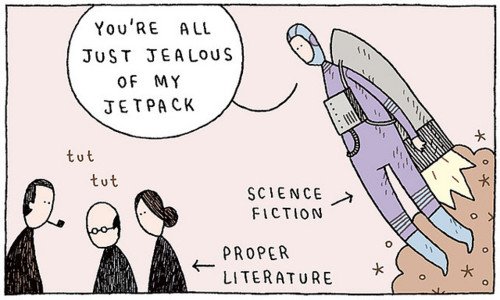
Sorry but I don’t agree. Literary fiction is like SF it’s a genre ( I’m quoting here but unfortunately don’t have the reference). Too often literary fiction is beautifully written but lacks a real story. The best literary fiction has both and transcends genre. But this is not the norm.
@NE French – I don’t see literary fiction as a stand alone genre, at least not in the way that SF is a genre. There are plenty of genre books that overlay literary sensibilities (‘overlay’ is a better descriptor of literary than ‘genre,’ I think). I think the genre that would describe the type of “lacks real story” fiction that you describe would be Domestic Fiction, which would involve family life, and far too often, aimless internalizing.
OF COURSE “literary” fiction is a genre! “Genre” simply means “kind,” and “literary” is a kind of fiction. This isn’t a bad thing–except that too many literary fiction types don’t want to be sullied by being associated with those other kinds of fiction, kinds which they consider beneath them, unworthy. You can almost hear them spit after they say “genre fiction,” as if they’re trying to get the bad taste out of their mouths.
Am I making this up? Alas, no. In his book on writing, “The Lie That Tells a Truth,” literary fiction writer John Dufresne slimed genre fiction (wish I could find the exact quote right now, but I can’t; I do know it pissed me off when I came across it–how DARE he?).
Look, like any other kind of fiction, literary has its strengths and weaknesses, its good and bad points. It appeals to some readers and not others. But one way in which it might appeal to more readers is if the purveyors of lit-fic stopped looking down their noses at the other genres (and their readers) and acknowledged there’s a place and a reason for each in the pantheon of story-telling.
My novels seem to be in some limbo-ish place between litearary and “women’s fiction” and even sometimes called “YA-ishy” and “southern fiction” and “appalachian fiction” — it boggles the mind! But, one thing is for sure, I was told not to call my work “literary fiction” or it would turn to dust and fly away to the four unknown corners of the universe. Besides, I am told, my stuff is “just over to the other side” enough not to be considered “Literary books that people are put off by . . .” I suppose that’s a good place to be, right? Right? Still, when one is not in a solid “Genre,” one doesn’t pull to them as much hoopladoo.
My novels are a patchwork quilt it seems! – in Granny’s “chester-drawers,” much loved, and when Granny pulls the quilt out and drapes it over someone, they can’t believe how comfy warm it is and how they ever lived without it, then Granny puts it back in the chester-drawers where someone has to fish it out again and say “hey, this is a really nice quilt, y’all. Hand-stitched! Heirloom!” Of course, those quilts from Target keep people pretty warm, too, and they aren’t hidden in a chester-drawers. lawd.
Children will eat sugar all day long, too, if that’s all they are offered. Parents have to offer real nutrient if they want to see their children grow up healthy. Thankfully there are a few publishers who understand that. And good on you for offering readers something more than another celebrity tell-all.
Many years ago (decades) I was told by a publisher that he loved to publish my work but that there was no market for it. Literary fiction has become a vanity press for publishers. I was advised to write in a genre. Since then I have heard the same refrain from writers about serious fiction. I think they are wrong. They are living in a fantasy world. Serious fiction was important at one time. Mostly the late 19th and early 20th century. It affected our culture. Since then the mantle of ideas and culture has moved to other mediums. The cinema in the 20th century. More people read now than probably at any time. But the books they read do not change the way people think. Or run their lives. I love books. I love reading and writing. But those are the facts. As I see them anyway.
Actually when it comes to newspaper reviews, literary novels get the most attention. I know this because I read the round up of reviews in Publishers Marketplace every week. It’s very rare to find a a genre review. Also I agree with NE French, storytelling skills sorely lacks in so many literary novels. Yes, they are often brilliant, funny and well-written, but as a whole they often fall apart. Upmarket fiction is what everyone seems to be looking for (Think Kite Runner) which is a hybrid of commercial and literary.
I”l quote Seth Godin: “If your target audience isn’t listening, it’s not their fault, it’s yours…Change what you do, not how loudly you yell or whine.”
I’m a commercial novelist who just finished an MFA program in creative writing. Literary writers gets schooled in short stories which doesn’t help them much when it comes to writing a novel. They need to learn structuring technique,which aren’t taught. Combine sound structure with intelligent and beautiful writing and literary writers won’t have to beg for attention.
Totally agree on the short story thing. A major shortcoming of my MFA program as well. Short stories don’t teach you how to deal with a plot, or character development, for that matter, over the course of 80,000 words. A lot of folks who might have found a natural plotting on their own, or by reading novels, might be confused by classes that emphasize short stories. They’re a very different animal (and just as hard to do well).
April, thanks so much for this thoughtful post. This discussion speaks to the heart of our reading culture, and the answers are not in MFA programs, not in reading programs for YA. My teenage twin grandchildren are in advanced reading because of my son, his reading because of his mother. My reading because I read everything.
There is too much said about the “poor” reader, or to be blunt, that readers are not at literate as they once were. It has nothing to with the basic education of the reader, only the narrow perspective of marketing departments in publishing. It is also sad that a Random House can market a book as deep literature, that is less captivating than my penny saver.
Ask yourself April, if you would consider Tolkein as literature or simply fantasy fiction? Was the Turn of the Screw at tale of horror? Is it not possible for you and your group as literary readers to classify many of the classics as romance or suspense? To merely call a book literate because it seems more lofty than perhaps a legal thriller, or for marketors to classified a page turner as less thrilling is not the problem of “readers today.”
There might always be the argument that genre fiction is less. One generation produced Dickens and Conan Doyle. One of them would be in the mystery section, where would the other be? The Hallmark of MWA, uses Edgar and today Poe’s books might cause marketors a headache. Was he a poet or a writer of horror? His agent and publisher would remind him not to cross genres and risk losing his readers. The poor man would have been psycho-babbled to death in blogs and tweeted into insanity.
Yes, there is a greater responsibility for the writer to connect to the times in which they live. We did not live through the Victorians and read the other hundred books that were tripe, but we do live in a time when any tripe can be printed in hundreds of ways, compete with gaming, HD TV … or block buser movies. To this end bean counters and marketing executives who basically read spread sheets, have left you and your group with a thankless and perhaps futile challenge.
I think you can blame the readers as much as the marketers. If you look at this list of popular self-published fiction, it’s mostly non-literary commercial fiction. Maybe this is a result of all he marketing from the traditional publishing industry, or maybe this is what readers want. As readers are more and more the gatekeepers instead of editors, they’re proving to have exactly the same taste.
I am also spelling challenged … “marketers” I believe is the word … sorry 🙂
Hi April! Let me throw a couple thoughts into this discussion.In the UK, the NAWE (National Associate of Writers in Education) includes in its *Creative Writing Benchmark Statement* that “a Creative Writing course [should] not uncritically privilege one or other genre or style of writing (e.g. ‘literary fiction’)” However, in the US, the AWP’s (Association of Writers and Writing Programs) *Director’s Handbook* insists that “students are required to produce a publishable literary work” I realize that you’re mostly talking about marketing here, but I do think that the privileging of “literary” over “genre” (or to widen the scope a little, lets call it “commercial”) starts in school–for a variety of reasons. Chad Harbach’s piece in Slate last year addressed this issue quite well. http://www.slate.com/articles/arts/culturebox/2010/11/mfa_vs_nyc.single.html Two writers I know (who also teach creative writing) interested in this issue are Julianna Baggott and Benjamin Percy, who have plenty of literary cred but are interested in appealing to as wide an audience as possible. Ben talks about it here: http://fictionwritersreview.com/interviews/some-supernatural-source-of-primal-energy-an-interview-with-benjamin-percy. Let me put this out there, too: What does it mean when writers like Alice Munro and Alice McDermott and Anne Tyler are marketed as “women’s fiction?” I know I’ve had a tough time getting my male students to read books that present as “girly.” One reason why many women writers try hard to stay within literary boundaries is because they are afraid of not being taken seriously. (Disclaimer: I believe it’s troubling when we assume that just because a lot of women want to read a book, it must not be very good.)